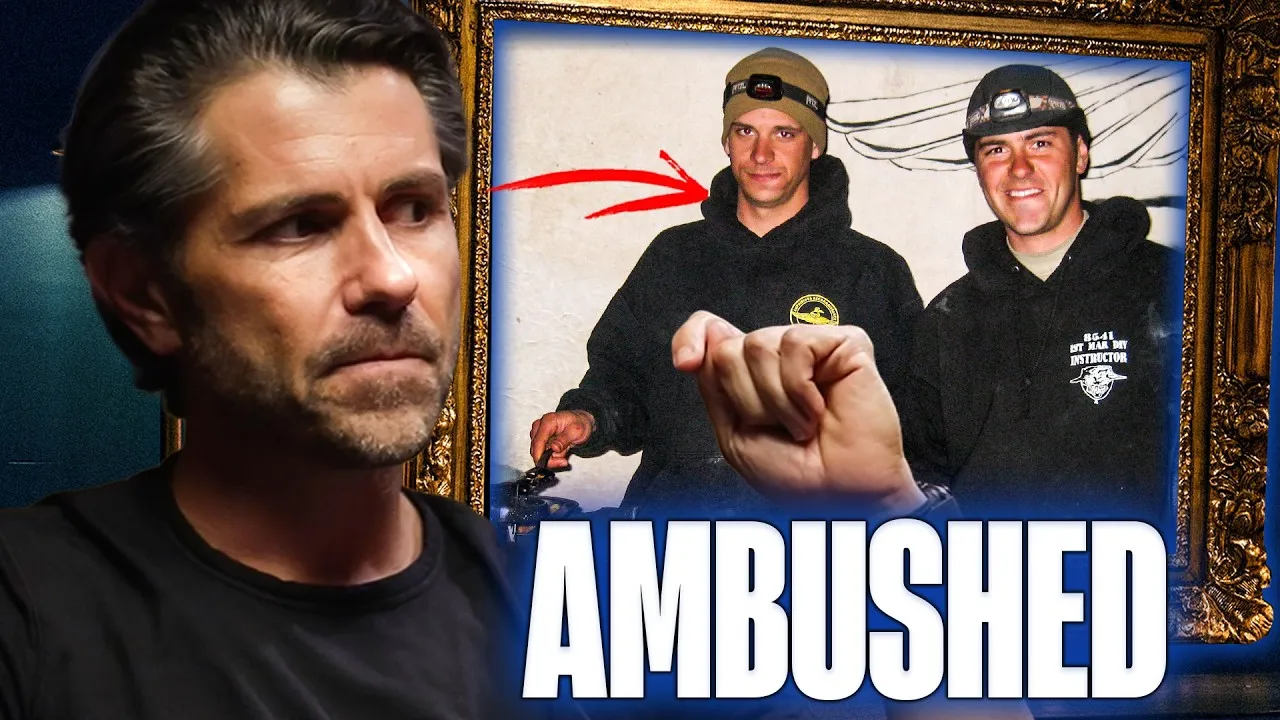
A Marine scout sniper says Angela, a 14-year-old from Sunnyvale, gave him permission to keep living after Afghanistan
The Shawn Ryan Show clip turns the usual combat-hero frame inside out, making the rescue story not about air support or tactics, but about a freshman with a pen.
Listen on YouTube · Spotify · Apple Podcasts
 WATCH NOW↓
 Care-package letters are supposed to be the military’s wholesome background music, all crayon flags and generic thank-yous. On The Shawn Ryan Show, a Marine scout sniper says one anonymous letter from Angela, a 14-year-old in Sunnyvale, California, did something much stranger and heavier: it gave him “permission to continue living” after three Marines from his platoon were killed in Afghanistan.
That is the claim here, and it’s the rare war-story claim that doesn’t puff itself up. No new secret raid. No macho revelation about the shot nobody else could make. The rescue arrives in a box addressed to “any Marine,” written at 10:48 p.m. by a freshman who had heard that a poster from her class had once made a deployed Marine smile. Somehow, the guest says, that letter found the exact man it was describing.
Before Angela enters the story, the episode is grim in the familiar Shawn Ryan register: radio traffic, call signs, aircraft, split-second loyalty math. The guest describes listening to his best friend Matt’s team get enveloped by an estimated 40 to 50 Taliban fighters while he had to choose between running toward him or staying put for the infantry Marines he was assigned to support. The moral injury is not subtle. He frames recon’s purpose as loyalty to the rifleman, then has to obey that purpose while his friend disappears from the radio.
And it was India 0311. And I didn’t hear anything else after that.
That line number matters because Matt’s last four digits were 0311, the Marine Corps infantry rifleman MOS. The guest says they used to joke that Matt was meant to be a grunt. Then the joke became the identifier for a death notification in a muddy Afghan courtyard, with young Marines waiting to be taught how to grieve by a team leader who had no magic syllabus for it.
Angela was not writing a movie speech
The Angela letter works because it isn’t polished. It has the oddly precise geography of a teenager explaining her life, Sunnyvale, the Bay Area, “lots of people don’t know that.” It has the awkward moral clarity of someone old enough to understand death but young enough to still believe thanks can cross an ocean intact. If a screenwriter invented it, you’d roll your eyes. Real life, annoyingly, has better timing.
But thank you. Thank you for being so brave that you can stand up and fight for our country. Thank you for being so brave and selfless that you let your lives and loved ones, you leave your lives and loved ones to fight for a people you don’t even know.
The guest says he carried the letter in his flak jacket through Marjah, which he calls “Afghanistan’s Fallujah.” That is where the story risks becoming too neat, the kind of inspirational military anecdote that gets flattened into a viral clip with piano music. But he doesn’t claim the letter cured him. He says he fought substance abuse, suicidal ideation, and “harmful thoughts.” The letter didn’t fix the war. It gave him an address for his survival.
What I realized was that I was living for Angela because that little girl and her hope and her determination what she felt in that was something so powerful.
The verdict: emotionally true, not medically tidy
The skeptical read is easy: public gratitude is cheap, Americans love outsourcing the moral weight of war to yellow ribbons, and “thank you for your service” can become a national shrug with better manners. But this isn’t that. The specificity saves it. Angela is not “America.” She’s a 14-year-old writing late at night because a teacher told her a poster made a Marine happy before he died. The guest is not claiming patriotism as a cure-all. He is saying that one human being’s innocent insistence that his life mattered gave him a reason to stay.
That’s why the episode’s hardest sentence is not the most tactical one. It’s the one that punctures the clean myth of competence. The military trains people to master chaos, to make the right call under impossible pressure, to trust the plan until the plan eats itself. Then grief arrives and says, congratulations, you can do the job and still lose the person.
sometimes you can do everything right and still fail.
The internet will probably clip the tears. Fair enough. But the sharper thing is the claim underneath them: survival can be embarrassingly random. Not noble. Not cinematic. A letter in a box. A kid in Sunnyvale. A Marine who reached in and pulled out the one piece of paper that made him feel seen.
Johnnie Clark says he got his Silver Star 30 years late because a Marine wanted a Purple Heart license plate
On The Shawn Ryan Show, the Vietnam Marine ties one of his highest honors to a surreal chain of bureaucracy, destroyed records, and a war story that wrecked him decades later.
Brian Keating says UFO disclosure is “bread and saucers” distraction, not alien evidence
The physicist’s best point isn’t that aliens are fake. It’s that teasing civilization-shaking secrets while showing no data is a cheap trick with a saucer on it.

Shawn Ryan says he went through four exorcisms after a psychedelic vision of hell
The former Navy SEAL and podcast host frames his recent supernatural experiences as a reason to push harder into Christianity, while Bishop Joseph Strickland calls it spiritual warfare.
Mel Chancey says the Outlaws broke bikers' “no homes and no families” rule by beating a girlfriend
The former Hells Angels figure describes a biker feud code that sounds like restraint until you hear what happened when someone crossed it.
The circuit, read weekly. No noise.