Billy Strings says he found his mom’s meth stash after her fatal overdose and wanted to save some for a rainy day
On This Past Weekend, the bluegrass star gave one of the rawest descriptions of addiction you’ll hear from a famous musician, because he refused to make himself the hero of it.
Listen on YouTube · Spotify · Apple Podcasts
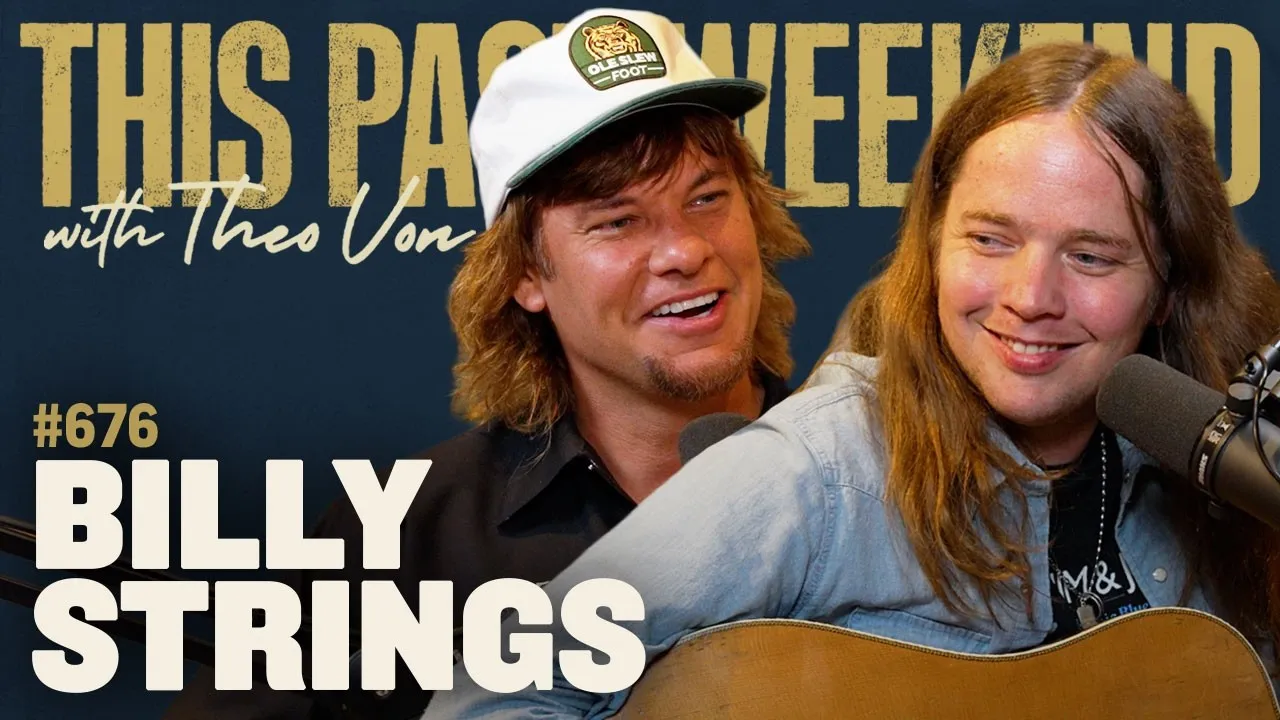 WATCH NOW↓
 The scariest thing Billy Strings says on This Past Weekend is not that his mother died from meth. It’s that when he found her stash afterward, his first thought was to save some for himself, “for like a rainy day.”
That sentence is a trapdoor. Not because it’s tidy recovery-podcast wisdom, the kind where everybody leaves with a sponsor, a serenity prayer, and a new water bottle. It’s the opposite. Strings tells the story in a way that makes him look worse than a PR-trained celebrity would ever allow, which is exactly why it hits. The claim is ugly, specific, and credible because it doesn’t flatter him.
I was in Australia when I found out that she died from an overdose. I was in Australia on tour. I still had no idea what happened. I was like, was it an aneurysm, a heart attack? Like what the hell happened? And then I got her autopsy and her um her papers back and her um her death certificate and it said methamphetamine intoxication was the cause of death.
Strings is not exactly a stranger to darkness. His public story has always had the gothic Americana goods, childhood instability, drugs around the house, old-time music as escape hatch, guitar as lifeboat. But there’s a difference between a backstory and a confession. Backstory can become brand. This is messier than brand.
He says that after returning home, he went to his mother’s house and started digging through her bedroom. He found the stash. Not the homemade Michigan meth he remembered from earlier years, the local “shake and bake” stuff, but clear crystal, the Breaking Bad visual burned into every American brain. Then the addict math began.
dude, you want to know what the first thought that went through my head was? Was like, man, I should just take a little bit of this and put it aside for like a rainy day.
The addict brain doesn’t care about symbolism
There’s the whole sick punchline of addiction. A normal person sees evidence. An addict sees inventory. This was not some abstract drug PSA. This was the substance that killed his mother, sitting in his hand, and his brain still tried to turn it into emergency supplies.
Theo Von, who has his own radar for the insane little negotiations addiction makes with the self, doesn’t over-polish the moment. He recognizes it immediately. The story doesn’t need a TED Talk garnish. The horror is already sitting there in a vial.
I called him and I was like, “Man, can you have one of your boys come just grab this stuff? Like I don’t I don’t want to put it in the trash can cuz I’ll go digging back through there later or my dad will or something or somebody will or I just needed to get like actually dispose of it, you know?”
That’s the smart part, and maybe the least cinematic one. He doesn’t flush it dramatically while thunder rolls over a Michigan cornfield. He calls a police officer friend from high school and asks him to get it out of the house. It’s not saintly. It’s logistics. Recovery, at its least Instagrammable, is often just arranging the room so Future You has fewer ways to wreck Present You.
Strings even lets the contradiction sit there: his mother, he says, would have hated him calling the police. That detail is pure family tragedy, almost too perfect. The son honors the dead mother by betraying one of her rules because the rule might get the living killed.
The weed story is the same story with a crib in it
The episode’s other addiction story is less lurid but just as revealing. Strings says he quit smoking weed in December after realizing he couldn’t even make a 20-minute grocery run without wanting his vape pen. Then came the bigger rupture: his son got sick, and Strings went upstairs to work on music while getting high.
when I came back downstairs, my son had gotten worse. Like he was like lethargic. Like we couldn’t even get his attention. We had to bring him to the hospital and that was the last time I smoked right there.
This is where the celebrity recovery arc usually gets too clean, but Strings keeps stepping on the rake. He says he smoked every day since he was 11, and that the one year he couldn’t smoke because of probation, he was doing acid instead. That’s not a wellness rebrand. That’s whack-a-mole with a nervous system.
Fatherhood, though, seems to have given him a new hierarchy. He talks later about his son River changing his relationship to performance, making music less life-or-death because the actual life-or-death thing is now at home. For a musician who built a career by gripping the guitar like it was the last branch over a ravine, that’s a serious shift. The guitar is still his best friend. It’s just no longer God.
Billy Strings keeps choosing the hard detail
The strange thing about the episode is how easily it could have become a victory lap. Strings has the credentials, the three Grammys, the tour, the new album, So Much for Goodbyes. He even tells a tremendous Bob Dylan story, complete with Dylan asking him to play “All Along the Watchtower,” then walking into his green room afterward and somehow making the oxygen file a missing-person report.
But the real center of gravity is his mother. Her artwork is on the new record. Her music taste shaped him. Her death still shows up in his dreams like a bill collector. He describes her as a wild, psychic, outlaw artist, a woman who would hitchhike to his shows and appear in his green room asking for a hotel room. That could be mythmaking. Then he tells you about the stash, and the myth gets blood on it.
There’s a temptation to treat famous addicts as either cautionary tales or inspirational posters. Strings is neither here. He’s a man describing the split second when grief, inheritance, chemistry, and habit all reached for the same little vial. If you’ve ever made a rainy-day plan with the thing that was ruining you, this one won’t feel like gossip. It’ll feel like a mirror you wish somebody had turned around sooner.
- What did Billy Strings say happened after his mom died?
- He said he was in Australia on tour when he learned his mother had died, and later saw paperwork listing methamphetamine intoxication as the cause of death. When he went through her room, he found pipes, bags, vials, and crystal meth.
- Did Billy Strings say he wanted to keep some of his mom’s meth?
- Yes. He said that while holding the drug that had killed his mother, his first thought was that he should save a little for a rainy day. That is the point of the story, not shock value, but the humiliating speed of addictive thinking.
- Why did Billy Strings quit smoking weed?
- He said two moments pushed him there: realizing he didn’t want to go to the grocery store without his vape pen, and then feeling absent when his sick son got worse while he was upstairs getting high. He said that hospital scare was the last time he smoked.
Joey Diaz says 19 years off cocaine gave him more than his first 44 years
Diaz turned a filthy, funny hang with Theo Von into a blunt sermon on sobriety, regret, and what finally showed up after the bag left.
Jeff Bridges says a Big Lebowski fan theory claims Donnie never existed, and he thinks they might be right
The Dude himself has been sitting with a theory that would rewrite everything you thought you knew about bowling night.
Matt Rife Came to Talk Comedy and Ended Up Eulogizing Ralphie May
The crowd-work king of Netflix stops by Theo Von's podcast and spends the best hour of the episode grieving a mentor most people forgot to miss.
John Mulaney Tells Theo Von About the Gorilla in His Head
Two comedians who have spent serious time in the wreckage compare notes on cocaine, sobriety, and chasing the version of yourself that existed before things got dark.
The circuit, read weekly. No noise.