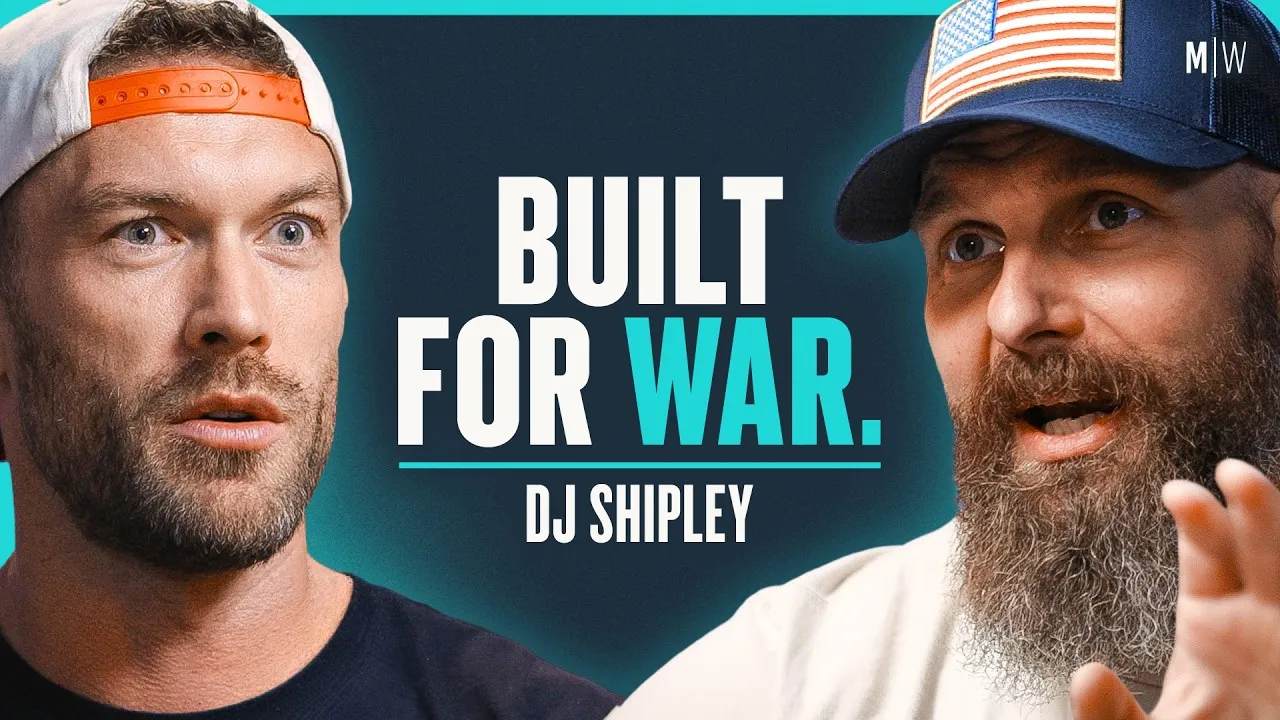
DJ Shipley says he drove to a beach with a pistol to kill himself the same day he came back from an ibogaine trip in Mexico
The Modern Wisdom episode that starts as a SEAL career debrief ends somewhere most podcasts never go.
Listen on YouTube
 WATCH NOW↓
 DJ Shipley came home from five days of ibogaine and 5-MeO-DMT in Tijuana, walked into his business, found every item he owned packed into thirty boxes stacked floor to ceiling in his office, grabbed his pistol from the armory, and drove twenty minutes to a dead-end road on a private military beach to shoot himself. His wife had been tracking his phone. By the time he pulled in and put on a song, giving himself until the last note to live, she was already there, having sent other wives ahead to surround the vehicle. That is where this episode goes. Not as a metaphor. As a sequence of events on a specific afternoon in Virginia Beach.
The Modern Wisdom formula is usually: impressive guest, punishing career, hard-won lessons, actionable takeaways. This episode starts that way. Shipley is articulate and funny about the absurdity of elite military life, the 30-minute recall windows, the divorce rate that exceeds 100 percent because guys remarry and run it back, the fairy tale that dissolves the moment you get out and realize no one will pay you to assault a cruise ship. Host Chris Williamson is good at this format, and for the first hour they are cooking. Then Shipley starts talking about the transition, and the episode changes shape entirely.
I’ve spent my entire adult life developing a skill set nobody wants. What am I supposed to do now? I don’t know how to do anything.
The Part Nobody Prepared Him For
Shipley joined the Navy in 2002, made it to the tier-one side by 2010, and retired in August 2019. Nine years of being on a 30-minute recall. Uppers and downers and pain meds stacked so high that a new doctor at Walter Reed told him the combination would give him a stroke. He went through a 31-day medical detox, pissed himself in a hospital bed thinking he had food poisoning, came out the other side, and then got electrocuted in his backyard on Father’s Day while burning skateboards with a microwave transformer he had wired into jumper cables. The electricity shattered his collarbone, blew exit wounds in his palms, his thighs, and next to his tailbone, shot him across a standing puddle, and a burn unit nurse later told him she was surprised he still had a penis. He treats this story the way a reasonable person treats a bad week. Just a thing that happened. The detail lands because he is not performing toughness. He genuinely does not register it as remarkable.
The suicidal ideation, though, he does register. He names it plainly: every day, all day, from roughly 2013 to 2020 or 2021. Both while active and after retiring. He describes sitting in his guest room with a trash bag and a pistol, planning to put the bag over his head so his wife could resell the house. He says he told almost no one, and that when he finally disclosed it during an ibogaine circle in Tijuana, surrounded by guys he had spent a decade with, every single one of them said me too.
No one ever stood up, got in front of the microphone with the bright lights on and said, ‘It’s okay not to be okay.’ No one ever said it to me. And we talked about everything. Not that.
The Medicine, the Affairs, and the Phone Tracking
Ibogaine, for anyone who missed the last five years of veteran wellness discourse, is a psychoactive compound derived from the root bark of a West African shrub. It is illegal in the United States. Clinics operate in Mexico. The veteran community has been pushing hard for federal research, and Trump signed a bill to fast-track it earlier this year with former SEALs visibly present at the signing. Shipley is not a dispassionate advocate. He has been down multiple times, has taken other guys down, and appears in a Netflix documentary about the treatment called Waging War. His pitch is not subtle.
I dipped two cans of Copenhagen every single day from the time I was 18 up until that morning. Every single day. I dipped two cans of Copenhagen. When I woke up from ibogaine, I’ve never touched it again.
The ibogaine story would be compelling enough on its own. What makes it genuinely hard to look away from is the timing. While Shipley was in the ceremony, his wife hacked his phone and found out about multiple affairs, including a pregnancy. She had five days to retain a lawyer, box up his belongings, and file for divorce before he landed back in Norfolk. He came through the border, turned his phone on in Atlanta, and watched his Instagram password change in real time. The beach parking lot, the pistol, the song he chose as a countdown, Experience by Ludovico Einaudi, his wife appearing at the end of that dead-end road because she had been watching his location the entire time. He recounts this in the kind of linear detail that only comes from having worked through it many times, in therapy or in medicine or in both.
Is the ibogaine claim true? The addiction-interruption research is real, the PTSD symptom reduction data is promising, and the veteran community’s results are documented enough that they moved federal policy. Whether it works the way Shipley describes, wiping every addiction in a single session, killing the ego so completely that a man who could power through ketamine could not steer the experience at all, that is harder to verify. What is not hard to verify is that Shipley is still here, is off every medication, and describes his marriage as the best thing in his life. The before and after he presents is not a testimonial. It is a survival story with receipts, and the receipts are in a Netflix documentary you can watch tonight.
The episode is three hours long. Most of it is excellent. The stuff on tier-one culture, the draft system, the physics of buying down risk through repetition, why special operations feels more like a professional sports team than a military unit, all of that is the best version of a SEAL conversation. But none of it is why you will remember this one.
Angela Duckworth says successful people don’t use willpower
The author of Grit has not disowned effort, but she is now arguing that white-knuckle discipline is the worst way to build a life.

Tim Urban says the black hole era lasts so long you would need 1.4 billion observable universes packed with timeline ribbon to measure it
The Wait But Why writer turned far-future cosmology into a craft-store nightmare, and the math is mostly the point.
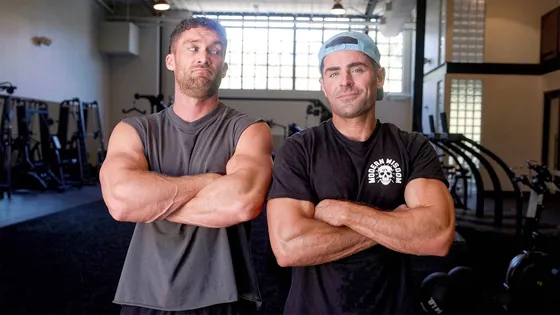
Zac Efron says eating too much salmon during The Iron Claw prep gave him mercury poisoning
Efron says the 6,000-calorie bulk for The Iron Claw pushed him from a 29 waist to a 34, up to 205 pounds, and into a fish problem.
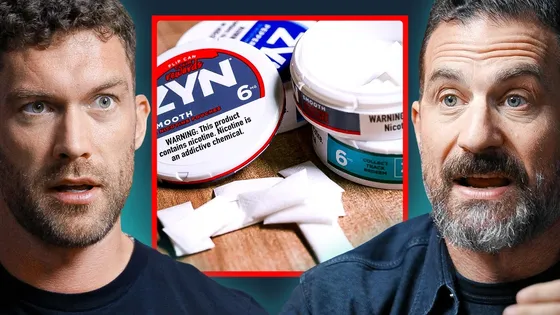
Andrew Huberman says daily nicotine pouches don't boost your brain, they just fix withdrawal
Huberman's rule is brutally unfashionable in the pouch era: if you want nicotine to help performance, don't make it a habit.
The circuit, read weekly. No noise.