Jane Curtin Never Begged for It, and That's Why She Lasted
The original SNL anchor on improv, Lorne Michaels, Gilda Radner, and the one rule she never broke.
Listen on YouTube
 WATCH NOW↓
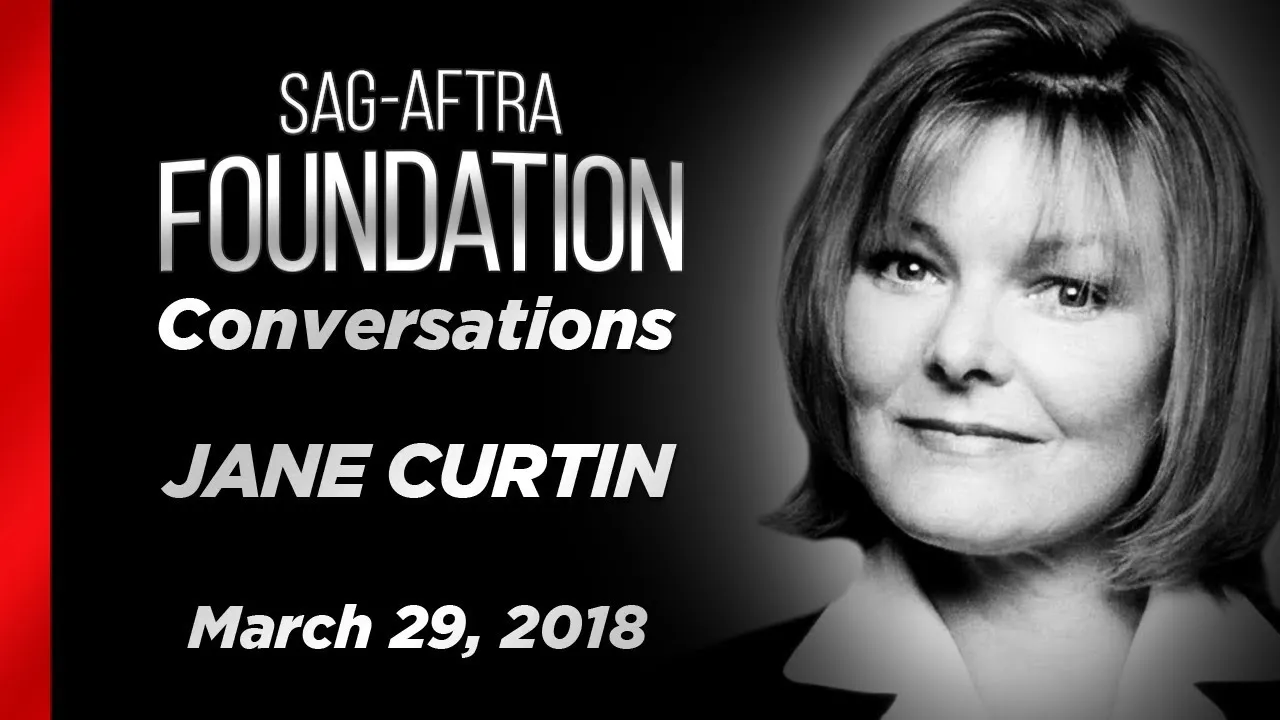
 Jane Curtin walked into her SNL callback with nothing prepared. No material, no bit, nothing. She was literally on her way out the door when she remembered a tape she had in her purse, grabbed Gilda Radner in the hallway, explained the piece in thirty seconds, and went back in and got the job. The moral she draws from this is practical and a little funny. The larger moral, the one that runs through an hour-plus of career retrospective, is something sharper: Curtin never once performed for the people who could give her things. She just did the work and waited for them to catch up.
That is, genuinely, a radical posture for someone who spent years on one of the most politically treacherous stages in television history. The SNL writers room in the late seventies was a place where you either showed up Tuesday night and fought for airtime or you didn’t exist. Curtin stopped going. She’d attend the read-through, get put in two or three pieces, and call it sufficient. She was right that she probably wouldn’t have gotten more by hustling. She was also, by her own admission, not a salesperson. Her proof: one summer doing debutante community service at a thrift store on Charles Street in Boston, she sold exactly one spoon.
Just let me play. Don’t make me beg for it. Just let me play. That’s all I care about.
The Lorne Problem
Curtin is careful without being dishonest about Lorne Michaels. He communicated with her through Gilda. That was the arrangement. It wasn’t passive aggression exactly, it was just the system that evolved after she complained about John Belushi coming into her dressing room uninvited and nothing changed. Lorne, she says, would eventually get to a point in conversation, but you’d be through half an hour of name-dropping first. She didn’t have time. She had a dog to walk.
So when Lorne wanted her to open her shirt on Weekend Update to do a Connie Chung bit, Gilda carried the message. Curtin said sure, no problem. The bit worked. That’s roughly the level of institutional dysfunction she was operating inside, and she managed to turn it into some of the most deadpan, controlled television comedy of the era. Weekend Update became hers after Chevy Chase left, partly because she’d done enough commercials to be fully comfortable in a direct address to camera, and partly because herb Sargent, who she adored and credits generously, made her his collaborator.
As long as I could be Herb’s voice, I was really happy. Because he was really smart.
What She Actually Learned From Improv
Curtin stumbled into improv the way most good things happen, by tagging along to a friend’s audition and raising her hand when they asked if anyone else wanted to try. Her friend Amy didn’t get the spot. Curtin did. Then she spent three months in the background not saying a word, watching people who actually knew what they were doing. Harvard and BU theater majors, voice majors, people on their track. She was just the woman in the back thinking, why am I here, but wanting to be so badly.
After five years with the Cambridge improv group The Proposition, she’d learned improv’s central lesson so well it became a problem. She was always on. Ready. Brilliant at cocktail parties in the worst possible way. The solution wasn’t to quit comedy. It was to reinstate the internal editor that improv specifically trains you to remove. She calls that realization the moment she decided to become an actress, not an improviser. It’s a distinction most people in the field don’t bother to make.
The longevity question comes up near the end, framed as mild surprise that she’s outlasted most of her original castmates professionally. She doesn’t have a grand theory about it. The closest she gets is this:
I guess I didn’t really expect much, so I was willing to take whatever they would give me, because I wanted to stay in this business and I wanted to do what I do.
Which sounds modest but is actually a precise description of a survival strategy. Low ego about the business, high standards about the work. She did the Love Boat because her friend Fred Grandy asked and she knew he’d do the same for her. She did Third Rock from the Sun because Bonnie Turner called while she was using two bottles of red wine as hand weights in a Virginia hotel room, playing Mary Todd Lincoln opposite Kris Kristofferson, and the pilot sounded more fun. She’s been doing it that way for fifty years. It works.

Dan Aykroyd and John Belushi in 1978: Two Guys Who Weren't Sure the Show Would Last Seven Episodes
A newly surfaced interview captures the Blues Brothers at 26 and 29, still sleeping on foam slabs and genuinely unsure if any of this was going to work out.
Chevy Chase Walked Into Bill Maher's Living Room and Refused to Leave
At 79, the original Saturday Night Live star is still the funniest guy in any room, and he knows it.

Kristen Wiig Tells Amy Poehler She Packed Up Her Car After a Dollar-a-Minute Psychic Told Her to Move to LA
Two SNL legends talk Groundlings, ghosts, Real Housewives of Salt Lake City, and the particular horror of being asked to tell a story at a dinner party.
Bill Hader and Ted Danson Bond Over the One Thing Funnier People Are Supposed to Hide
Two of the most decorated comedy actors alive spend ninety minutes comparing anxiety attacks, SNL nightmares, and the specific horror of bombing in front of a Sarah Palin crowd.
The circuit, read weekly. No noise.