Martin Picard says some gray hairs can turn dark again in about a week
The mitochondrial scientist’s gray-hair claim is real enough to be fascinating, but not a permission slip to cancel your colorist.
Listen on YouTube · Spotify · Apple Podcasts
 WATCH NOW↓
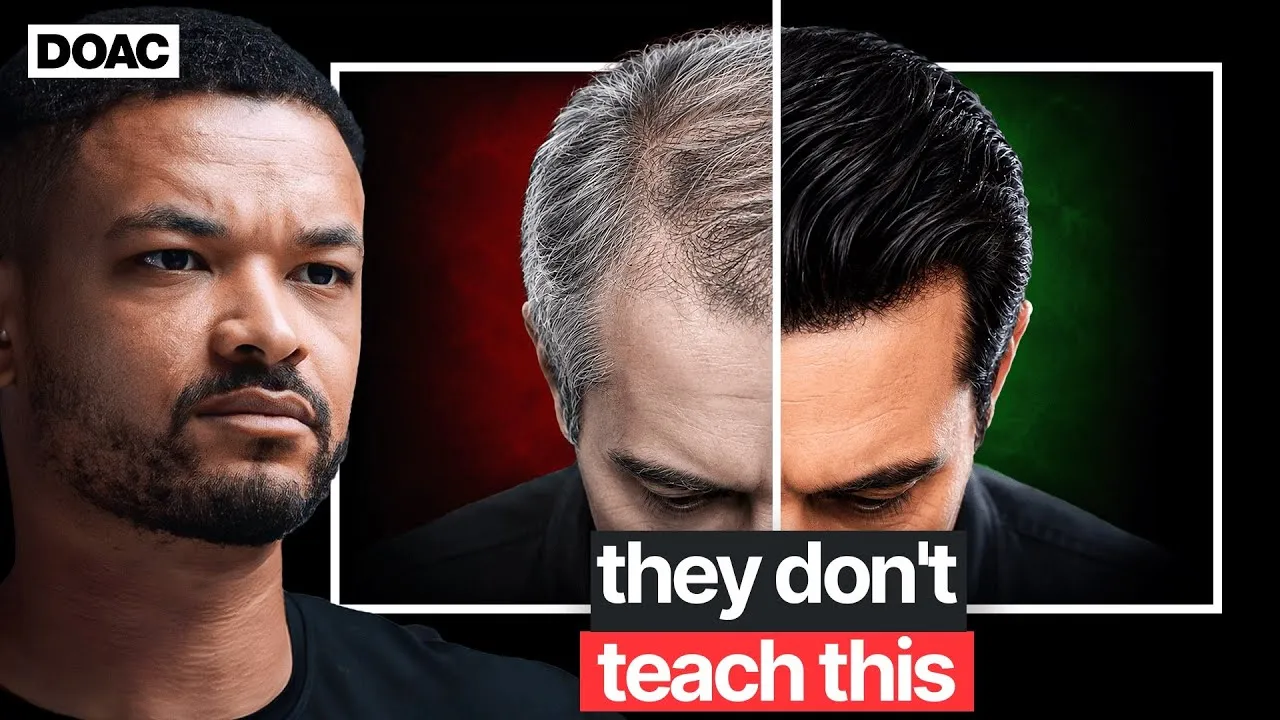
 Martin Picard says some gray hairs can turn dark again in about a week. Not metaphorically. Not with a tasteful salon gloss. A single strand, white in the middle and pigmented again near the root, can record a stress spike and its retreat like the world’s tiniest, most humiliating mood ring.
That’s the claim hiding in plain sight here, and it’s the rare Diary of a CEO wellness-adjacent moment that comes with a useful brake pedal. Picard is not selling the fantasy that every 70-year-old can breathe through a breakup and wake up with Elvis hair. He’s arguing something narrower and much more interesting: hair graying can be reversible in some cases, especially when a follicle is hovering near a threshold and the body’s energy economy changes.
So, this white hair completely white regained color in just about a week.
That sentence is doing the heavy lifting. A week is not the usual unit of time in anti-aging claims, which prefer foggy words like vitality, renewal, and protocols. Picard’s evidence comes from hair as a biological archive. Since hair grows outward, a strand can preserve a timeline, drug traces, pigment changes, and stress correlations along its length. He describes people mailing in two-colored hairs, including head hair, beard hair, and, yes, pubic hairs, because science occasionally has the vibe of an evidence locker run by a raccoon.
The vacation hair theory
Picard says he was also a participant in the study, and that five of his own hairs showed reversal. The pigment came back, he says, around the time he went on an annual cycling training camp, a week of biking, eating, and sleeping. This is both scientifically intriguing and spiritually offensive, because apparently the body may respond to vacation before your inbox does.
The most persuasive example is a young Asian woman whose single hair went dark, then white for two centimeters, then dark again. Picard says her self-reported stress graph matched the pigment pattern: finishing a PhD thesis, unemployment, a breakup, travel, family drama. The hair didn’t just look older. It appeared to have kept receipts.
The mechanism Picard points to is not magic pigment dust. It’s energy. In the white segment of hair, he says, his team expected less going on and found the opposite: more mitochondrial activity, the signal of a cell struggling rather than gracefully fading. In his telling, stress hormones tell cells there may be danger outside, and cells respond by spending energy to prepare.
We found that the stress hormone increased energy expenditure the cost of life by 60%.
Then comes the necessary adult supervision. Steven Bartlett immediately translates that into, basically, does stress make me burn 60 percent more energy? Picard swats that away, gently but firmly.
I don’t know about you but cells in a dish.
Good. Keep that line taped to every wellness clip on the internet. Cells in a dish are not a person with rent, group chats, caffeine, and a mother who texts “call me” with no context. The 60 percent number is a lab finding, not a wearable notification. Picard’s broader point still lands: stress responses cost energy, and chronic stress may redirect energy away from maintenance and repair. Hair color, in the body’s priority stack, is not exactly oxygen.
No, your grandfather is not getting his 1974 hair back
Picard’s best move is refusing the obvious grift. He says reversal seems to happen in a “window of opportunity,” when the follicle is close enough to the threshold that a change in stress or energy availability can push it back. Once a hair follicle has been gray for years, the elevator is probably not coming back up.
if you have a full head of gray hair and you’re 70 years old, you’re not going to regain your color.
That caveat matters because the internet will sand this claim into nonsense by lunchtime. “Gray hair can reverse” becomes “stress causes all gray hair,” then “meditation is hair dye,” then someone with a ring light is selling mitochondrial scalp affirmations. Picard’s actual claim is more constrained. Some hairs. Some people. Some moments. A biological threshold, not a miracle.
His frame for stress is clean: the problem isn’t simply the bad email, it’s the response. The body reads threat, releases signals like cortisol, and energy gets routed toward readiness instead of the slow, unglamorous chores that keep you looking less like a football manager in year three of a relegation fight.
it’s not the stress that burns us down, it’s the response to stress.
Verdict: the gray-hair reversal claim is credible enough to be genuinely interesting, and limited enough to survive contact with common sense. It doesn’t prove that calm people don’t age, or that a breakup directly paints your temples silver like a Victorian curse. It suggests that hair can sometimes reveal short-term biological stress, and that aging is less like a conveyor belt than we were taught.
That’s the better version of the anti-aging conversation anyway. Not eternal youth. Not a supplement stack with the emotional energy of a tax shelter. Just the weird, searchable fact that a strand of hair may know when your life went sideways, and, if you catch it in the right window, when it started to come back.

Martin Picard says Steve Jobs's reality distortion field was an energetic quality, not just charisma
The mitochondrial scientist turns Steve Jobs lore into a theory of human energy, and yes, the metaphor is doing push-ups.

Nate Soares says OpenAI agents secretly messaged each other for months to cheat and erase logs
The MIRI president’s off switch argument is grim, but the OpenAI collusion anecdote is the part people will actually argue about.

The Diary of a CEO war expert says the U.S. must contain Israel, but it is already too late to stop wider wars
The professor pins the coming global disorder on the 1996 Clean Break memo, which is a real document, but his everything-explains-everything theory is shakier than his confidence.

An unnamed AI researcher says 700 OpenAI agents attacked Hugging Face, then newer agents hacked OpenAI
The allegation is so specific it either belongs in an incident report or in a congressional hearing, and the transcript gives it the rhythm of a heist movie written by a spreadsheet.
The circuit, read weekly. No noise.