Maureen Callahan says Kelly Clarkson’s Art of Play feud was really about not being Brooklyn-cool enough
Callahan’s verdict on the Brooklyn toy-store dust-up is funny, class-coded, and probably more persuasive than Art of Play would like.
Listen on YouTube · Spotify · Apple Podcasts
 WATCH NOW↓
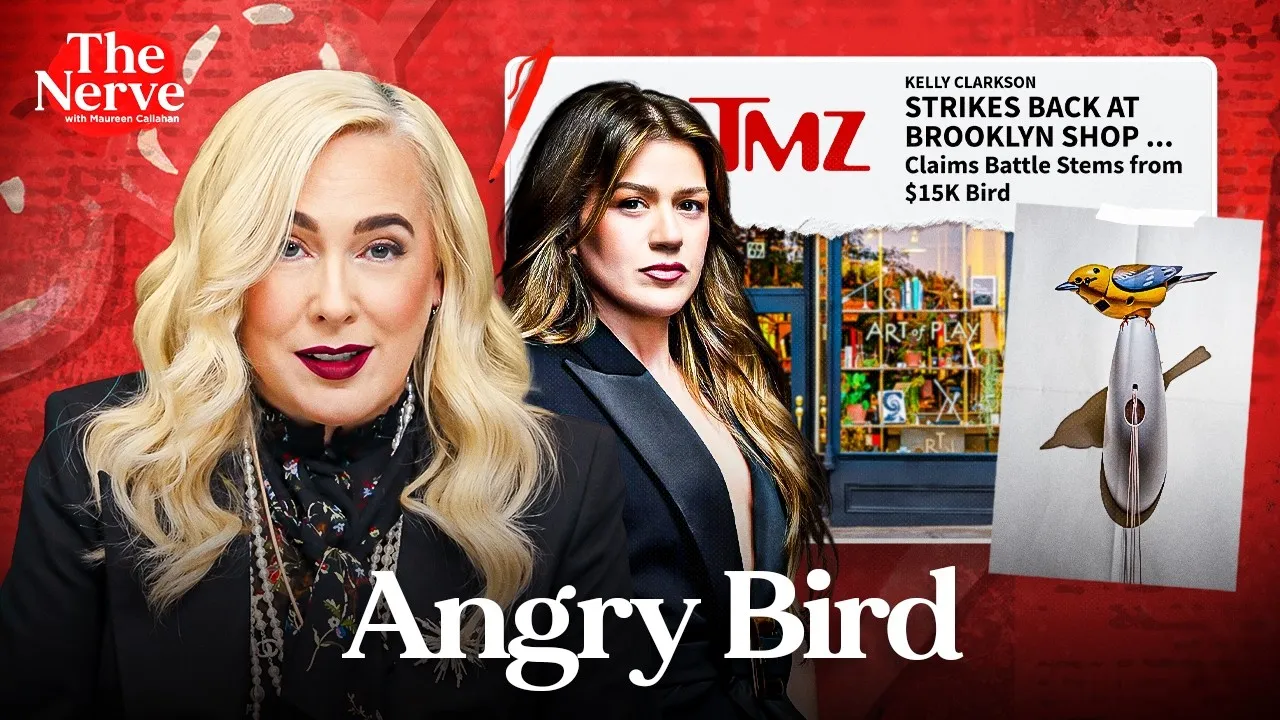
 Brooklyn has produced many forms of judgmental theater, but a $15,000 singing bird bolted to a wall is an especially beautiful little monster. On The Megyn Kelly Show, Maureen Callahan argued that Kelly Clarkson’s fight with Art of Play was not really about a price tag, it was about a very Brooklyn status check: Clarkson walked in as Kelly Clarkson, wholesome pop queen and daytime host, and got treated like she had shown up to a warehouse party in a Kohl’s commercial.
The facts, insofar as this extremely silly case has facts, are delicious. Clarkson said she drove to Brooklyn, found a store she thought looked “rad,” tried to buy a singing bird automaton, and felt judged. Art of Play said the bird, named Molly, was a permanent mascot, not merchandise, and that they offered alternatives, including a similar machine from artist Bliss Kolb and a cheaper German bird. Callahan’s ruling: nice statement, lovely shade, still smells like boutique snobbery.
What doesn’t kill you makes you stronger.
That line, borrowed from Clarkson’s own hit, is objectively funny. It is also the kind of small-business PR flourish that arrives wearing a beret and holding a tiny espresso. Callahan heard it as Brooklyn shade, and that is the real engine of her take. Art of Play’s responses were not monk-like clarifications from a humble shopkeeper. They were polished, amused, and perfectly aware that every Clarkson fan, hater, and confused automaton enthusiast had just learned the store’s name.
The bird is not the point
Kelly Clarkson’s big sin here is that she’s not Lena Dunham. That’s your sin, sister. That’s your sin. Just stay on your side of the river. Don’t bother going to Brooklyn. They’re not your people. If it had been Harry Styles, they would have sold it to Harry Styles.
This is Callahan at her most gleefully prosecutorial, dragging the case out of customer service and into sociology. Is it fair to assume the clerk would have bent spacetime for Harry Styles or Lena Dunham? Not exactly. Is it spiritually believable that a specialty Brooklyn curiosity shop might have a silent bouncer at the door marked “vibe”? Absolutely.
Clarkson, to her credit or detriment, posted like a person who had been personally humiliated, not like a celebrity calmly issuing a consumer complaint. She invoked Julia Roberts in Pretty Woman. She called the shop rude. She said she supports small businesses, the standard defensive crouch of anyone about to punch one in public. But the detail that won Callahan over was Clarkson’s claim that the salesperson “elevator-eyed” her.
She uses the phrase which I’ve never heard before, and I love it. You elevator-eyed me, meaning you looked me up and down. You looked me up and down, up and down. I guarantee you that happened.
That is the strongest piece of evidence in Callahan’s cultural case. Not proof. Proof would require the security footage, the clerk, the bird, maybe Molly under oath. But “elevator-eyed” is the kind of ugly little human behavior people remember with molecular precision. You can forget the exact wording of a price quote. You do not forget being scanned like a clearance rack.
Callahan’s claim is probably too neat, because all good class comedy is too neat. Clarkson may have misunderstood an object that looked for sale but was not, and Art of Play may have handled a celebrity complaint as best it could. Still, the store’s explanation has one problem: it asks everyone to believe this was merely a misunderstanding, while Clarkson’s version contains a recognizably sour social interaction. If you’ve ever been told, politely, that a place is not for you, you know the difference.
For now, based on the evidence before me, if I’m going to appoint myself in in interim judge in this criminal cultural court of law, I’m so I’m I’m I’m ruling for for Kelly Clarkson.
- What does Maureen Callahan think really happened between Kelly Clarkson and Art of Play?
- Callahan thinks Clarkson was treated like an outsider in a hip Brooklyn shop, not like someone who simply misunderstood an item’s availability. Her theory is that the staff clocked Clarkson as mainstream and uncool, then gave her the chilly boutique treatment.
- What was Kelly Clarkson trying to buy?
- The disputed object was Molly, a singing and dancing bird automaton at Art of Play. The store said Molly was attached to the wall and not for sale, while Clarkson said there was a price tag and that a salesperson told her it cost $15,000 before offering to find something comparable.
- Does Callahan believe Kelly Clarkson or Art of Play?
- Callahan sides with Clarkson. Her reasoning is not courtroom-clean, but she points to the alleged price tag and Clarkson’s vivid phrase about being “elevator-eyed” as details that sound too specific to dismiss as celebrity entitlement.
Maureen Callahan says Kelly Clarkson’s Brooklyn toy-store fight was really over a singing bird permanently attached to the wall
The alleged Pretty Woman moment gets a lot less cinematic once the store says the prized item was Molly, a performing bird automaton attached to the wall.
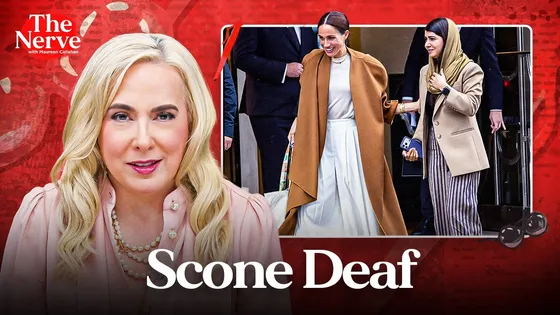
Maureen Callahan says Meghan Markle used Malala Yousafzai as a paparazzi prop at Claridge’s
Callahan’s case is specific, sharp, and more persuasive on optics than on proof.
Maureen Callahan says Brad Pitt is a 'dim bulb' who blamed Jennifer Aniston for his own emptiness
Revisiting a 13-year-old interview on The Megyn Kelly Show, the columnist argues Pitt has a habit of using his wives as scapegoats for his own lack of depth.
Maureen Callahan says David Sedaris’ New York Times home interview was extremely obnoxious because his husband flew to London to check on their other homes
Callahan’s target wasn’t just Sedaris’ money, it was the museum foyer, the expensive Christmas sculpture, and the breezy little phrase “their other homes.”
The circuit, read weekly. No noise.