Maureen Callahan says Paramount slapping Mark Ruffalo as anti-Semitic is Hollywood’s canary in the coal mine
The claim is not just that Ruffalo picked a fight with David Ellison, it’s that Paramount’s response signals a new studio posture toward anti-Israel celebrity politics.
Listen on YouTube · Spotify · Apple Podcasts
 WATCH NOW↓
 Maureen Callahan says Paramount’s public slap at Mark Ruffalo is a canary in the coal mine for Hollywood: studios may finally be done pretending celebrity Israel rhetoric is just harmless moral accessorizing. Her read on The Megyn Kelly Show is that the David Ellison era comes with a new rule for stars who accuse corporate power of complicity in “genocide” and “apartheid”: say it if you want, but don’t expect the company to sit there like a nervous publicist in a linen blazer.
The Ruffalo detail matters because he is not some fringe actor yelling into a ring light. He is the Hulk. He has made Marvel money, Disney money, giant-studio money. That’s what makes Callahan’s jab so pointed. She sees a star who benefited from the very studio ecosystem now throwing moral grenades at a corporate transaction involving Paramount and Warner Bros. Discovery, and she sees the company firing back almost immediately.
What is fascinating to me, Rob, is that this is this is a canary in the coal mine.
The specific flashpoint, according to the transcript, was a Variety piece in which Ruffalo attacked the merger and the Ellison family over Palestine. Paramount’s response, also described here via Variety, accused the rhetoric of invoking anti-Semitic tropes and said the company does not tolerate prejudice. That’s not a mild corporate “we respectfully disagree.” That’s a legal department wearing steel-toed boots.
The old studio move was silence. This wasn’t silence.
Callahan’s stronger point is not that Ruffalo is uniquely influential. It’s that the company moved fast, in public, and with moral language of its own. For years, big entertainment companies mostly treated star activism like bad weather: irritating, occasionally expensive, but safer to endure than confront. The fear was always the same. Don’t inflame the fan base. Don’t make the talent mad. Don’t turn a bad quote into a cycle.
Callahan thinks that math has changed. She also floats the nuclear version of the idea, that David Ellison could someday decide the whole Hollywood ecosystem is more trouble than it’s worth.
He might move them to Texas. I mean, it’s this is like quicksand. This isn’t shifting sands, this is quicksand.
That Texas line is the most Callahan part of the segment: vivid, a little apocalyptic, probably ahead of the evidence. Studios do not uproot decades of infrastructure because Mark Ruffalo got dramatic in Variety. But her larger instinct is sturdier. Hollywood bosses used to be faceless enough to absorb punishment. The Ellisons are not faceless. Larry Ellison is one of the richest men in the world. David Ellison is now a recognizable power player. Once the owner class has a name, it also has an ego. Ego answers back.
Rob’s defense of the punch-back
Rob, the other voice in the clip, buys the premise completely. His framing is that corporations once swallowed these attacks because responding seemed beneath them or too risky. Now, in his view, silence just trains people to escalate.
Two years ago, five years ago, a corporation would not publicly have responded to that. The game has changed.
There’s a clean conservative media argument here, and it’s one Megyn Kelly’s audience will recognize instantly: public consequences are not cancellation when the person facing them is a wealthy movie star with plenty of other options. Rob makes that distinction explicitly. This isn’t about removing Ruffalo from public life. It’s about denying him the old celebrity privilege of saying radioactive things while the institutions that pay him pretend not to notice.
I call this consequences, and I I it’s not cancel.
That’s the part of the segment with real juice. The Ruffalo fight is not just another celebrity politics flare-up. It is a test of whether antisemitism accusations, Israel-Palestine rhetoric, and merger politics now sit in the same volatile bucket. Callahan is right to notice the speed and severity of Paramount’s response. She overplays the industry-exile fantasy, but not the signal.
If she’s right, the next celebrity who reaches for “genocide” language in a fight with a studio may not get a crisis meeting. They may get a press statement with teeth.
- What did Maureen Callahan say about Mark Ruffalo and Paramount?
- Callahan argued that Paramount’s fast public response to Ruffalo was a sign that Hollywood’s old habit of absorbing celebrity political attacks in silence may be ending. She framed the dispute as a warning signal, especially because the company accused Ruffalo’s language around the merger of invoking anti-Semitic tropes.
- Why is David Ellison part of the argument?
- The dispute centers on the David Ellison-run Paramount enterprise and its reported merger fight, with Callahan treating Ellison’s camp as newly willing to defend itself in public. Her point was less about one press statement than about a possible new studio boss style: less nervous, more combative, more personal.
- Is Callahan right that this is a Hollywood turning point?
- She’s persuasive on the narrower point that Paramount’s public rebuke is unusually forceful. Calling it a full industry turn may be premature, since one fight with one actor does not rewrite studio politics. But it does show that celebrity activism around Israel is no longer guaranteed to be treated as cost-free brand theater.
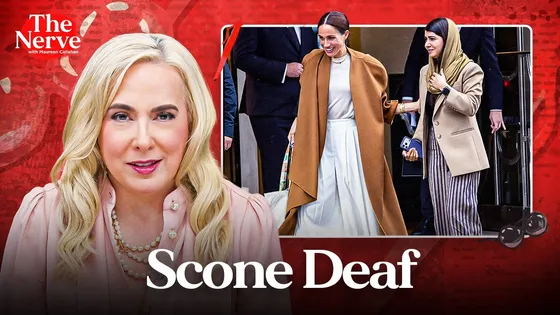
Maureen Callahan says Meghan Markle used Malala Yousafzai as a paparazzi prop at Claridge’s
Callahan’s case is specific, sharp, and more persuasive on optics than on proof.

Maureen Callahan says Brad Pitt is a 'dim bulb' who blamed Jennifer Aniston for his own emptiness
Revisiting a 13-year-old interview on The Megyn Kelly Show, the columnist argues Pitt has a habit of using his wives as scapegoats for his own lack of depth.

Maureen Callahan says David Sedaris’ New York Times home interview was extremely obnoxious because his husband flew to London to check on their other homes
Callahan’s target wasn’t just Sedaris’ money, it was the museum foyer, the expensive Christmas sculpture, and the breezy little phrase “their other homes.”
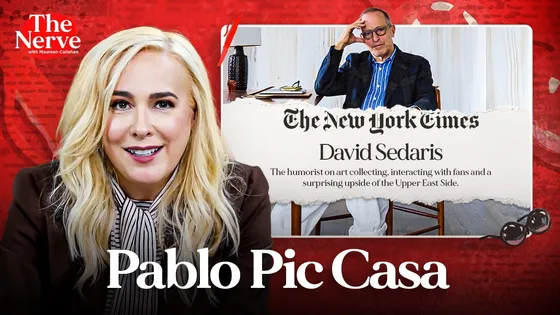
David Sedaris says he bought a $2.5 million New York penthouse for his Picasso
Maureen Callahan uses Sedaris's New York Times real estate profile as Exhibit A in the case that America's beloved literary crank has become a museum-grade rich guy.
The circuit, read weekly. No noise.