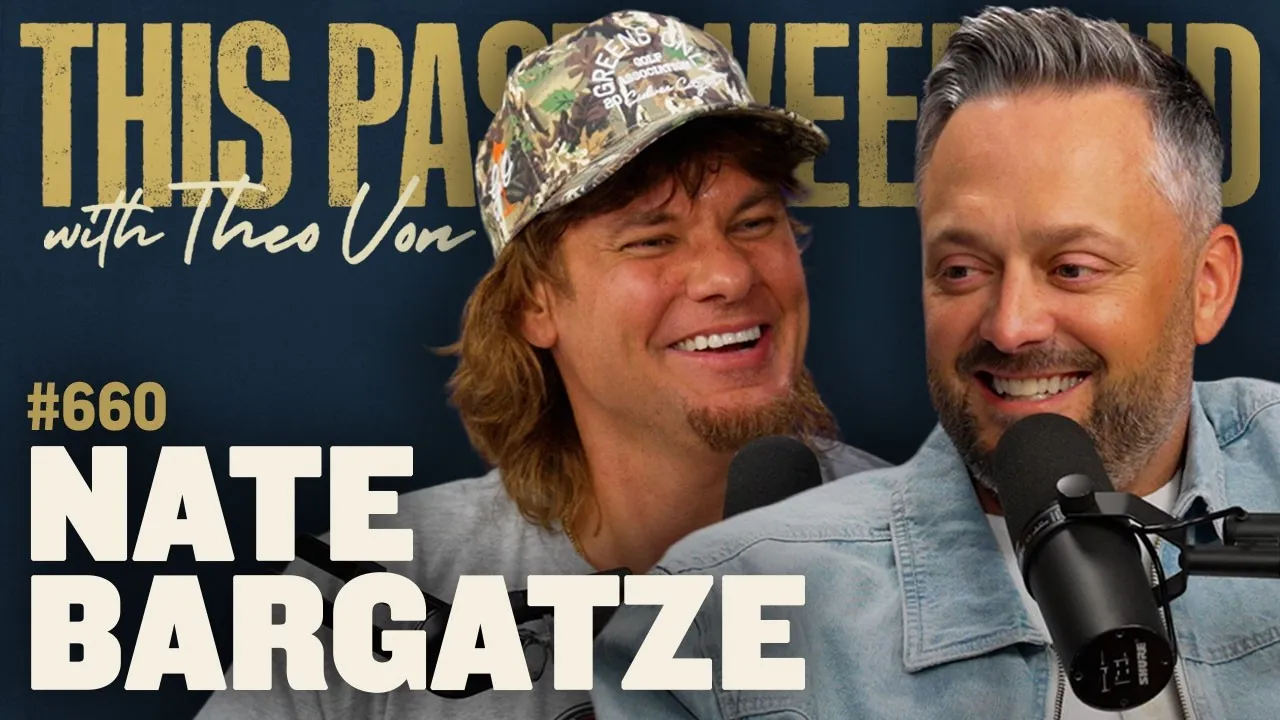
Nate Bargatze Is Building a Theme Park With His Own Money and He Knows It's Crazy
The cleanest comedian in the game comes on This Past Weekend to talk about his new movie, his Nashville theme park, and why he thinks stand-up is the last place you can hear a real person.
Listen on YouTube · Spotify · Apple Podcasts
 WATCH NOW↓
 Nate Bargatze is self-funding a $350 million theme park, and he is completely aware of how insane that sounds. He used to read water meters in Juliet, Tennessee. He lifted those little iron lids off the ground, typed in the numbers, and occasionally had to deal with a snake coiled on top of the gauge. Now he is flying to Hershey Park with a guy from a design firm called Storyland to ride roller coasters and evaluate the g-forces. The throughline is not obvious. But spend an hour with Bargatze on This Past Weekend and somehow it makes total sense.
Theo Von, to his credit, does not treat this as a novelty. He asks real questions about land acquisition, investor rounds, the infrastructure gap between Nashville and Atlanta, and whether the park will have a water element. Bargatze, for his part, is disarmingly honest about all of it. He doesn’t know the exact theater count for his movie opening weekend. He admits he’s paying for everything himself right now. He knows some people think it’s a vanity project. He keeps going anyway.
I don’t come from any world where I should be building a theme park. There’s nowhere in my growth of a child to high school, any of this that you would ever be at a point there’s nowhere that I should even had the success that I should have had.
The Trust Economy
The theme park is called Nate Land, and Bargatze has a specific answer for why it carries his name. It’s not ego. It’s accountability. The logic is direct: his audience already buys tickets to see him, they trust him, and that trust is the actual asset being deployed. Walt Disney put both his names in it. Bargatze wants to be the person on the hook if it fails. That framing is either humble or savvy, and honestly it’s both.
I need to sell the tickets. I need to keep the trust that I have with this audience. That’s on me. That’s not anybody else’s problem. I’ll do it. That’s what I feel has been bestowed upon me.
He traces the whole idea back to the night he sold out Bridgestone Arena in Nashville. 19,365 tickets. Almost exactly 20 years of touring compressed into one number. He stood there afterward and felt the thing comedians are not supposed to admit out loud: now what? Arenas were the goal. He’d done it. So he started Nate Land the production company, wrote The Bread Winner with Dan Lagana, and started paying people to do feasibility studies on a theme park that his hometown no longer has, because Opryland got turned into a mall in 1997. He worked at that park when he was 15. His dad did magic there. The circle is almost too neat, but he’s not selling a narrative. He’s genuinely working through it in real time.
Clean Comedy and the Last Unfiltered Room
Bargatze makes a real argument for why stand-up is more culturally durable than it looks right now. His version of it has nothing to do with the algorithm. His point is simpler: a live performance cannot be AI-generated, cannot be over-produced, and if the comedian doesn’t curse, a parent can leave it on in the car without their kid looking up from the back seat. That’s a market position, but he arrived at it through his upbringing in a Southern Baptist household, not through brand strategy. He doesn’t curse because he never started. The consistency is actually the product.
There’s not a place where you go to get a pure voice anymore. That’s why I mean I hope young entertainers, I hope stand-up comics that are getting into it get into it and they get in there and create an act because you’re going to be the only place you could maybe be actually hearing a real person.
The conversation also takes a long detour through Davy Crockett, Daniel Boone, Spike TV, the Markiplier horror movie Iron Lung that grossed $50 million on a $4 million budget, Betty Crocker as potentially the original catfish, and O’Charley’s dinner rolls and whether they changed the sugar content. This is not padding. This is the show. Theo and Bargatze are two comedians who came up reading water meters and selling Italian food door to door, and they sound like it. The tangents are the point. When Bargatze finally circles back to explain that he visualizes Nate Land easily, that the doors keep opening, that he feels called to it, it lands because you’ve spent an hour watching a guy who knows exactly how to get lost and still find his way back.
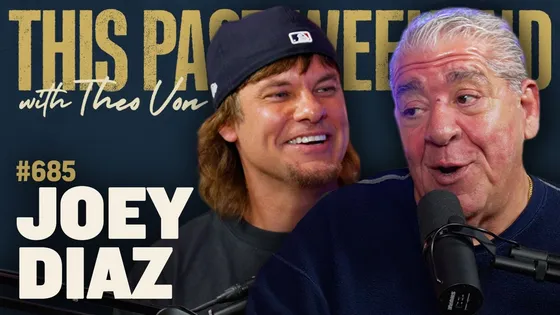
Joey Diaz says 19 years off cocaine gave him more than his first 44 years
Diaz turned a filthy, funny hang with Theo Von into a blunt sermon on sobriety, regret, and what finally showed up after the bag left.
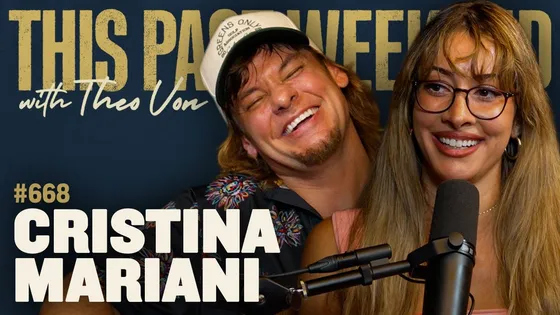
Cristina Mariani says her parents have never come to see her perform comedy
On This Past Weekend, the Austin stand-up turned a family boundary into the episode's real punchline, and the punchline is sadder than it sounds.
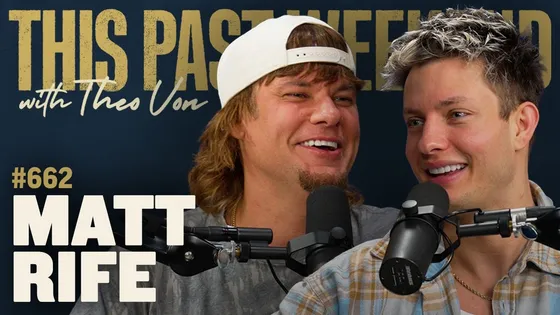
Matt Rife Came to Talk Comedy and Ended Up Eulogizing Ralphie May
The crowd-work king of Netflix stops by Theo Von's podcast and spends the best hour of the episode grieving a mentor most people forgot to miss.
Tina Fey on Athletes, Almonds, and Why She Can't Get Her Kids to Watch 30 Rock
The Kelce brothers haul in Tina Fey and Nate Bargatze for an episode that somehow covers manspreading at MSG, a Cleveland Guardians ownership stake, and the origin of Nashville hot chicken.
The circuit, read weekly. No noise.