Sean Stone says Osama bin Laden was CIA and the man killed in Abbottabad may have been a dummy
On the Danny Jones Podcast, Stone turns the official bin Laden story into a full intelligence-op theory, but the most explosive part is also the least proven.
Listen on YouTube
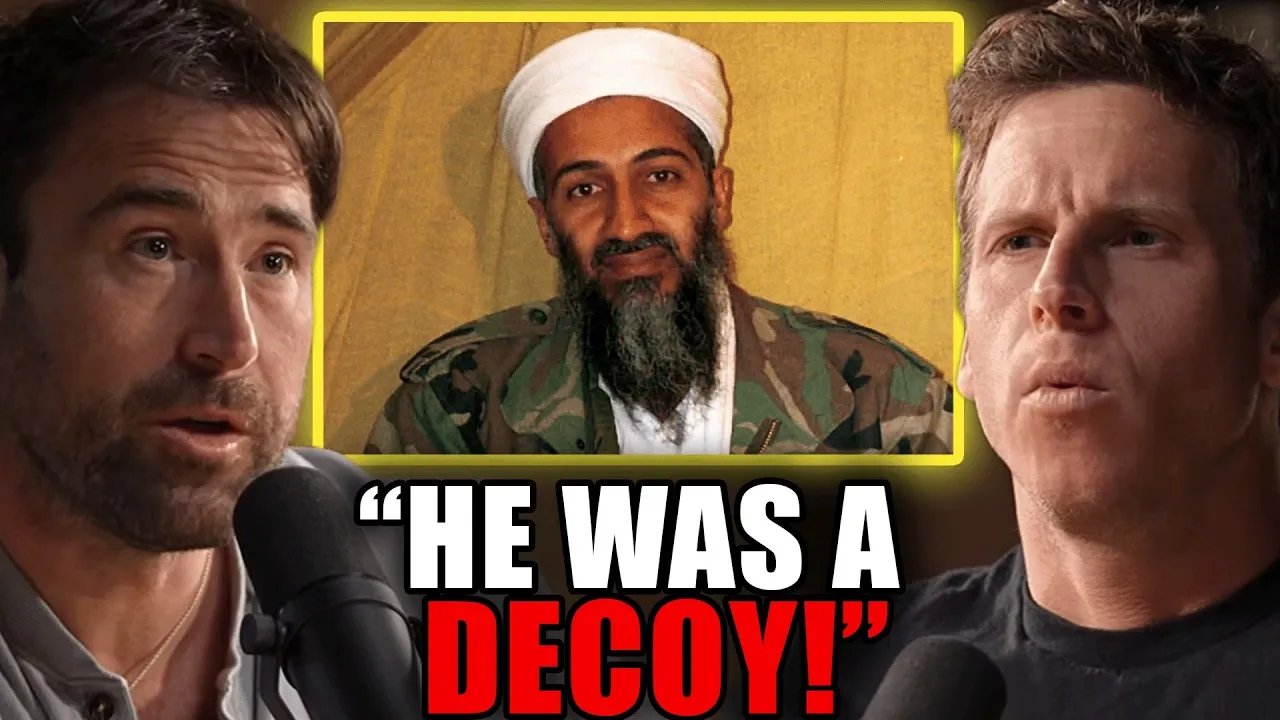 WATCH NOW↓
 Sean Stone’s claim is blunt: Osama bin Laden was CIA, possibly under the name Tim Osman, and the man killed in Abbottabad may not have been the man America was sold. It is the kind of sentence that doesn’t walk into a podcast studio so much as kick the door open wearing night-vision goggles.
On the Danny Jones Podcast, Sean Stone doesn’t merely say the official bin Laden story is suspicious. He says he isn’t even sure who “bin Laden” is, which is either a profound ontological position on intelligence cutouts or the most podcast-brained thing a man can say before breakfast.
I don’t know who Bin Laden is.
That line arrives after Stone compares bin Laden to Lee Harvey Oswald, arguing that multiple Oswald sightings before the Kennedy assassination suggested a patsy was being preloaded into the story. When Stone reaches for Oswald, he isn’t wandering far from the family business. His father, Oliver Stone, made JFK, the grand cathedral of American assassination suspicion. Sean’s version of the move is to take that same shadow-box logic and apply it to the War on Terror.
The Tim Osman rabbit hole
The searchable bit, the phrase that will send people to old forums and worse YouTube thumbnails, is Tim Osman. Stone says some people believed bin Laden operated under that name while working with U.S. intelligence. This is not a new claim. It has floated around conspiracy circles for years, usually attached to the broader argument that the CIA did not merely arm anti-Soviet fighters in Afghanistan but directly cultivated the future face of al-Qaeda.
And with Bin Laden, I feel like I you know, he was CIA in the at some point between the ’80s and ’90s. Some people saw him as Tim Osman.
Here is where the claim needs separating from the fog machine. The U.S. absolutely backed anti-Soviet forces in Afghanistan, largely through Pakistan’s intelligence service, and the blowback story of the Afghan jihad is a real part of modern history. But “the CIA supported forces in the region” is not the same as “Osama bin Laden had a CIA identity.” Stone collapses that gap with confidence, which is great radio and lousy evidence.
The episode’s logic is less courtroom brief than conspiracy weather system. Oswald. Bin Laden. ISIS. British clerics. Iran. Saddam Hussein. Ahmed Chalabi. Curveball. A whole sky of connected storms. Some of those clouds are real. Governments do lie. Intelligence agencies do cultivate assets. The Iraq War was sold with garbage claims and exile grifters. Danny Jones even brings up a recent Scott Horton appearance about Chalabi, which points toward a more grounded antiwar critique: bad incentives, bad intelligence, useful liars, catastrophic policy. Stone’s version goes further. The enemy is not exploited after the fact. The enemy is manufactured.
The Abbottabad suspicion is the easy part
Stone’s strongest rhetorical move is not Tim Osman. It is the burial-at-sea question. The U.S. killed bin Laden in Pakistan in 2011, then buried his body at sea. For people already inclined to distrust the national security state, that detail has always been a gift-wrapped invitation to doubt. Stone takes it.
I think it’s just an intelligence operation.
Jones is with him on the weirdness, or at least willing to say the official explanations never satisfied him.
Yeah, all the all the answers I’ve been given to that question when I’ve asked it never seem to add up.
That is the part of the conversation most likely to land with normal listeners, not just the black-helicopter alumni association. Even people who accept the official account can understand why “we killed the world’s most wanted man and quickly disposed of the body” sounds like a plot device written by someone trying to get out of Act Three. Suspicion is not proof, though. It is the opening mood. Stone treats it like the closing argument.
A real history, stretched until it snaps
Stone’s big framework is that the national security state needs enemies. After the Soviet Union faded, he says, Islam versus the West became the next great organizing conflict. He talks about Samuel Huntington, Zbigniew Brzezinski, the “clash of civilizations,” Yugoslavia, Afghanistan, Iran, and religious fault lines as the easiest match to strike. That is not nonsense. There is a serious argument that American power after 1947 required permanent threat production, and the CIA has a long record of ugly covert work.
But Stone’s bin Laden claim is the classic leap from pattern to puppet master. Because states benefit from enemies, the enemy must be managed. Because intelligence agencies monitor dangerous people, those people must be assets. Because the Abbottabad burial was strange, the dead man may have been a dummy. Each step has a little hook in reality. The staircase still doesn’t reach the floor he says it does.
That’s what makes the moment potent. Stone is not selling a random theory from nowhere. He is attaching a wild claim to a history of real deceit, real coups, real proxy wars, and real War on Terror absurdity. The listener’s job is not to pretend the state has earned trust. It hasn’t. The job is to notice when distrust starts being used as a substitute for evidence.
If Stone is right, the central villain of the War on Terror was never only a fugitive in a compound. He was a character in someone else’s script. If he wants that to be more than a killer podcast clip, the next question is simple: where is the document?
- Did Sean Stone literally say Osama bin Laden was CIA?
- Yes. Stone says bin Laden “was CIA” at some point between the 1980s and 1990s, then connects that claim to the long-running “Tim Osman” story. He frames it as part of a larger theory about intelligence agencies creating or managing enemies.
- What is the Tim Osman claim?
- “Tim Osman” is a conspiracy-world name often alleged to have been an alias used by Osama bin Laden in dealings with U.S. intelligence. Stone repeats that claim here, citing people who said they met Osman and identified him as bin Laden. The episode does not establish the claim with documents or direct proof.
- Is Stone’s bin Laden theory convincing?
- Not as stated. The U.S. did support anti-Soviet forces in Afghanistan through regional partners, which gives the theory a historical doorway. But Stone’s more dramatic claim, that bin Laden himself was a CIA-linked figure with a CIA name and that the 2011 raid may have killed someone else, is asserted rather than demonstrated.
Sean Stone says the real JFK files problem isn't what was hidden but what Richard Helms shredded when Nixon fired him
Oliver Stone's son thinks the JFK document dump is a distraction from a bonfire that already happened in the 1970s.
Sean Stone says a black program craft may have used lasers to spread the Palisades fire
The filmmaker and conspiracy media regular turns the LA fires into a secret aircraft theory, and the leap from eyewitness weirdness to smart city arson is doing Evel Knievel work.
Matt Ehret says the CIA shaped the National Enquirer to seed a one-world alien religion
The claim is wonderfully lurid, and also a perfect example of how a real Cold War fact can become a cosmic corkboard theory in about 90 seconds.
Matt Ehret says Majestic 12 is fake because its typewriter and Truman signatures give it away
The UFO disclosure debate gets a paperwork problem, then turns into a full CIA myth-management theory.
The circuit, read weekly. No noise.