Sheryl Crow says a songwriter paid $5 to clone John Mayer's voice and she couldn't tell the difference
Crow heard a demo, assumed it was her friend, and only then learned any amateur can now buy a convincing replica of a working musician's voice for the price of a coffee.
Listen on YouTube
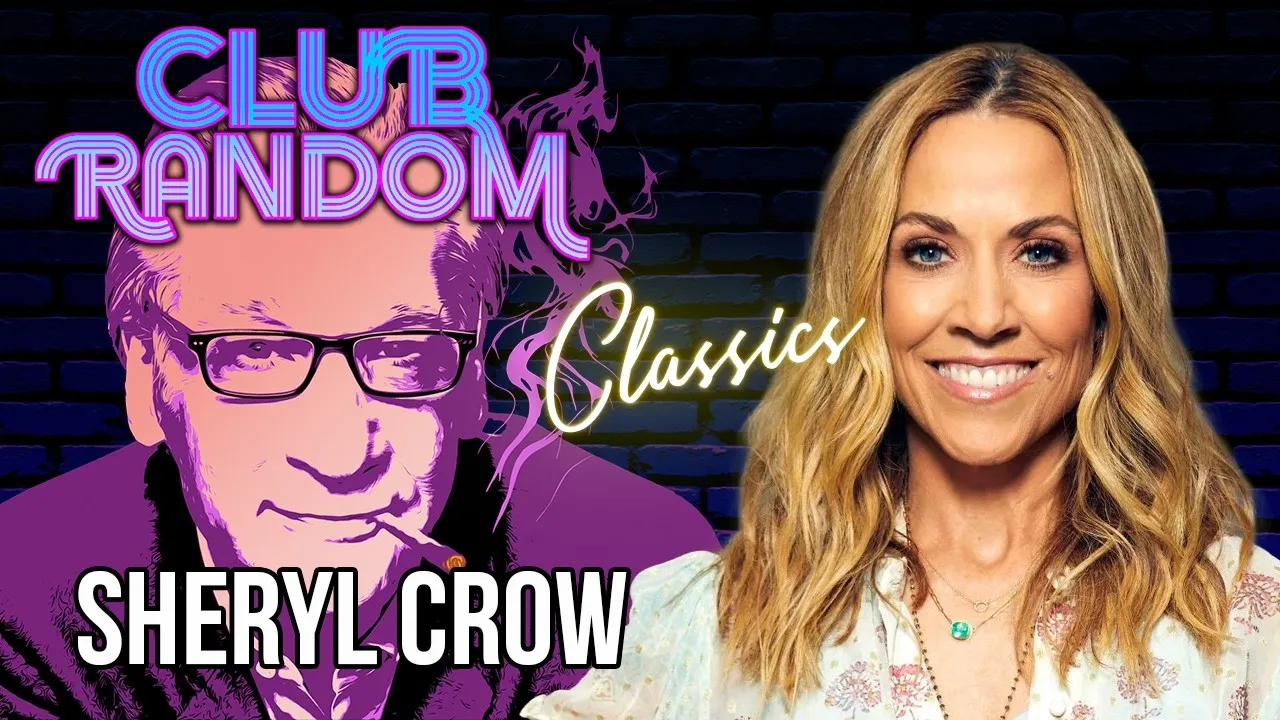 WATCH NOW↓
 Sheryl Crow was sitting across from Bill Maher when she described the moment she realized the music industry’s AI problem was already over. A 21-year-old songwriter played her a demo. Crow listened. She heard John Mayer, his voice, his phrasing, his particular way of leaning into a line. She knew it was him. Except it wasn’t him. The kid had paid five dollars to a service that cloned his voice, and Crow, who actually knows Mayer, couldn’t pick the fake.
She paid $5 and got John Mayer’s voice and she played me the demo and it’s John Mayer singing. Not only his voice, but his inflections, his style. I started crying. I was just like, I know John. There’s no way I would not know this was him.
That is not a hypothetical. That is a working product, priced below a movie rental, deployed casually by someone young enough to think nothing of it. Crow’s reaction, actual tears, is the honest measurement of how much is being lost. She is not a technophobe waving a fist at Spotify. She buys albums on iTunes. She still uses an iPod because she likes owning her 4,000 favorite songs clean, no waste. She is someone who cares about the object of music, which is exactly why the five-dollar John Mayer hit her so hard.
The Napster Argument, Now With Stakes
Crow has been at this fight longer than most people remember. She and Don Henley were on Capitol Hill every time a new technology ate into artist revenue, and every time Congress shrugged and said the technology was already here. Napster. Streaming. Now this. The pattern is the same and she names it without being prompted: the industry and the lawmakers gave up each time, and each capitulation made the next one easier to justify.
Except for me and Don Henley who are on Capitol Hill every 10, like we’re there every Tuesday, like trying to fight for stuff. And the Senate subcommittees are all saying, well, it’s already here. But you can’t do anything about it ever.
She called her attorney after the five-dollar demo. Her concern was not theoretical royalties. She wants her voice, her image, her old demos locked in something AI cannot reach, in writing, for posterity. That is the tell. When artists start calling entertainment lawyers about contracts with the future, the crisis is not coming. It is already being administered.
The claim is real and it checks out. AI voice-cloning services have existed for a few years and the consumer-facing ones have gotten cheap fast. Whether any particular service costs exactly five dollars on any given day is a detail, but the price point Crow describes is not an exaggeration. The technology is commodity-level, and Crow’s inability to detect a fake of someone she personally knows is the most honest testimony about where the capability currently sits. This is not Pharrell making twelve thousand dollars off a massive hit on Spotify, which Crow also mentions and which is its own indictment. This is something structurally different: the voice itself, the irreducible thing an artist owns, now reproducible by anyone with a debit card.
What Else Is In Here
The AI story is the one worth arguing about, but the episode earns its runtime in other ways. Crow’s account of touring with Michael Jackson for eighteen months and being genuinely unsure he recognized her when she said hello at the Grammys afterward is a quiet, devastating line reading of fame at its most sealed-off. Her description of Lionel Richie pulling her into Billy Joel’s dressing room backstage in Atlanta to pitch a hits-only world tour, then turning to warn her never to play new songs, is funny and sad in about equal measure. Her account of shooting the video for “If It Makes You Happy” four days after her breast cancer diagnosis, with Sting stepping in as her Grammys date after Lance Armstrong ended their engagement days earlier, lands with the kind of compressed biographical weight that makes you understand why people are still writing about her thirty years in.
We shot the video for that 4 days after I was diagnosed with breast cancer. And I was supposed to present at the Grammys with Lance and we had split a few days before that. And Sting went with me to the Grammys.
Maher is a better interviewer here than his political show sometimes lets him be. He does his homework. He knows “Abalone” is not a single. He has every album. He earns the conversation, and Crow, who came in having watched his documentary, gives it back. The fungus tangent goes long but it goes somewhere real. The Kid Rock conversation is more careful and more interesting than it sounds on paper. This is a good episode. The five-dollar voice clone is why you lead with it.
Lisa Kudrow says Sam Kinison was shooting heroin on set while they filmed a sitcom together
The Friends icon drops a genuinely startling piece of TV history buried inside a very pleasant chat about mushrooms and Spartacus.
Kevin Spacey says he would have been benched for just seven games if he were an athlete
The actor tells Bill Maher his nine-year Hollywood exile is deeply unfair compared to the leniency shown in professional sports.
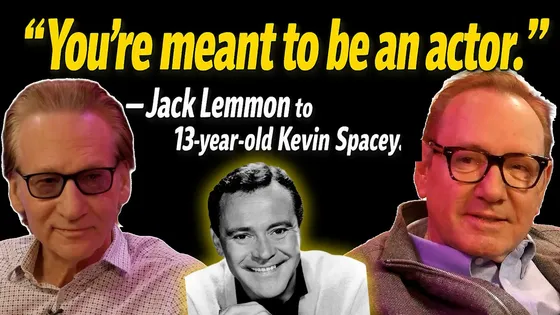
Kevin Spacey says Netflix is shelving Gore, a completed Gore Vidal movie he calls one of his best films
Spacey told Bill Maher that Netflix should release or give up the finished Gore Vidal film, and he made the pitch with maximum self-interest and one genuinely sharp point.
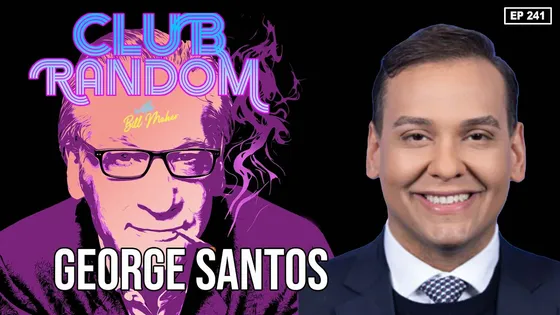
George Santos says the credit card scandal was straw donations and Ferragamo ties, not a shopping spree
On Club Random, Santos tried to shrink one of the ugliest parts of his federal case into a very Washington story about campaign optics, committee gifts, and elephant-print neckwear.
The circuit, read weekly. No noise.