T.D. Barnes says the Tic Tac UFO sightings were probably radar spoofing tests, not alien craft
The former Area 51 operator argues the famous Navy UAPs look less like visitors from another world than a very familiar Pentagon habit: testing pilots without telling them.
Listen on YouTube
 WATCH NOW↓
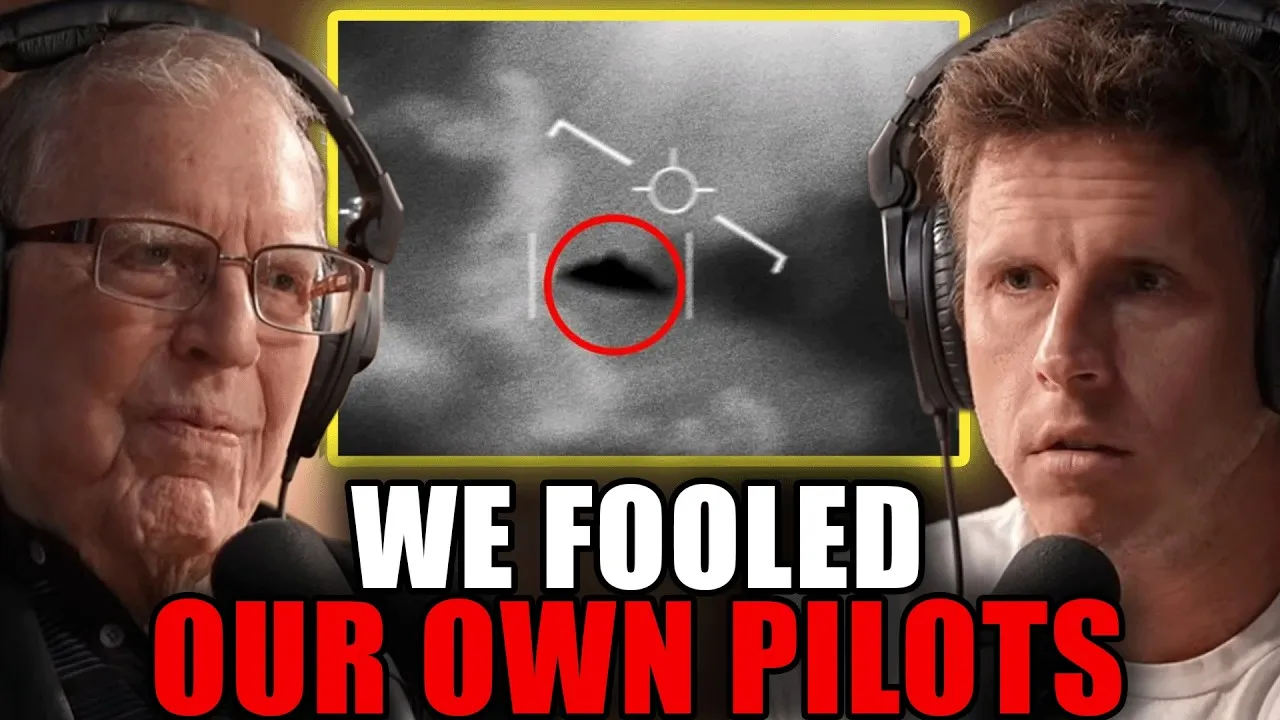
 T.D. Barnes has a deeply inconvenient answer for anyone hoping the Tic Tac UFO was humanity’s first clean look at alien hardware: he thinks it was probably a radar spoofing test. Not a saucer. Not a transmedium physics miracle. More like the Pentagon pointing a laser pointer at its own cat and then acting surprised when the cat freaked out.
On Danny Jones Podcast, T.D. Barnes, the former Area 51 operator with a Cold War résumé in classified radar games, looks at the famous Navy sightings and sees a familiar pattern. New radar gets installed. Strange things appear. Pilots are not briefed. Everyone later argues on cable news about whether Earth has roommates.
So uh in my opinion they were doing the same thing that we did during project palladium. They were spoofing that radar to see what its weak points were.
That is the whole Barnes theory in one sentence, and it is stronger than the usual debunk because it does not require the pilots to be dumb, lying, or drunk on Top Gun fumes. It only requires them to be outside the need-to-know bubble. Which, in the military, is less a plot twist than a weather condition.
The alien answer is sexier. The spoofing answer has paperwork.
Barnes ties the Navy reports to electronic warfare, specifically the idea that a new radar system would be stress-tested by friendly forces before an enemy could learn how to fool it. He also points out that the weirdness was not universal across every radar everywhere. It was tied, in his telling, to specific systems and specific upgrades.
Every new system comes out, you evaluate it to see if it anyone can spoof it.
This is where Barnes is persuasive, even if he is not proving the case. The public version of the Tic Tac story often leans on awe: impossible movement, no visible propulsion, pilots stunned by what they saw. Barnes answers with bureaucracy. Of course pilots would be stunned, he says in effect, because if you are testing surprise, you do not send a calendar invite titled SECRET FAKE UFO EVENT, PLEASE REACT NATURALLY.
Those guys, if they doing a spoofing test, they weren’t told they were going to be tested.
The claim also fits his old-world Area 51 logic. Barnes says U-2 and A-12 pilots often did not know the real mission, only when to flip a switch or turn. That is not an exotic conspiracy theory. That is compartmentalization, the dull gray filing cabinet where many good UFO stories go to die.
Barnes does not just say spoofed. He says maybe not physical.
The sharper part of the claim is that Barnes does not imagine a secret American Tic Tac craft zipping around the Pacific like a hypersonic Advil. Asked about the reported instant movement from point A to point B, he says it sounds electronic. Danny Jones suggests a hologram. Barnes does not run from that.
I don’t think it’s physical.
That is the line that will make UFO Reddit start sharpening knives. Barnes is not merely saying the Tic Tac was secret tech. He is saying the thing people think of as an object may not have been an object at all.
He even has an answer for the part that tends to rescue the mystery: the water disturbance. In the Tic Tac lore, churning water below the object has always carried a delicious implication, something under the surface, something emerging, something Spielberg with a defense budget. Barnes goes simpler. A submarine could create the disturbance while the aerial signature is something else. He says Project Palladium used submarines, and that a submerged platform could explain why observers saw activity on the water.
Is that proven here? No. Barnes offers a theory from experience, not a document dump. He also has a reason to see modern UFOs through the lens of his own past, because when your career involved spoofing sensors, every flying mystery starts to look like a sensor being spoofed. That bias matters.
Still, it is a better bias than believing every blurry blob arrives from Zeta Reticuli with a Navy escort. Barnes’ explanation has the unglamorous smell of how states actually behave. They test systems. They hide programs. They let their own people see ghosts if the ghost teaches them something useful.
He also drags Harry Reid into the origin story, claiming the late Nevada senator was a true believer who helped turn UFO curiosity into a funded government project. Barnes says Reid always believed alien spacecraft were out at Area 51, and that the modern UAP machine owes a lot to that belief and to Robert Bigelow’s orbit. That part is less a debunk than a genealogy of obsession: one powerful senator, one desert myth, one government office, and suddenly the weird lights have a budget line.
The most reasonable verdict is not that Barnes has solved the Tic Tac case. It is that he has supplied the least romantic explanation that still respects the witnesses. If he is right, the great UFO clip of the 21st century is not proof that aliens visited Earth. It is proof that the military can still scare the hell out of itself.
- Does T.D. Barnes think the Tic Tac UFO was a real physical object?
- No. Barnes says he does not think it was physical, at least not in the way UFO believers often mean. He frames the strange movement as something electronic, closer to a spoofed radar return or projection than a craft darting across the sky.
- Why does Barnes connect the Tic Tac sightings to radar upgrades?
- Barnes points to the timing: pilots started reporting strange objects after a radar upgrade. To him, that sounds like the military testing the weak points of a new system, the same basic logic he says was used in earlier classified spoofing work.
- What role does Barnes say Harry Reid played in modern UAP interest?
- Barnes says Harry Reid was a longtime UFO believer who pushed for official UFO study funding and helped set the stage for the current UAP boom. He is skeptical of that origin story, especially the money routed toward Robert Bigelow's UFO interests.
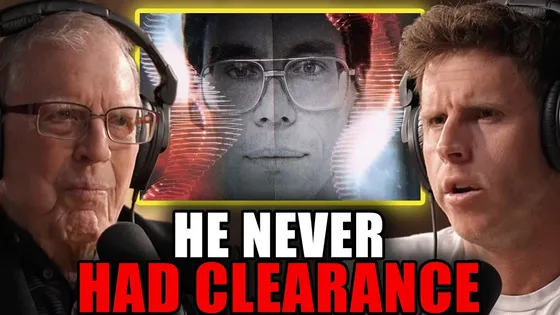
TD Barnes says Annie Jacobsen's Roswell source made up the Nazi children story for 'something juicy'
The former Area 51 worker doesn't just dismiss Bob Lazar, he says one of the most lurid modern Roswell claims came from a source who was never at Area 51.
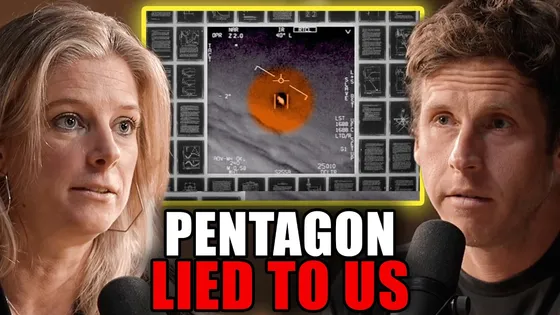
Nadia Drake says Susan Gough's psyops résumé is normal comms work, not proof of a UFO cover-up
The Danny Jones Podcast tried to turn a DoD spokeswoman's LinkedIn into a smoking gun, and Drake refused to salute.
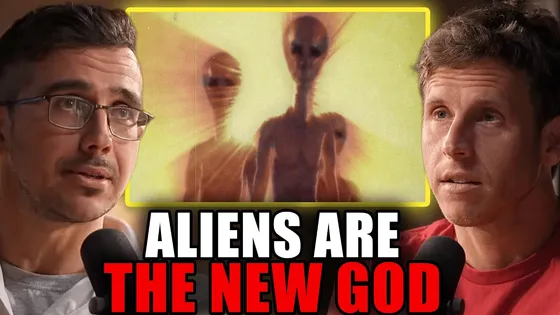
Matt Ehret says the CIA shaped the National Enquirer to seed a one-world alien religion
The claim is wonderfully lurid, and also a perfect example of how a real Cold War fact can become a cosmic corkboard theory in about 90 seconds.
Matt Ehret says Majestic 12 is fake because its typewriter and Truman signatures give it away
The UFO disclosure debate gets a paperwork problem, then turns into a full CIA myth-management theory.
The circuit, read weekly. No noise.