Tulsi Gabbard says Democratic elites want to be God and compete with Americans' faith
On The Shawn Ryan Show, Gabbard turns a familiar anti-elite argument into something grander and darker, a theology of Washington power.
Listen on YouTube · Spotify · Apple Podcasts
 WATCH NOW↓
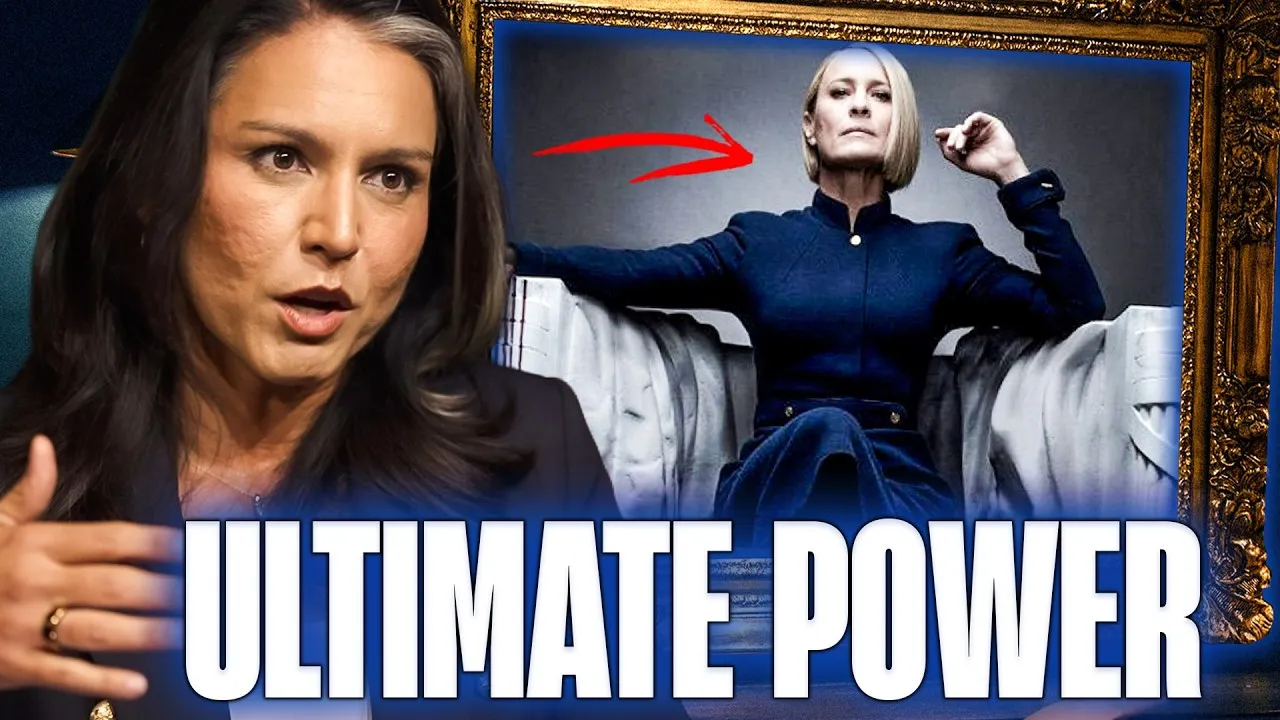
 Tulsi Gabbard’s latest turn on The Shawn Ryan Show is not subtle. She says the people behind progressive agendas don’t just want votes, power, or cable-news chyrons. They want to be God.
That is the clip, the sermon, and the Reddit fight. Tulsi Gabbard, the former Hawaii congresswoman who ran for president as a Democrat before becoming a high-profile exile from the party, takes the standard anti-Washington case and supercharges it with theology. Bureaucratic control becomes spiritual rivalry. Title IX becomes a proxy battle over ultimate authority. The government is not just overreaching. It is, in her telling, jealous.
At at its core, it comes from it comes from people who um ultimately want to be they want to be God. They want to be the ultimate um master.
This is classic Gabbard 2.0, part institutional critique, part culture-war flare gun, part burned-bridge memoir. The argument starts with faith. If Americans believe in a higher power than the state, Gabbard says, then state power has a ceiling. To her, that is the threat.
And so therefore they view this as a competition that they have to compete for our faith and our allegiance and our loyalty.
The God line is doing the work the evidence can’t
As rhetoric, the line is lethal. As evidence, it is much wobblier. Gabbard moves from transgender policy to Democratic party discipline to ballot access to religious tests for judges, stacking examples until they resemble a single machine. That machine has one purpose, she says, control.
Her most vivid policy target is transgender rights. She argues Democrats are refusing to say basic truths about biological sex, failing women and girls in sports, and staying silent on gender-affirming care because they are terrified of being cast out of polite Washington. This is where the old insider in her still has juice. She knows the social fear of Congress, the soft power of not being invited, not being liked, not being safe at the lunch table. Washington, but make it high school with subpoenas.
They see what happens to people like me and how what the Democratic party did to me even as I was in Congress and I was running for president on the Democratic ticket.
Then comes the anecdote that sounds engineered in a lab to confirm every suspicion of a political apostate. Gabbard says a Democratic colleague’s staff refused to work with her office because they didn’t want their boss contaminated by her reputation.
we don’t want our boss to be infected with your boss’s toxicity.
It is a brutal little Washington sentence, all cowardice and HR language. It also does more for her case than the God claim does. The anecdote shows how social enforcement works. It shows how dissent gets made expensive. It does not show that Democratic elites literally see themselves as divine substitutes. That leap is Gabbard choosing the pulpit over the deposition.
The better indictment is about money
The funny thing is that Gabbard’s cleaner, more provable critique comes when Shawn Ryan asks how lobbyists approach members of Congress. Here she drops the cosmic framing and describes a much more recognizable Washington: friendships, retreats, campaign checks, soft pressure, and occasional hard threats.
She tells a story about an unnamed member whose campaign ad called for negotiating lower prescription drug prices for Medicare. According to Gabbard, industry lobbyists threatened to pull millions in support if the ad ran. The ad got pulled. That is not a theological argument. It is a structural one. It is also more persuasive.
On insider trading, she gets even sharper. Gabbard says members of Congress are constantly near market-moving information, whether in committee or on the House floor, and that the public should not have to guess whether the trades are innocent.
No member of Congress should be allowed to do any trading of any stocks. Uh neither should their spouse. Neither should their senior staff. Period.
That is the version of Gabbard that can still sting beyond the choir. The ex-Democrat, the ex-member, the person who knows how the room feels when the money walks in. The God claim will go viral because it flatters an audience that already believes American politics is a spiritual emergency. The congressional stock-trading claim should go viral because it is boringly outrageous and fixable.
If Gabbard is right, the listener’s real problem isn’t that Washington thinks it is heaven. It is that Washington has figured out how to make obedience pay.
- What was Tulsi Gabbard's main claim about Democrats wanting to be God?
- She said the real motive behind certain political agendas is control. In her telling, people with faith in God are harder for government elites to dominate, so those elites see religion as competition for loyalty and obedience.
- Did Gabbard give evidence for the claim?
- She offered examples, not proof of intent. She pointed to Democratic silence on gender-affirming care, Title IX changes, attempts to remove Donald Trump from ballots, and questions Kamala Harris and Mazie Hirono raised about a Catholic judicial nominee. Those examples support her view that power is being centralized, but they don't prove the God-sized motive she assigns.
- What else did Gabbard say about Washington power?
- She described Congress as socially coercive and financially compromised, with lobbyists forming friendships, making threats, and using campaign spending to shape votes. She also called for a total ban on stock trading by members of Congress, their spouses, and senior staff.
Johnnie Clark says he got his Silver Star 30 years late because a Marine wanted a Purple Heart license plate
On The Shawn Ryan Show, the Vietnam Marine ties one of his highest honors to a surreal chain of bureaucracy, destroyed records, and a war story that wrecked him decades later.
Brian Keating says UFO disclosure is “bread and saucers” distraction, not alien evidence
The physicist’s best point isn’t that aliens are fake. It’s that teasing civilization-shaking secrets while showing no data is a cheap trick with a saucer on it.
Shawn Ryan says he went through four exorcisms after a psychedelic vision of hell
The former Navy SEAL and podcast host frames his recent supernatural experiences as a reason to push harder into Christianity, while Bishop Joseph Strickland calls it spiritual warfare.
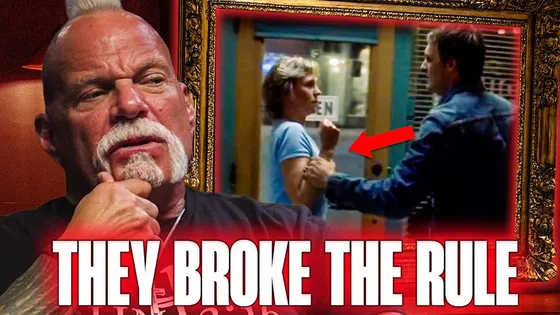
Mel Chancey says the Outlaws broke bikers' “no homes and no families” rule by beating a girlfriend
The former Hells Angels figure describes a biker feud code that sounds like restraint until you hear what happened when someone crossed it.
The circuit, read weekly. No noise.