Annie Jacobsen says a biological attack could push America from outbreak to anarchy in six days
The author of Nuclear War: A Scenario argues that the real bioweapon nightmare is not just death, but the speed at which fear of infection breaks a country.
Listen on YouTube · Spotify · Apple Podcasts
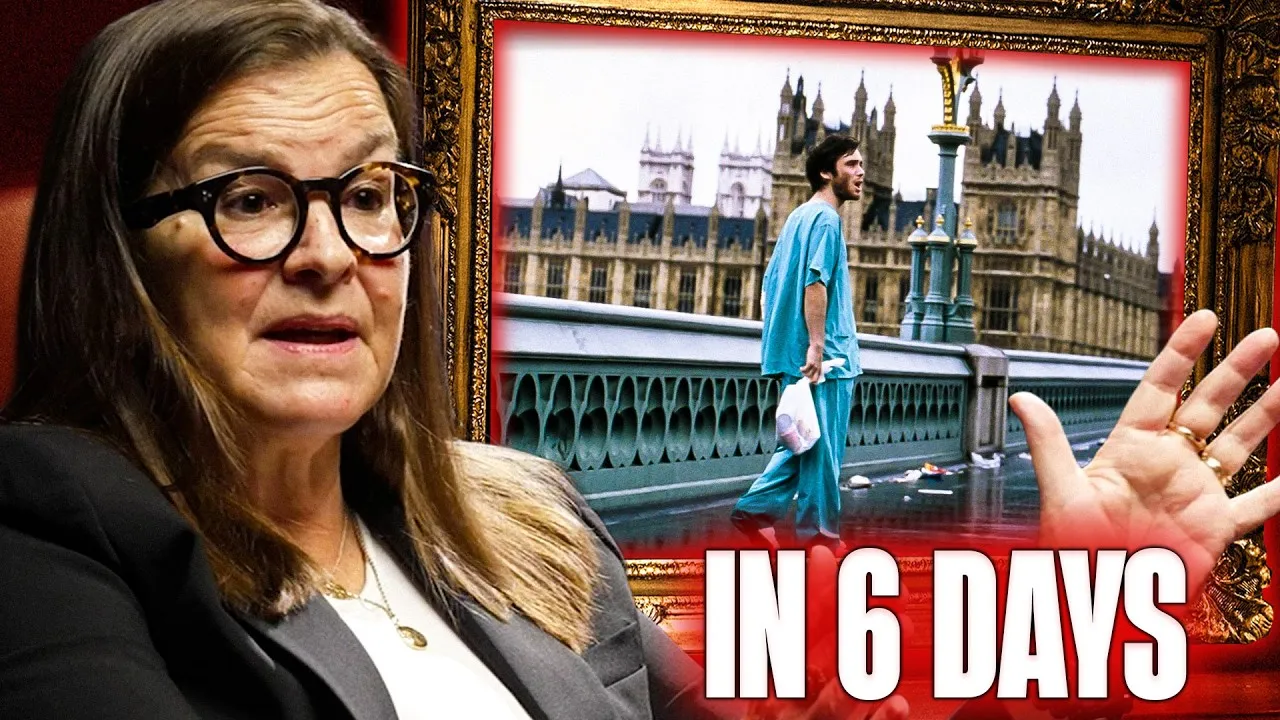 WATCH NOW↓
 Annie Jacobsen’s new apocalypse math is not 72 minutes to nuclear winter. It’s six days from biological outbreak to American anarchy.
On The Shawn Ryan Show, Annie Jacobsen framed biological warfare as the more psychologically corrosive cousin of nuclear war: less cinematic mushroom cloud, more everybody staring at the person coughing in aisle nine like they’re holding a dirty bomb. Her claim is blunt, searchable, and unpleasantly plausible. According to Jacobsen, U.S. defense planners worry that fear of infection, not just infection itself, could send the homeland into insurrection within a week.
in biological war, I take the readers from outbreak to anarchy in 6 days because anarchy and insurrection is the real threat.
That is the whole grim trick. Nuclear war has the decency, if that word can survive the sentence, to be obvious. Launches, alerts, impacts, firestorms. Jacobsen’s previous book, Nuclear War: A Scenario, turned the end of the world into a stopwatch exercise. Biological warfare is messier. A pathogen does not announce itself with sirens. It arrives through breath, uncertainty, rumor, bad tweets, and the ancient human instinct to treat strangers as hazards.
The scary part is not the germ. It’s the trust collapse.
Jacobsen is at her strongest when she stops sounding like a prepper’s favorite dinner guest and starts sounding like a reporter who has read too many declassified documents. Her phrase, borrowed from the material she says she found, is ‘fear of infection.’ That is more useful than the usual sci-fi fog around bioweapons, because it points to the actual American weak spot. Not bravery. Not science. Coordination.
The COVID memory she reaches for is not lockdowns or masks or lab-leak trench warfare. It is public health certainty curdling into distrust. Early in the pandemic, she says, institutions communicated confidence about airborne spread when they should have admitted uncertainty. That matters because a real biological attack would be a trust exam administered by a sadist.
COVID not airborne. It was airborne. It was airborne.
This is where Jacobsen’s claim earns its oxygen. Six days to anarchy sounds like a cable-news panic graphic until you remember how fast the country went feral over toilet paper, school closures, and whether standing six feet away from someone was magic or theater. A pathogen that is airborne, deadly, and poorly understood would not need to kill half the country to break the country. It would only need to make everyone believe everyone else might.
Her biggest claim is also her cleanest
Jacobsen does not say biological weapons are more destructive than nuclear weapons. That would be nonsense, and she knows it. Her sharper point is that the Pentagon, in her reading, treats them as the greatest overall threat among weapons of mass destruction because the entry price is so much lower.
But bioweapons are considered by the defense department the greatest overall threat
That distinction matters. A nuclear bomb requires states, enrichment, delivery systems, and enough detectable industrial activity to make satellites and intelligence agencies twitch. A biological weapon can sound, in these conversations, less like a Manhattan Project and more like a nightmare Etsy kit. Jacobsen is careful enough to explain the basics: transmissibility, lethality, and whether there is a medical countermeasure. But she also lets the horror breathe. An airborne pathogen turns lungs into the delivery system.
Her most alarming line is the one most likely to ricochet around Reddit, because it compresses the whole dual-use biology problem into a sentence you wish were dumber. In her telling, the danger is not only hostile states with secret labs. It is the spread of tools and knowledge that make genetic tinkering less exotic by the year.
People will now tell you that like a high school student with limited biology can essentially do some genetic tweaks to create this kind of thing.
That sentence needs a raised eyebrow. ‘A high school student’ is the kind of phrase that turns a serious risk into a trailer voice-over. Genetic modification is not the same as building a reliable weapon, scaling it, dispersing it, and avoiding self-injury or detection. Still, Jacobsen’s broader warning is not flimsy. Dual-use science is real. The same techniques that can help produce therapies, diagnostics, and environmental sensors can also be bent toward uglier ends. That is not anti-science. That is science with a hangover.
Shawn Ryan throws in a particularly paranoid-sounding question about consumer DNA services and targeted assassination, and Jacobsen does not laugh it out of the room. She answers that individual targeting has a long history, especially through poisons, but then wisely drags the conversation back to the bigger threat: modified pathogens, airborne spread, and multi-agency chaos. The personalized bioweapon is the sexy spy-movie anxiety. The mass panic scenario is the public policy problem.
The verdict is grim, with one caveat
Jacobsen’s six-day anarchy claim is persuasive as a warning about social breakdown, less persuasive if heard as a guaranteed countdown clock. America does not need to become Mad Max by next Friday for the claim to matter. A serious biological incident would hammer exactly the systems that already creak in daylight: public health messaging, federal and local coordination, hospital capacity, supply chains, and the public’s ability to believe an official sentence without immediately checking which faction benefits.
The uncomfortable stake for listeners is simple: pandemic preparedness is not just masks, antivirals, and stockpiles. It is whether the country can survive the first week of not knowing.
- What did Annie Jacobsen mean by outbreak to anarchy in six days?
- Jacobsen’s argument is that the social panic around infection can become the main accelerant. In her telling, the nightmare is not only a pathogen moving through bodies, but fear moving through institutions, families, supply chains, and law enforcement faster than the government can regain trust.
- Why does Jacobsen say bioweapons can be more threatening than nuclear weapons?
- She says nuclear weapons remain more destructive at the far end of the scale, but bioweapons are treated by defense planners as the greater overall threat because they are cheaper, easier to conceal, and easier to modify. That is the scary hinge of her claim: the barrier to entry is lower than people want to believe.
- Does Jacobsen think the public health response to COVID made future bio panic worse?
- Yes. She points to early messaging that COVID was not airborne as an example of institutional certainty becoming a trust grenade. Her view is that saying 'we don’t know' would have aged better than making a confident claim that later collapsed.
Annie Jacobsen says the U.S. has a classified devolution plan to send the president alone to a cold site in a 100 percent fatal plague
The national security writer says the public name is known, the actual program is classified, and the creepiest detail is not the bunker, it is the president alone in a room with the nuclear football outside.

Annie Jacobsen says Soviet scientists engineered plague with a euphoria gene so victims would go to discos
Jacobsen’s bioweapon nightmare is not just a germ that kills, it is a germ that allegedly hacks the victim into becoming its hype man.
Brian Keating says UFO disclosure is “bread and saucers” distraction, not alien evidence
The physicist’s best point isn’t that aliens are fake. It’s that teasing civilization-shaking secrets while showing no data is a cheap trick with a saucer on it.
Shawn Ryan says he went through four exorcisms after a psychedelic vision of hell
The former Navy SEAL and podcast host frames his recent supernatural experiences as a reason to push harder into Christianity, while Bishop Joseph Strickland calls it spiritual warfare.
The circuit, read weekly. No noise.