Annie Jacobsen says the U.S. has a classified devolution plan to send the president alone to a cold site in a 100 percent fatal plague
The national security writer says the public name is known, the actual program is classified, and the creepiest detail is not the bunker, it is the president alone in a room with the nuclear football outside.
Listen on YouTube · Spotify · Apple Podcasts
 WATCH NOW↓
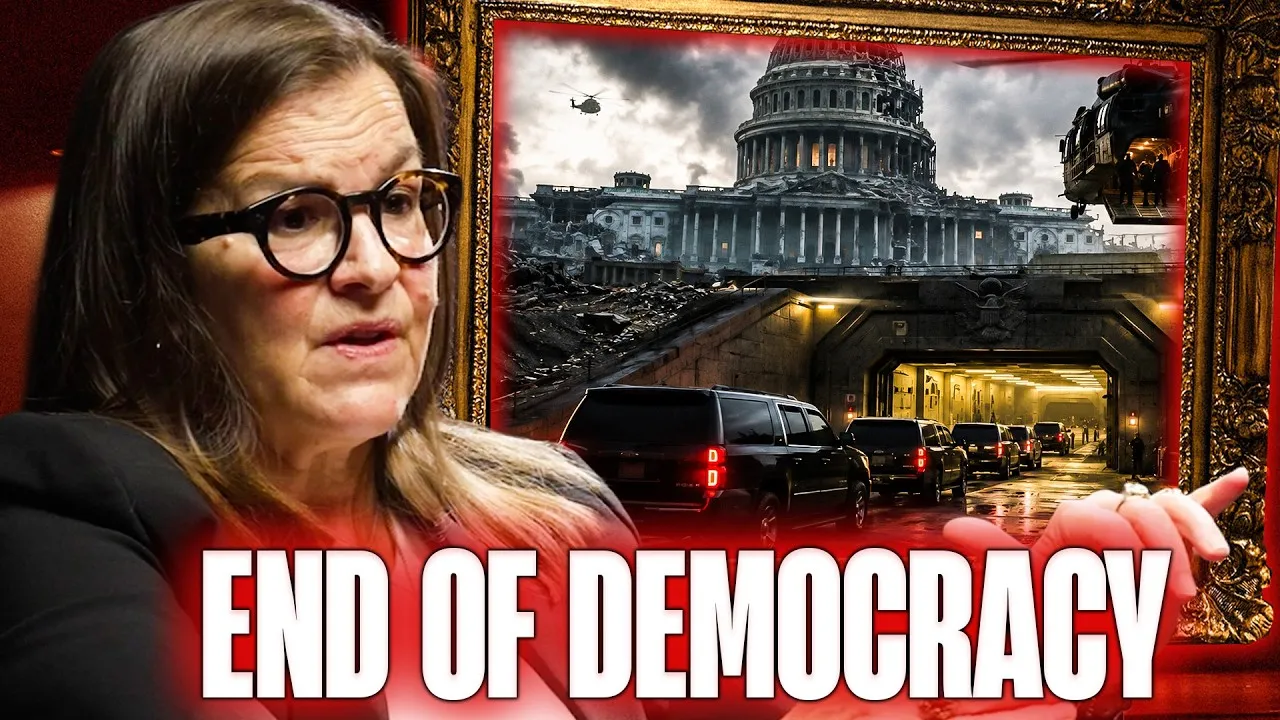
 The scariest bunker story is not about billionaires in Hawaii or some Bond-villain mountain door. According to Annie Jacobsen, the U.S. government has a classified plan called devolution that could leave the president of the United States alone at a remote cold site during a 100 percent fatal airborne plague, while a secret list of officials waits elsewhere to restart the country.
That is the kind of sentence that makes The Shawn Ryan Show feel less like a podcast and more like someone found a manila folder under a loose floorboard. Jacobsen’s claim is not that a shadow government is definitely running America right now. She is more careful than that, mostly. Her claim is stranger and more durable: the architecture for a post-collapse government exists, the public can know the label, and almost nothing else.
The name devolution is unclassified. The program is classified.
The basic idea belongs to the world of Continuity of Government, the grim little cousin of civics class. In normal American mythology, the government survives because the Constitution is sturdy and everyone agrees to be normal. In continuity planning, the government survives because someone already picked the backup people, the backup buildings, the backup communications, and the backup backup buildings. Less Schoolhouse Rock, more lanyards at the apocalypse.
a essentially secret government disappears off into a bunch of bunkers called hot sites, warm sites, and cold sites to hunker down so that they can rebuild the government once everybody dies.
That last phrase, once everybody dies, is pure Jacobsen maximalism. It is also why she is effective on this subject. She has the reporter’s binder and the disaster novelist’s lighting kit. Her sourcing hook here is Craig Fugate, the Obama-era FEMA administrator, who Jacobsen says signed off on the 2016 version of the devolution protocols on the final day of the Obama administration. She says Fugate took her right up to the edge of what could legally be known.
The cold site detail is the nightmare fuel
The list of devolution officials, Jacobsen says, is pre-chosen and classified. She imagines a mirror version of the government: a devolution POTUS, a national security adviser, a secretary of defense, health officials, even the machinery needed for the courts. That part sounds plausible because it is bureaucratically boring. The terrifying part is what she says happens to the actual president during a catastrophic pandemic or bioattack.
The president does not get moved to a big bunker like Raven Rock or Mount Weather. Any of these command centers we can talk about if you want more details. He gets moved to like what’s called a cold site. Like really far away. By himself. It’s such a crazy visual.
Jacobsen’s scenario is not COVID with better graphics. She is talking about an airborne pathogen with a case fatality rate of 100 percent, specifically raising pneumonic plague as the sort of thing planners fear, then adding the nastier possibility of genetic modification to defeat antibiotics. She does qualify the medical point, saying antibiotics within 24 hours can change the outcome for pneumonic plague. That qualifier matters. The headline version is apocalypse. The planning version is risk management wearing a gas mask.
Her broader argument is that officials plan in secret for the worst-case biological weapons scenario while failing to speak honestly to the public about much less exotic failures. She brings up COVID guidance, airborne transmission, and the lab-leak debate as examples of institutions branding uncertain possibilities as conspiracy theories, then quietly retreating later. Jacobsen wants the phrase changed to speculative narrative, which is a little too TED Talk for my taste, but her point is not silly. Governments lose trust when they pretend uncertainty is disloyalty.
This is credible, up to the classified wall
The strongest version of Jacobsen’s claim is easy to believe: the government has secret continuity plans, and those plans include dispersed sites and designated successors. The weaker version is the one that invites Reddit to put on night-vision goggles: who exactly is on the list, whether devolution could already be active, whether the backup state has its own politics. Ryan pokes that bear, asking whether the hidden devolution apparatus might be the one really running things. Jacobsen does not endorse it. She says she does not know.
Good. Because the difference between reporting and bunker cosplay is the willingness to stop at the locked door. Jacobsen gets close enough to make the door interesting. The rest is a warning label: continuity planning is real, but secrecy turns every contingency plan into a Rorschach test for a country that already thinks the thermostat is being controlled from a room it cannot enter.
That’s the end of democracy.
- Is devolution a real government plan?
- Jacobsen says the name devolution is unclassified but the actual program is classified. In plain terms, she describes it as a continuity plan for moving preselected government officials to dispersed sites so federal power can be rebuilt after a catastrophic collapse.
- Who chooses the people in the devolution government?
- Jacobsen says the list is classified, including who is on it and how they are chosen. She speculates that the list probably changes by administration, because no president would want a previous administration’s designates running the post-disaster government.
- Why would the president be moved to a cold site instead of a famous bunker?
- In Jacobsen’s telling, the scenario is not a normal attack but an airborne pathogen with catastrophic lethality. A remote cold site would isolate the president from exposure, which is logical in a biosecurity sense and horrifying in every democratic sense.
Annie Jacobsen says a biological attack could push America from outbreak to anarchy in six days
The author of Nuclear War: A Scenario argues that the real bioweapon nightmare is not just death, but the speed at which fear of infection breaks a country.

Annie Jacobsen says Soviet scientists engineered plague with a euphoria gene so victims would go to discos
Jacobsen’s bioweapon nightmare is not just a germ that kills, it is a germ that allegedly hacks the victim into becoming its hype man.
Brian Keating says UFO disclosure is “bread and saucers” distraction, not alien evidence
The physicist’s best point isn’t that aliens are fake. It’s that teasing civilization-shaking secrets while showing no data is a cheap trick with a saucer on it.

Shawn Ryan says he went through four exorcisms after a psychedelic vision of hell
The former Navy SEAL and podcast host frames his recent supernatural experiences as a reason to push harder into Christianity, while Bishop Joseph Strickland calls it spiritual warfare.
The circuit, read weekly. No noise.