Ben Felix says $10,000 in cash can shrink to $5,336 of buying power in 20 years
The Canadian portfolio manager turns the most boring personal finance warning into the episode’s cleanest gut punch: cash feels safe right up until inflation quietly eats dinner.
Listen on YouTube · Spotify · Apple Podcasts
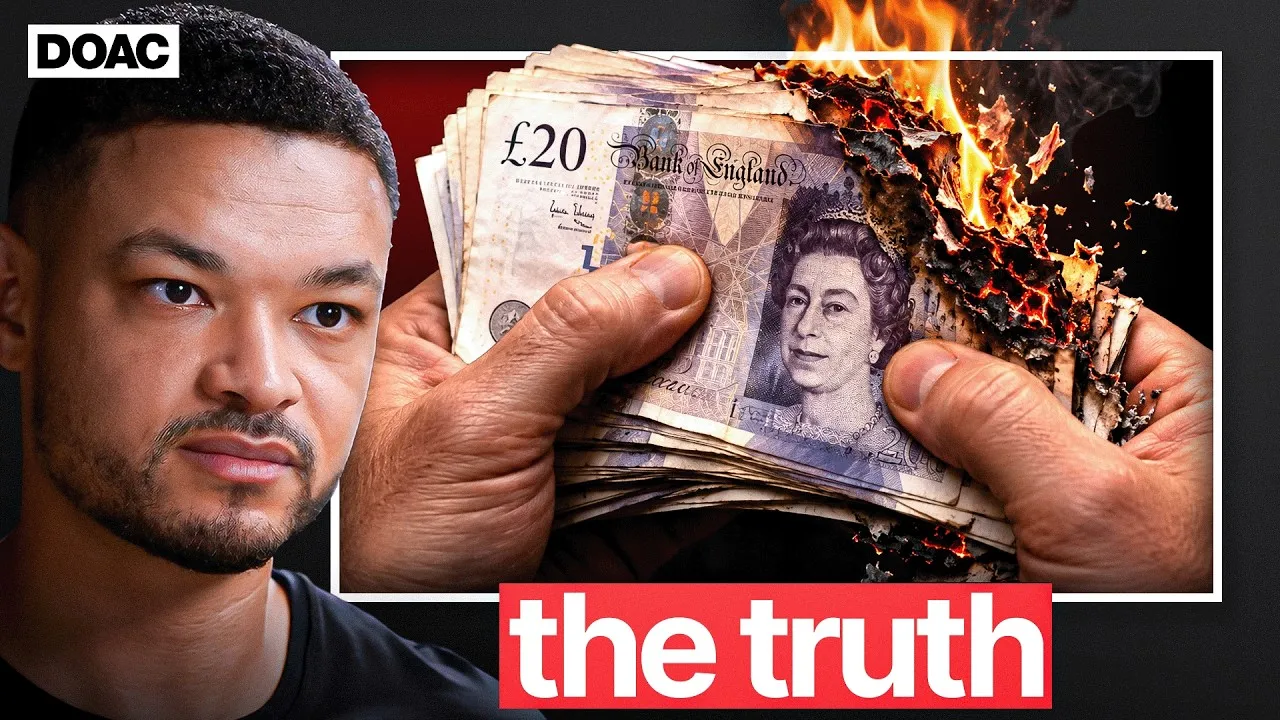 WATCH NOW↓
 The scariest chart in personal finance is not a crash chart. It is the one where nothing appears to happen. Ben Felix, appearing on The Diary of a CEO, effectively signs off on the brutal little math problem at the top of the episode: leave $10,000 sitting as cash for 20 years with 3 percent inflation, and your purchasing power falls to $5,336.
That is not a market prediction. It is arithmetic wearing a balaclava. Cash gives you the warm feeling of control, no red numbers, no CNBC panic chyron, no sweaty app refresh at 9:31 a.m. But inflation does not need drama. It just needs time.
Hoarding cash is is it’s in its own way taking a type of risk.
Felix is not selling the meme version of finance where anyone with a savings account is a coward and every spare pound must be hurled into Nvidia before breakfast. His actual argument is calmer and more annoying, which is why it lands. A bank balance can be stable and still be losing. Safety, in this frame, is not the absence of movement. It is the preservation of purchasing power.
You you don’t have an expected return when you hold cash. you in real terms have a negative expected return.
The mattress is not the villain. The illusion is.
The useful thing about Felix is that he refuses to make the obvious next scammer move. He does not say, fine, cash is doomed, therefore buy my favorite magic asset. Asked how he allocates money, he says he likes stocks, specifically a globally diversified portfolio, with a Canadian home country bias. Not sexy. Not the sort of answer that gets a man invited to a yacht party in Dubai. But credible.
His broader advice is basically the anti TikTok portfolio. Be wary of products created after everyone has already fallen in love with the story. AI ETF, cannabis ETF, clean energy ETF, SpaceX access product, whatever the new shiny noun is. By the time the package reaches retail investors, the excitement has often already been converted into fees.
Financial firms are very good at seeing what investors want even if that thing is not good for them and then creating a product to fulfill that desire.
That is the best sentence in the episode because it explains half of modern investing culture. The industry does not have to beat the market if it can monetize your desire to feel early. You want AI exposure. You want private company access. You want the thing your clever friend mentioned at dinner. The machine hears you. Then it prints a product.
No crypto, no crystal ball
Felix is also blunt on cryptocurrency, though not in the lazy eye roll way. He gives Bitcoin its historical due, calling the digital cash problem fascinating and recognizing Satoshi Nakamoto’s technical achievement. Then he separates that from the investment case. At PWL, he says, they do not allocate client money to it. Personally, aside from buying small amounts while researching it, he does not touch it.
we’ve decided not to touch it and I personally don’t touch it.
The same discipline shows up when Steven Bartlett pushes him on AI and the possibility of a coming market contraction. Felix does not pretend the AI boom is immune from the old cycle of technological mania, cheap capital, wild valuations, and eventual disappointment. He just refuses to play prophet. If everyone already knows the boom is doomed, that knowledge should already be in the price.
This is where the episode’s cash warning becomes more than a savings account scold. Felix’s worldview is internally consistent: do not confuse comfort with safety, story with return, or certainty with insight. Cash feels certain and quietly erodes. Thematic funds feel visionary and often arrive late. Crypto feels revolutionary and may still just be speculation with better branding. AI feels inevitable, which says almost nothing about what you should pay for it.
The verdict on the $10,000 to $5,336 claim is simple: true as math, slightly theatrical as framing, and useful precisely because it is theatrical. People understand crashes. They are bad weather. Inflation is damp in the walls.
If Felix is right, the listener’s homework is not to become a genius stock picker. It is to stop treating a pile of idle cash as morally superior to risk. Sometimes the mattress is just a very slow shredder.
- How much buying power does cash lose at 3 percent inflation over 20 years?
- The episode uses a simple example: $10,000 in cash has the purchasing power of about $5,336 after 20 years if inflation averages 3 percent. Felix’s point is not that your bank balance literally drops. It is that the same number of dollars buys much less.
- Does Ben Felix think holding cash is safe?
- He thinks cash is safe only in the narrow sense that the nominal number does not bounce around like a stock portfolio. In real terms, he calls cash a risk because it has no expected return and inflation gives it a negative expected return.
- What does Ben Felix say people should invest in instead?
- Felix repeatedly points toward a globally diversified stock portfolio, possibly with some home country bias, rather than chasing hot themes. He is wary of thematic ETFs, crypto allocations, and products that promise access to whatever investors are currently desperate to buy.

Ben Felix says young people saving money in their 20s is probably a financial mistake
The Canadian portfolio manager and YouTuber has the research to back it up, and a caveat that could save you from using it as an excuse.

Tara Swart says she is 100% sure she can communicate with her dead husband
The neuroscientist and former psychiatrist ties a 34-senses argument to after-death communication, but her best evidence is still personal grief, not proof.

Ian Bremmer says Anthropic's new AI model is dangerous to all of us globally
The geopolitical-risk expert argues that AI needs the same kind of emergency oversight finance got after crises, and he points to Anthropic as the warning flare.

Graeme Hancock says every world leader should take ayahuasca a dozen times before running for office
The lost-civilization author turned a mortality chat into a psychedelic hiring policy for presidents, prime ministers, and anyone near the nuclear codes.
The circuit, read weekly. No noise.