Ben Rhodes Told You So: The JCPOA Was Right, the Iran War Was Dumb, and Everyone Knew It
The former Obama deputy national security advisor walks Jon Stewart through a decade of foreign policy failure, and the argument is depressingly airtight.
Listen on YouTube
 WATCH NOW↓
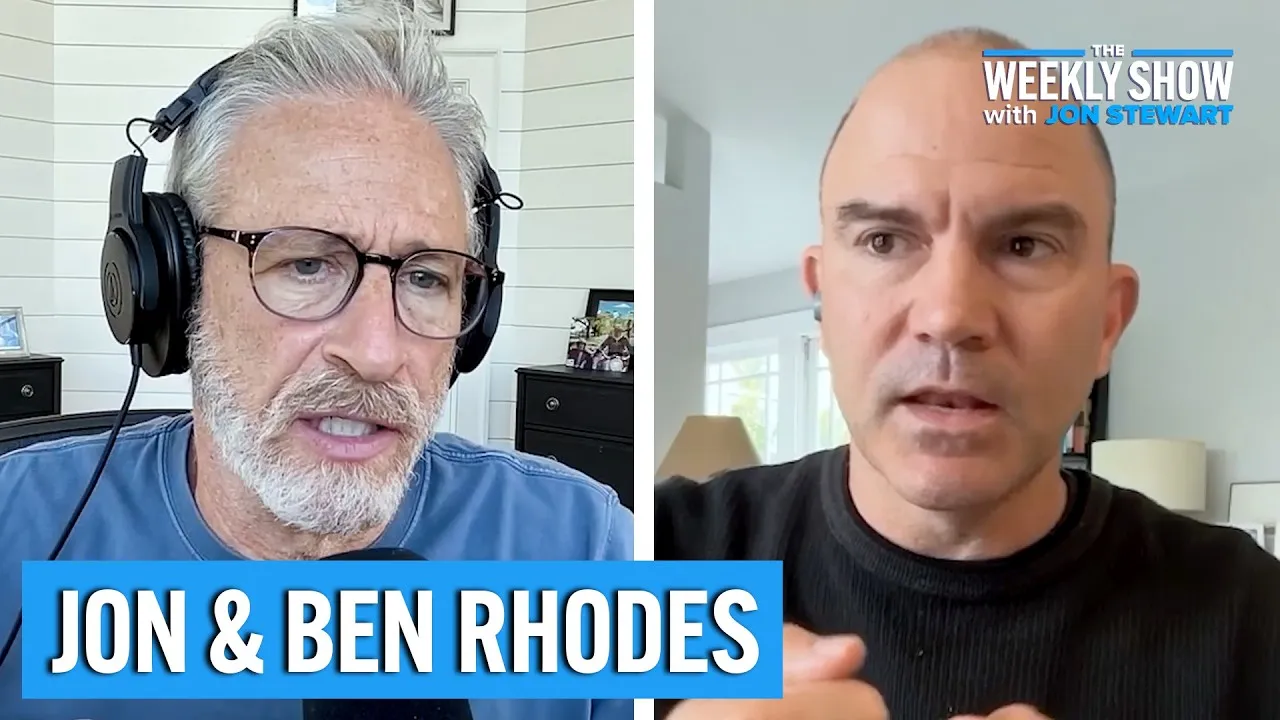
 Jon Stewart opens by announcing, with maximum deadpan, that America has won the war in Iran. The only complication is that Iran also believes it won. And so here we are. It is a perfect setup for Ben Rhodes, a man who spent years inside the rooms where these decisions get made, watching the country spend the last several months doing exactly what every war game said not to do, in pursuit of something that looks suspiciously like the deal Trump blew up in 2018.
Rhodes is a good guest for this kind of conversation because he is not performing anguish. He is genuinely, quietly furious in the way that only someone who watched the sausage get made can be. He was in those briefing rooms. He sat through Benjamin Netanyahu’s presentation on bombing Iran’s nuclear program, a presentation that, Rhodes notes, was delivered with such identical consistency over the years that Obama’s attention would visibly wander during the phone calls. The pitch never changed. The answer, every time they war-gamed it, was the same: you cannot bomb nuclear knowledge out of existence, and the Iranians will close the Strait of Hormuz.
Every scenario we looked at, we war gamed it. We were briefed by Bibi Netanyahu on what a great idea it would be to bomb the Iranian nuclear program. We got the same version of the same presentation Trump did.
The Strait of Hormuz, through which 20 percent of the world’s fossil fuel energy flows, is not a very large body of water. This is Rhodes’s understated way of saying: of course they closed it. Every model predicted they would. And now Iran is treating it like a toll road, collecting fees from passing tankers, having effectively demonstrated a deterrent that functions, Rhodes argues, like a nuclear threat of its own. America is unlikely to strike again. So the war has, in concrete terms, given Iran more revenue, more security, and a more militarized government dominated by the Islamic Revolutionary Guard Corps, which is not exactly the reformist transition Trump seemed to be banking on.
The best thing Trump could get, literally the best thing that he could get out of this war, which still I don’t think would have been worth anywhere near the cost that we paid, is something approximating the Iran nuclear deal, the JCPOA.
The Machine That Keeps Building Enemies
The conversation finds its real teeth when Stewart pushes Rhodes on the structural question: why does this keep happening? Not just with Trump, but with Obama, with Bush, with every administration that campaigns on restraint and then finds itself pulling levers. Rhodes’s answer is worth sitting with. Post-9/11, the United States built an enormous infrastructure for killing people across North Africa, the Middle East, and South Asia. Bases, intelligence platforms, Special Forces. And once you build that machinery, it becomes self-sustaining. It keeps finding enemies. Someone gains territory in Somalia. A bad actor pops up in Mali. Netanyahu arrives with a very consistent PowerPoint.
Rhodes goes further than most former officials would. He says the machine functions like an empire, and empires create chaos along their periphery, whether they intend to or not. The refugee crisis that radicalized European politics to the far right? A downstream effect of American intervention. The militarized equipment now used by ICE agents, some of whom were trained in counterinsurgency tactics in Baghdad? Same pipeline. He is not describing a conspiracy. He is describing a system that produces these outcomes regardless of the intentions of the people inside it.
We have to come to terms with the fact that we have an empire. We’ve been acting as if we do. Because if I talk to some friends from other places, what they say to me is, this is what empires do. They break things on the periphery. They keep the rest of the world violent and chaotic so that you can dominate things.
Congress, the Founders, and the One Fix Nobody Will Do
Stewart keeps pressing on what, exactly, would stop this. Rhodes lands on an answer that is both obvious and apparently impossible: congressional authorization. The founders put it in the Constitution. The War Powers Act reinforced it. If a president had to go back to Congress before every use of military force, Rhodes argues, there would be far fewer wars, because members of Congress know that war is unpopular. He cites Marco Rubio voting against authorizing strikes on Syria in 2013 after spending months attacking Obama for not striking Syria. The political incentive to avoid ownership of a war is strong. Use it.
Stewart’s version of this point is, characteristically, better as a one-liner. The bar for military intervention, he says, should be the same as the bar for releasing the Epstein files. If the government can hold that line, it can hold the line on bombing. Rhodes completes the thought: on dumb wars. It is, genuinely, the sharpest formulation of a very old argument. And the fact that it lands as a joke says everything about where we are.
Rhodes closes with a plug for his book, which traces American political argument through fifteen speeches from Benjamin Franklin to the present. Stewart, who has been nodding along for an hour, lights up. Of course he does. The whole conversation has been about what happens when a country loses the capacity to make an argument and just starts pushing buttons instead. Six trillion dollars and counting on the War on Terror, and the Strait of Hormuz is a toll road. Somebody should write that speech.
Graham Platner Wants to Be the Oyster Farmer Who Fixes the Senate
A Marine combat vet from Sullivan, Maine showed up on Jon Stewart's podcast and spent an hour saying the quiet parts loud about why Democrats keep losing.
Amy Goodman Has Been Right About Everything for Thirty Years and Nobody Paid Her For It
The Democracy Now founder joins Jon Stewart to talk about what journalism actually costs, and what the corporate press gave away for free.
The Diary of a CEO's unnamed war expert says a US strike on Iran's power plants would be worse than a nuclear weapon
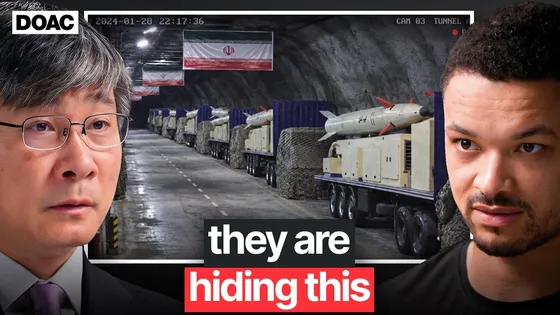
The claim is less prophecy than pressure-test, but it reveals how quickly grand strategy can start sounding like a hostage note.
Patrick Bet-David says foreign leaders snubbed JD Vance because they think Marco Rubio will be president next
The PBD Podcast turned a few awkward diplomatic clips into a 2028 power read, and the read says JD Vance has a respect problem.
The circuit, read weekly. No noise.