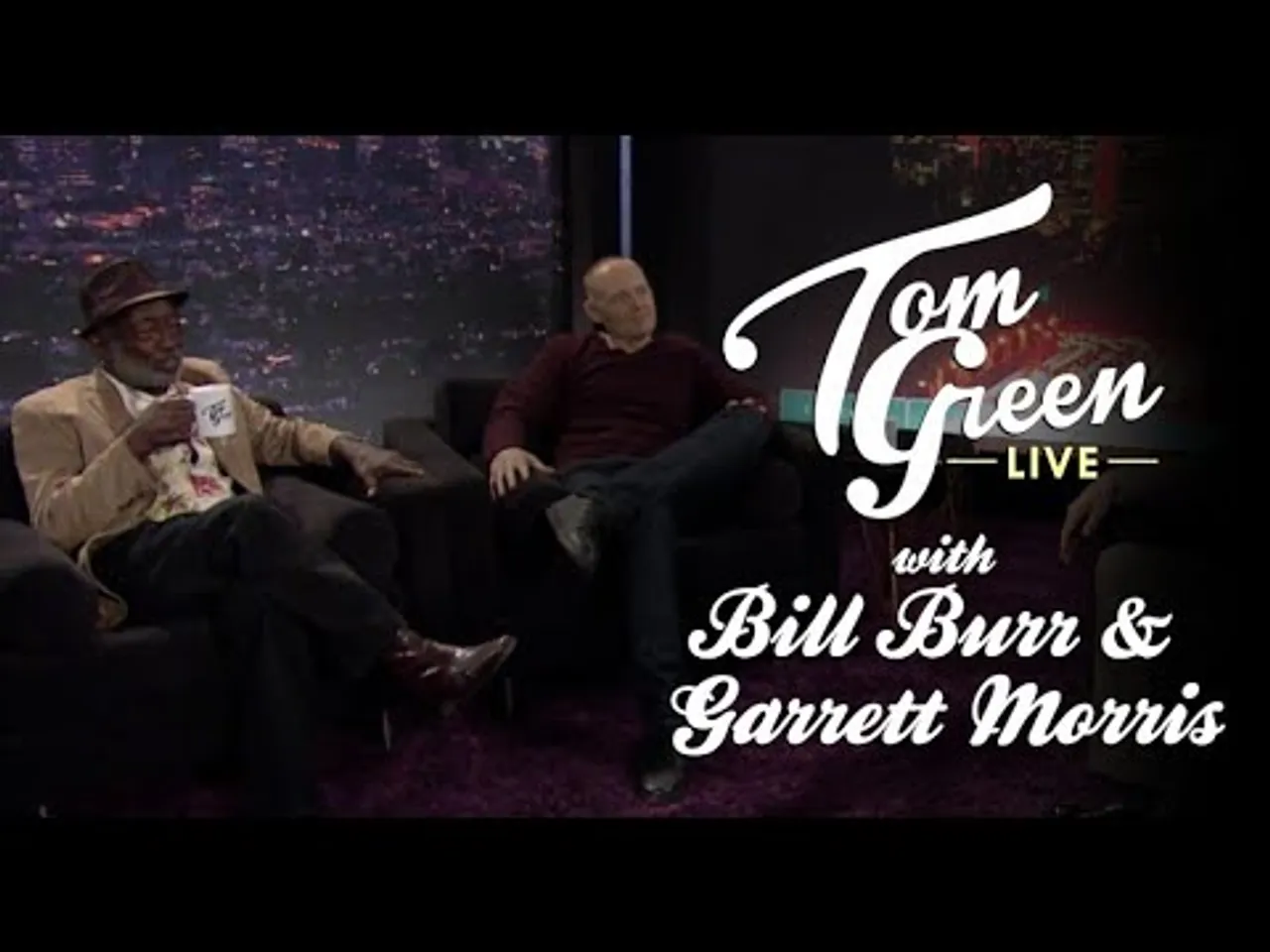
Bill Burr and Garrett Morris Reminisce About Carnegie Hall, Cocaine, and Getting Shot
Two comics from different eras swap stories on Tom Green's web show, and somehow it works.
Listen on YouTube
 WATCH NOW↓
 Garrett Morris has a missing vertebra. He lost it when a 22-caliber bullet ricocheted into his lumbar spine in February 1994, lodged there, got infected, and had to be surgically removed. He spent time in a wheelchair, a body cast, endured ten operations and a colostomy that lasted six months. He tells this story on Tom Green’s web show, casually, between a bit about an Iceland cousin-detection app and a plug for his Saturday blues night at a club on Crenshaw. Bill Burr, sitting next to him, says nothing. What is there to say.
This is the thing about this episode of Laugh Trax. On paper it is a modest production, Tom Green hosting a livestream with call-in questions from people named Josh in Massachusetts and Carlos in California. In practice it is a genuinely weird and frequently great hour of two comics being honest about their jobs, their failures, and in Morris’s case, the kind of biographical detours that make you put your phone down.
Burr on the Craft of Staying Alive Onstage
Burr is in an unusually reflective mood. He admits he’s happy right now, which he frames as a professional problem. He doesn’t write his material down, just scribbles a word or two on whatever’s nearby and figures out the bit in front of a crowd. His current obsession is a YouTube video about a woman teaching sign language to a gorilla. He is bothered, specifically, that she never once asked the gorilla how it felt about living in a zoo. That’s the bit. That’s how his brain works.
I don’t write. I just do it on stage. It doesn’t work for me, and I’m lazy.
He talks about middling for a comic at the Improv early in his career, watching this guy tag jokes every single night, always finding one more angle. That lesson stuck. Burr invented a personal rule: whenever he feels robotic onstage, he improvises harder into the joke, even if it bombs. Especially if it bombs. The bomb resets him. It’s a weirdly practical philosophy from a guy who built his reputation on seeming to have no filter at all.
Even if it bombed, it was just like a bucket of water, like Jesus, I just bombed on that joke.
He also owns, without much prompting, that he once walked out after Amy Schumer at a Comedy Oddball show and immediately went into material trashing women in front of her entire fanbase. He knew it was wrong while it was happening. He describes the feeling afterward as just… off. A blogger destroyed him for it. He seems, years later, genuinely puzzled by his own impulse. That is a more interesting response than either doubling down or performing contrition, and it’s worth something.
Morris Plays the Long Game
Then Morris arrives, asks about the tea, mentions his medical marijuana card, and proceeds to be the most compelling person in the room for the rest of the hour. He was hired at SNL as a writer, not a performer. He got cast because Gilda Radner saw him improvise a ten-minute cab ride scene and told Lorne Michaels to stop holding auditions. He was, by his own account, a serious introvert with a cocaine problem who mostly went home with women instead of hanging out with John Belushi. Tom Green responds to this information by saying it sounds like he was living the dream.
I was a very serious introvert who also had a cocaine problem so I didn’t hang out with the guys.
His favorite SNL character came from a real incident he witnessed involving Harry Belafonte and a woman who stood up at an Art Linkletter show and sang a song about killing Black people on live television in the 1950s. Morris filed that away for years, then flipped it into a death-row sketch where his character sang about shooting white people. Lorne Michaels had given him and the other performers a free room and told them to come back with something. Morris came back with that. It aired.
He is also, at the time of this taping, running a Saturday night blues and comedy show at a club in South Central Los Angeles, shopping a production deal to Warner Bros., and missing a vertebra. He is fine, he says. Grateful, even. The most satisfying thing in his career right now is being taken seriously as a producer. Not the SNL years, not Two Broke Girls. The club on Crenshaw.
I can’t tell you how I feel about that because you know, how you know you’re good but I didn’t know whether I could do it.
By the end, Burr’s greatest career achievement, the one he names when a caller asks, is that Garrett Morris said his name during a bit. He is not joking. Morris, who has been shot, blacklisted, and was present at the creation of one of the most durable television institutions in American history, laughs and moves on.

The Circuit: the week the tidy story kept losing
Across nine conversations this week, some of the biggest names on the podcast circuit spent their time roughing up the clean version of events, the plague that supposedly ended Rome, the aliens in the government freezer, the trophy that counts as a World Cup. What kept surfacing was a preference for the smaller, stranger, less quotable truth.
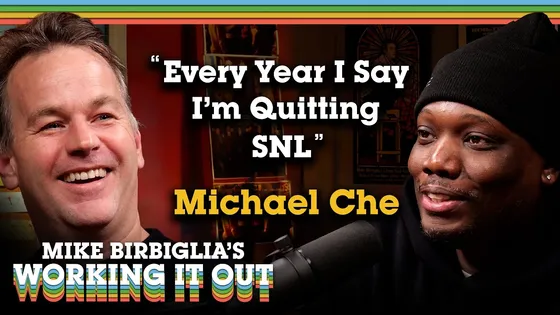
Michael Che Finally Shows Up for Mike Birbiglia's Podcast, Five and a Half Years Later
Two comedians who actually trust each other spend an hour workshopping bits, diagnosing SNL, and accidentally conducting therapy.
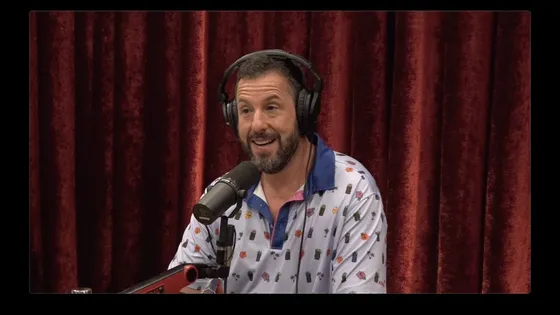
Adam Sandler on Bombing, Kevin Meany, and Why He Said Yes to the Netflix Special
Two hours and forty minutes of comedians talking about comedy, and almost none of it is boring.
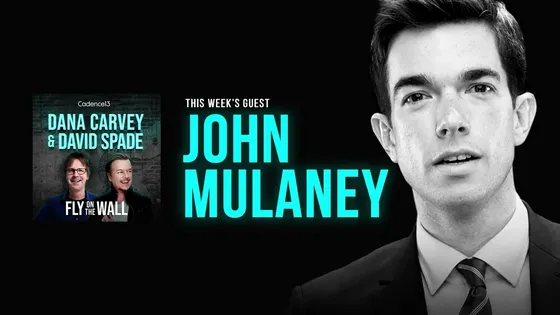
John Mulaney on Arenas, Addiction, and the SNL Writer Who Thought He Could Dress Himself
Mulaney joins Dana Carvey and David Spade to talk sobriety, Madison Square Garden, and why Mickey Rooney wanted to shoot a serial killer.
The circuit, read weekly. No noise.