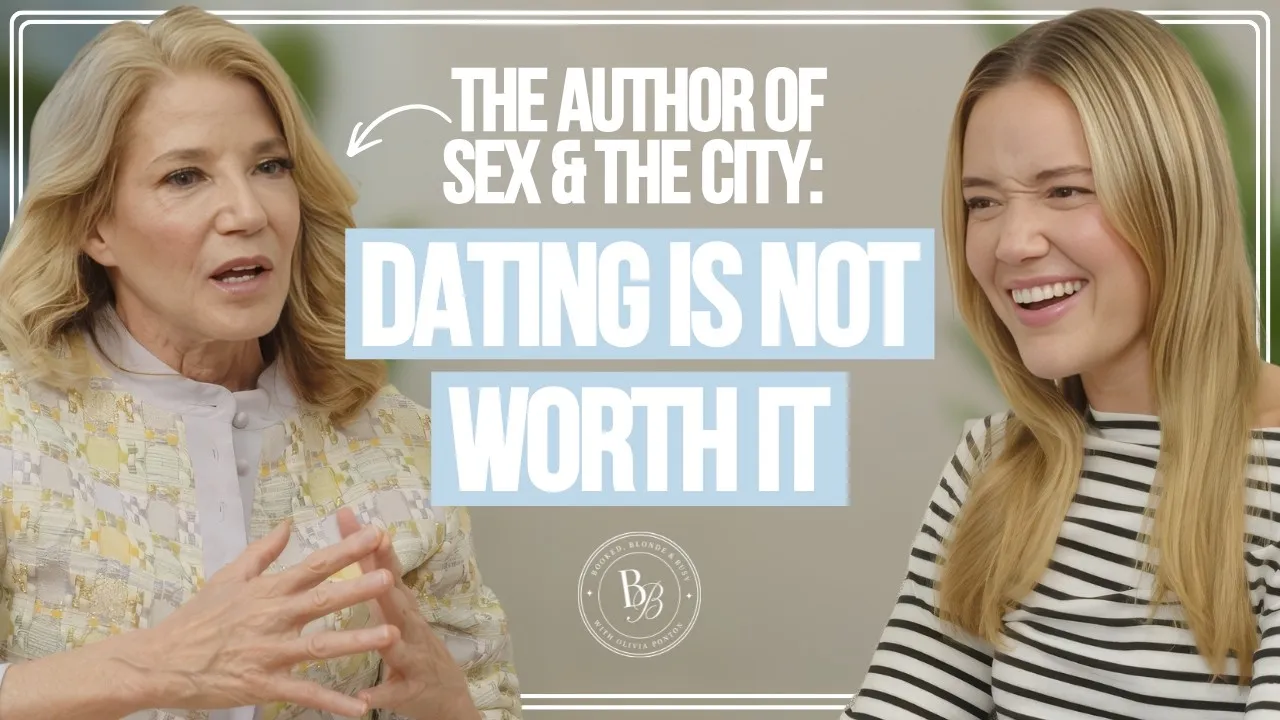
Candace Bushnell says a typical 90s New York night was 20 drinks, a couple grams of coke, and two packs of cigarettes
The Sex and the City author gives Gen Z the least cosmo-glossy version of the myth: the real New York was darker, meaner, smokier, and much more financially brutal than the HBO fantasy.
Listen on YouTube · Spotify · Apple Podcasts
 WATCH NOW↓
 The cosmo, in Candace Bushnell’s telling, comes with a warning label and possibly a cardiologist. On Booked, Blonde & Busy, Candace Bushnell says a normal 90s New York night was not four friends clinking martinis under flattering HBO lighting, it was “20 drinks,” “a couple grams of coke,” and “two packs of cigarettes.”
That is the useful thing about Bushnell as a keeper of the Sex and the City flame. She is not especially interested in protecting the snow globe. Olivia Ponton arrives with the proper Gen Z reverence, virgin cosmo included, and Bushnell responds by handing over the real inventory: Studio 54, the Mudd Club, Bret Easton Ellis with a whiteboard full of nightly obligations, everyone smoking, everyone ranking everyone else by status, everyone pretending this was glamorous because sometimes it was.
you know, a typical night was you know, have 20 drinks, like a couple grams of coke, and probably like two packs of cigarettes.
Is that literal ledger-keeping or nightlife mythmaking with a nicotine stain? Probably both. “Twenty drinks” has the sound of a war story that has been buffed by decades of retelling, but the broader claim rings true: the pre-phone, pre-wellness, pre-vape-pen city Bushnell describes was physically punishing in ways younger listeners may understand only as costume design. Today’s party girl leaves the table to smoke outside and checks Find My Friends. Bushnell’s cohort apparently tried to become a Keith Haring wall.
The book was never the cupcake version
Ponton keeps circling back to how real Bushnell’s stories feel, especially for young women in New York, and Bushnell keeps correcting the franchise’s later softness without sounding bitter about it. The original column, she says, was “social anthropology,” written for a tiny but powerful New York Observer audience that knew exactly who was being anatomized. The HBO show made Carrie Bradshaw a global avatar. The book is more like getting cornered at a party by someone rich, cruel, observant, and absolutely correct.
these are real people who said really said these things. And these are real attitudes that people have.
That matters because the modern Sex and the City revival cycle often treats the original as either comfort food or a problematic museum object. Bushnell’s version is harder to flatten. She is saying, essentially, no, the book was not a fantasy of shoes and brunch. It was a field report from a small island where ambition, sex, money, and humiliation were all circulating in the same air, along with secondhand Marlboros.
She also lands one of the better explanations for why the show keeps finding new viewers: it tells young women that marriage does not have to be the organizing principle of adulthood. That sounds almost quaint now, until you remember how much of pop culture still quietly routes women toward the final boss of being chosen.
The real advice is less Carrie, more accountant
The episode’s funniest swerve is that Bushnell’s advice for Gen Z dating is both a joke and not a joke at all: “Don’t bother.” The real prescription is even less romantic. Get the money. Not because money makes you invulnerable, but because depending on a man for survival narrows the room you are allowed to stand in.
What I would have said to myself was get the money.
This is where Bushnell’s old New York diagnosis snaps neatly onto Ponton’s influencer-era world. Ponton talks about young women making serious money through content, and about men who claim to want independent women until independence starts picking up the check. Bushnell, delighted, calls herself into the idea of the “trophy boyfriend,” but points out that women still get shamed for dating a man with less money, less status, or less red-carpet usefulness.
You don’t pick the wrong person. That’s what the majority of men are like.
That is the kind of line that will make some listeners hiss and others screenshot the transcript. It is sweeping, yes. It is also recognizably Bushnell: funny, fatalistic, allergic to sentimental cover stories. Her whole project has been watching what people do when they want sex, money, status, love, or all four, and refusing to pretend the motives are prettier than they are.
So the episode’s headline image is not Carrie with a laptop and a cigarette, asking a neat little question about love. It is Bushnell remembering a city where everyone went out every night because staying home offered nothing, then telling the women who inherited the fantasy to make their own money and stop waiting for men to become plot resolution. If the old New York was fueled by vodka, cocaine, and cigarettes, the new survival kit is blunter: cash, friends, and a very limited tolerance for nonsense.
- What did Candace Bushnell say a typical 90s New York night was like?
- Bushnell said the nightlife around her Sex and the City years was fueled by cocaine, cigarettes, vodka, and astonishing volume. Her example was not a dainty cosmo montage, but 20 drinks, a couple grams of coke, and two packs of cigarettes.
- Does Candace Bushnell think Sex and the City was darker than the TV show?
- Yes. She described the original book as dark social anthropology, built from real people, real attitudes, and a New York status game that was not softened to make everyone likable.
- What advice does Candace Bushnell give young women now?
- Her joking dating advice is basically, do not bother. Her more serious advice is to chase money and ambition first, because the wrong relationship can derail a woman and, in her view, men often do not rank relationships as highly as women do.
Candace Bushnell says she got married after three months because her ballet dancer husband only had July Fourth weekend off
The Sex and the City writer turned a Gen Z slang quiz into a tiny manifesto for pre-Instagram romantic recklessness.
Veronica Roth says she never finished 'The Hunger Games' because the violence is too emotionally difficult
The architect of the 'Divergent' universe admits she tapped out of her rival dystopian franchise because it was just too bleak.
Kier Gaines says Xaden's protection in Fourth Wing is still manipulation
The licensed therapist gave BookTok's favorite brooding protector the clinical side-eye, and honestly, he earned it.

Emma Brooks says Sally Rooney made her call her therapist crying on a New York sidewalk
The Booked, Blonde & Busy guest turned a bookish chat into a very funny warning label for reading Sally Rooney while emotionally available.
The circuit, read weekly. No noise.