Colleen Hoover says the Verity movie cut the book’s third child because there was too much death
The adaptation’s child count was not an accident, Hoover says, and the reason is as bleakly practical as Verity itself.
Listen on YouTube · Spotify · Apple Podcasts
 WATCH NOW↓
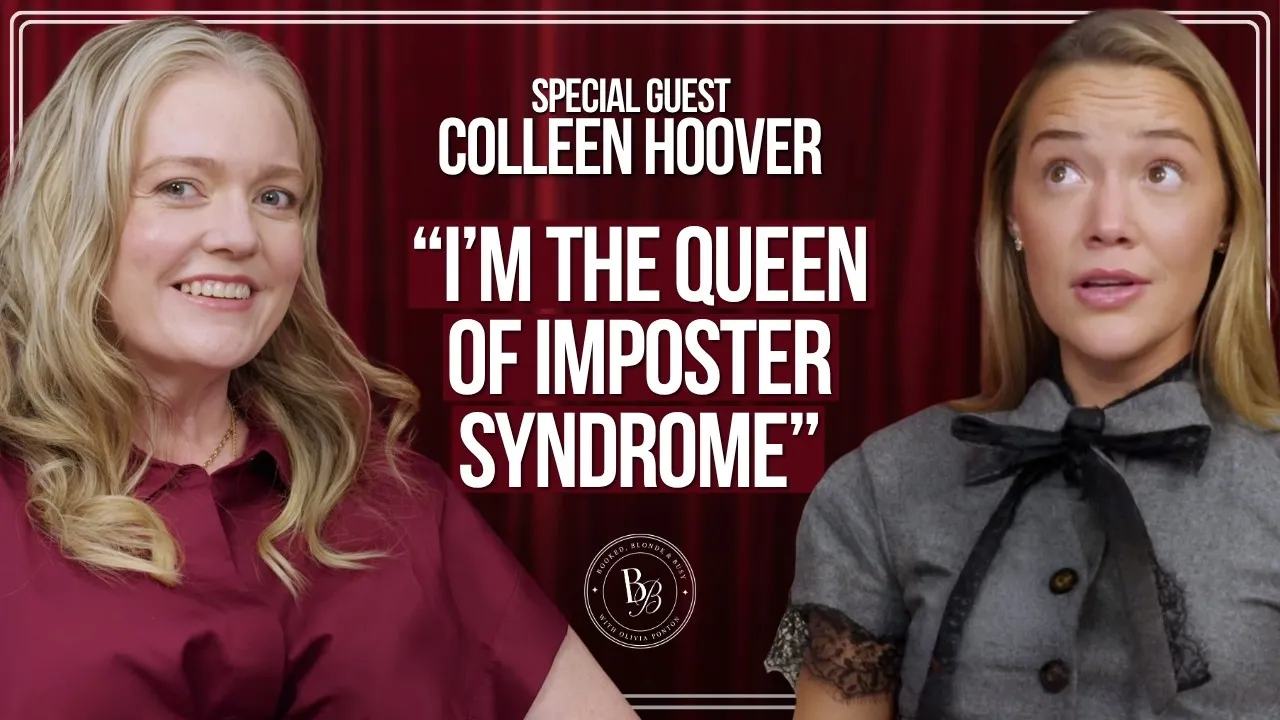
Colleen Hoover said on Booked, Blonde & Busy that the Verity movie cut the book’s third child because the film already had too much death and less room than the novel to carry it. The book has three children, the movie has two, and yes, this is the kind of adaptation math that sounds insane until you remember which book we’re talking about.
The answer came when Olivia Ponton asked Colleen Hoover about the biggest difference between the book and the film. Hoover did not pick the house, the ending, the sex, the manuscript, or the eternal Team Letter versus Team Manuscript civil war. She picked the head count. Specifically, the child head count. Verity fandom, please put down the highlighter tabs and breathe into a paper bag.
Um the amount of children. I don’t know if you noticed there were three in the book and two in the movie. And we we made that decision because I think it was an Amazon note. Like there’s a lot of murdering going on.
This is the rare adaptation change that is both hilarious and hard to argue with. In a novel, Hoover can spread horror across pages, pauses, interior panic, and Lowen’s increasingly bad vibes. In a film, dead children arrive with faces, bodies, flashbacks, and the blunt efficiency of screen time. Three kids can be gothic excess on the page. Onscreen, it can tip into, “Ma’am, this is an Amazon movie.”
Hoover’s phrasing was very Hoover: casual, morbid, a little self-aware, like someone explaining why she only ordered two emotional support coffins instead of three. She added that the book gives you more room “to have children die,” which is the sort of sentence that should probably come with its own dust jacket blurb.
The missing child is not the real Verity problem
For readers who know Verity by scar tissue, the change is notable but not necessarily fatal. Hoover herself wondered whether she should warn fans so they would not spend the movie hunting for the missing third child, then decided the absence does not really break the story. Ponton, who described herself as obsessed with the book, agreed she did not miss it.
That feels right. The number of children in Verity matters less than the sick little machine Hoover built around motherhood, authorship, suspicion, and the terror of being read literally. The movie can lose a child and still keep the main nightmare intact: what if someone found the darkest thing you ever wrote and treated it as a confession?
I wrote Verity from Lowen’s perspective and when I finished that book, I was just as confused as Lowen.
That is the more revealing admission. Hoover has been asked forever whether the manuscript is true or the letter is true, and here she still refused to plant a flag. At first, she said, she leaned manuscript. The letter felt like Verity trying to “cover her ass.” But after annotating the book recently, she reread herself into sympathy.
This is either maddening or perfect, depending on your tolerance for a writer declining to solve the escape room she built. My verdict: perfect for this book, dangerous as a general policy. Verity works because the ambiguity feels contaminated, not coy. A clean answer would make the whole thing smaller, like explaining a nightmare with a spreadsheet.
I kind of like after writing that epilogue a few years later, I think they’re all just crazy and deserve each other.
Hoover knows exactly what kind of writer she is
The episode also doubled as a defense of Hoover’s style, which has become its own internet blood sport. Ponton called her a gateway writer, and Hoover accepted the label with the confidence of someone who knows a lot of people have walked through that gate and then bought 12 more paperbacks. She said she likes fast, easy, emotional reads and writes that way on purpose.
That matters because the Verity change is not some sacred-text betrayal. It is exactly how book-to-film adaptations work when the author is practical about the difference between pages and images. Hoover is not pretending her novels are marble tablets lowered from the mountain. She wants the feeling to survive. The child math can change.
I don’t write to please other writers. I write for a fun quick reading experience as an escape from your real life and apparently it’s working for a lot of readers and I’m not going to change. I’m never going to use a thesaurus.
That line is the whole Colleen Hoover industrial complex in miniature: defiant, plainspoken, allergic to prestige theater, and extremely aware that BookTok did not make her famous because readers were craving subordinate clauses. If the Verity movie keeps the dread, the manuscript, the house, and the feeling that everyone should be separated by a court order, fans will survive the missing child.
If anything, the cut makes the adaptation sound more faithful to Hoover’s real project, not less. She is not counting bodies for accuracy. She is counting how many the movie can hold before the audience stops gasping and starts doing logistics.
- Why did Colleen Hoover cut a Verity child from the movie?
- Hoover said the Verity film changes the book’s three children into two because there was already “a lot of murdering going on” and because a movie has less room than a novel to carry that much child death. She attributed the change partly to an Amazon note, then added that viewers probably would not miss the third child. It is a grimly funny answer, but also a sensible adaptation choice.
- Does Colleen Hoover think the Verity manuscript or letter is true?
- Hoover did not give a clean answer. She said that when she first finished Verity, she leaned toward the manuscript being real and the letter being a cover story, but rereading the book for Kindle annotations made her feel sorry for Verity. Her current position is closer to chaos theory: everyone in the book may be unstable enough to deserve the mess.
- What is Colleen Hoover’s new thriller about?
- Hoover said she has about 10,000 words of a new thriller and an outline that could change wildly. She described it as a “trapped thriller situation,” with a large cast, a romance readers will root for, and not much interest in staying obedient to the outline.
Emma Brooks says Sally Rooney made her call her therapist crying on a New York sidewalk
The Booked, Blonde & Busy guest turned a bookish chat into a very funny warning label for reading Sally Rooney while emotionally available.
Olivia Ponton says she uses ChatGPT book summaries in club bathrooms to fake having read books
The funniest confession on Booked, Blonde & Busy is also a tidy diagnosis of reading culture in the BookTok age.
Danielle Robay says 10 out of 10 authors told her they don't write for BookTok
The Bookmarked host drew a clean line between BookTok as a fan engine and BookTok as an actual writing room, and she says authors are not letting TikTok hold the pen.
Josephine Skriver says A Court of Thorns and Roses should be animated like Arcane, not live action
The model and BookTok reader thinks the only way to make Sarah J. Maas’s fae look right onscreen is to stop pretending ordinary humans can pull it off.
The circuit, read weekly. No noise.