Creatine researcher Stuart Phillips says adding 5 grams of creatine to antidepressants doubled remission rates in women with major depression over 8 weeks
The muscle supplement has a surprisingly strong case for your brain, but one number from a Utah depression trial is the one worth arguing about.
Listen on YouTube · Spotify · Apple Podcasts
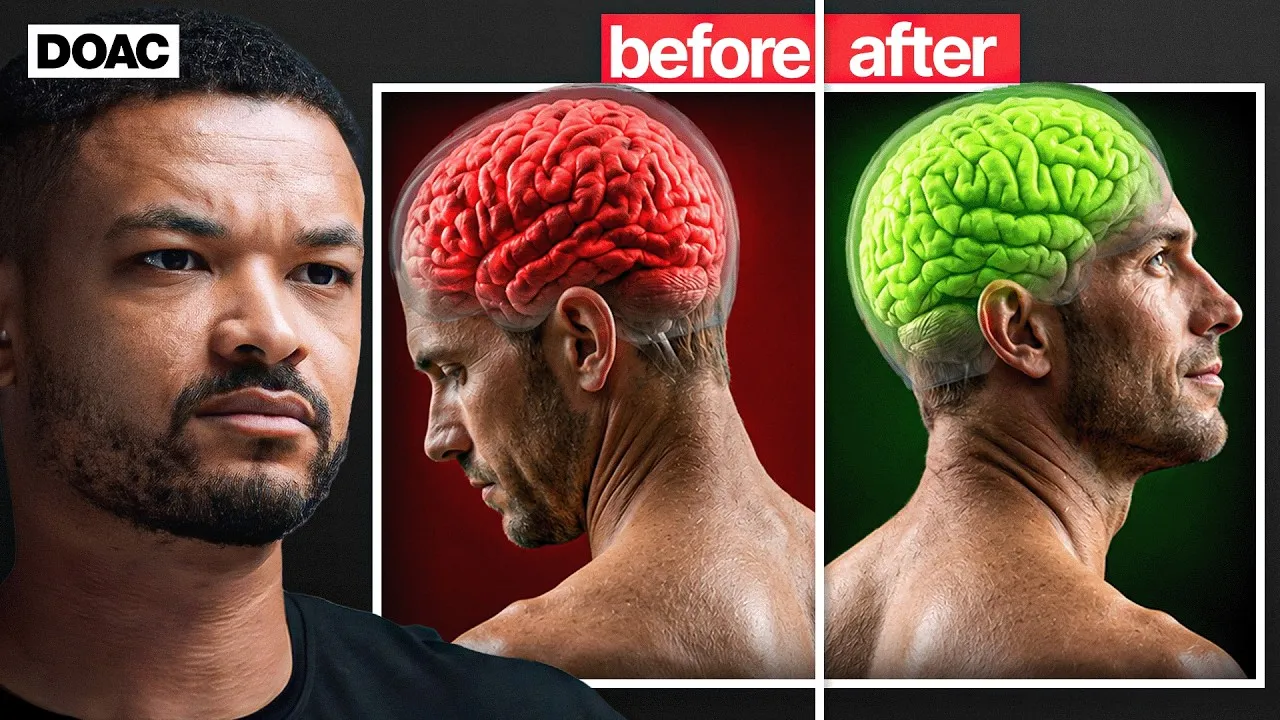 WATCH NOW↓
 Women with major depression who added 5 grams of creatine to their daily antidepressant doubled their remission rate over 8 weeks. That claim, dropped almost casually in this episode of Diary of a CEO, is from a real clinical trial out of Perry Renshaw’s group at the University of Utah. It is the kind of number that should be on the front page of every psychiatry journal and instead it is sitting in a podcast episode ostensibly about gym supplements.
The guest, a creatine researcher who has spent his career studying the compound’s effects on muscle and, increasingly, the brain, is careful not to oversell it. He says creatine by itself has never been shown to be a standalone treatment for depression. It works as an adjunct, alongside SSRIs or cognitive behavioral therapy. But double the remission rate is not a footnote. That is a headline, and the fact that your doctor has probably never mentioned it is the actual story.
In a clinical trial of women with major depression, adding 5 grams of creatine to their daily anti-depressant doubled their remission rate over 8 weeks.
The Brain Stuff Is Real, Just Not Magic
The mechanism the researcher keeps returning to is bioenergetics. People with clinical depression, Alzheimer’s, concussion, and anxiety all tend to have measurably lower creatine levels in the brain. The theory is not that creatine makes a healthy brain sharper, it is that it restores something that stress and disease have depleted. He puts it plainly: creatine can act as a safety net. Not a rocket booster.
It doesn’t boost the brain. It likely just brings those levels back up to normal levels before stress and it might give you a little bit more.
This is an important distinction that a lot of the creatine-hype content on social media skips entirely. A separate study cited in the episode found that over 200,000 adults who consumed the least dietary creatine had the highest rates of depressive symptoms. A landmark trial of 20 Alzheimer’s patients found that 20 grams daily for 8 weeks increased brain creatine levels by 11 percent and improved cognitive test scores. The Alzheimer’s study had no placebo arm, which limits its conclusions, and the researcher says so. He is not doing the thing where you bury the caveats.
There is also a sleep finding worth flagging. A study on young women found they slept an average of one hour longer on training days when taking creatine versus placebo. The researcher’s own read on it is uncertain: maybe the brain recovered faster, maybe they just trained harder. He says it needs to be replicated in men before anyone gets too excited. Fair enough. But an extra hour of sleep from a supplement that already has a 40-year safety record is a data point people will not forget.
Why Your Doctor Still Hasn’t Brought This Up
The episode title asks why doctors don’t prescribe creatine, and the guest never gives a fully satisfying answer. The honest version is probably this: it is cheap, unpatentable, and lives in the supplement aisle next to things that do not work. The research on muscle performance is 40 years old and settled. The brain and mental health research is newer, exciting, and still running trials without placebo controls. Psychiatrists are not going to recommend something until the evidence clears a higher bar.
If it can have any benefit to any neurological disease, it’s huge. And there’s a lot of hope, especially around Alzheimer’s.
The researcher threads this carefully. He is clearly a believer, but he keeps ranking creatine below sleep, weight training, and protein in his toolbox metaphor. Creatine is not the hammer or the screwdriver. It is the multifunctional wrench: useful in more situations than you expected, still not the first thing you reach for. That framing is more credible than the breathless supplement-industry version of this conversation, and it makes the depression remission number land harder precisely because he is not trying to oversell everything else.
The one thing missing from this episode is a direct answer to why the mental health findings haven’t moved clinical practice faster. Doubled remission rates, reduced brain creatine in depressed patients, a 5-gram daily dose with essentially no side effects. At some point the gap between the data and the prescription pad stops being a mystery and starts being a policy failure.
Darren Candow says UFC fighters should look at creatine before getting hit because rodent studies show faster concussion recovery
The creatine researcher’s boldest claim was not about bigger lifts, it was about whether the gym’s most boring powder might belong in the fight camp brain-protection kit.
Brian Greene says by the time we see an AI intelligence explosion, it may be too late to stop it
The physicist is not buying every 2029 superintelligence prophecy, but he thinks the math of exponential growth is exactly what makes AI risk so nasty.

Darren Candow says elevated kidney markers from creatine are false positives 99 out of 100 times
The creatine researcher says the supplement’s scariest reputation is mostly a lab-test misunderstanding, not kidney damage.

Rena Malik says people who have sex once a week live 49 percent longer than people who have sex once a year
The urologist brings a big longevity stat to The Diary of a CEO, then quietly admits the boring but crucial part, sex is probably a marker of health as much as a cause of it.
The circuit, read weekly. No noise.