Dennis Quaid on Reagan, Jerry Lee Lewis, and Getting Shot by a Ricochet
The actor brings a bulldog named Peaches and more presidential trivia than any podcast has a right to contain.
Listen on YouTube
 WATCH NOW↓
 Dennis Quaid walks into David Spade’s house with a bulldog named Peaches, who spends the entire conversation splayed on the carpet making sounds Quaid describes as not sleeping, just content. That detail is load-bearing. The whole episode has that energy: loose, unhurried, occasionally profound by accident. Peaches breathes heavily. The men talk about Reagan.
The Reagan biopic is the nominal reason for the visit, and Quaid is genuinely good on it. He took the role in 2018, terrified, spent time at the Reagan Ranch up a terrible five-mile road in California, and came back convinced. What sold him wasn’t the politics but the texture of the man’s private life. Two single beds zip-tied together to make a king. GE appliances because of the old sponsorship deal. A bookcase with every book Reagan had read since age nine. The secret service agent who guarded the ranch long after Reagan died.
His bookcase was there which had every book he’d ever read going back to when he was 9 years old. And there was just a feeling there that you could just feel his presence in a way.
Quaid is careful and convincing about Reagan’s political legacy without being a partisan bore. He acknowledges the AIDS response was inadequate, Iran-Contra was on Reagan’s watch, the trickle-down critique had real teeth. Then he says Reagan was probably the greatest president of the 20th century. Dana Carvey, who spent years doing the George H.W. Bush impression that defined a chunk of his career, nods along. Spade mostly listens. Nobody pushes back hard. It’s a conversation between three guys who came up in the Reagan era and feel warmly about the aesthetic of it, the Tip O’Neill-sharing-a-drink bipartisanship, the sunny defiance, the Jack Benny-style pause after a debate laugh line. Whether you buy the nostalgia or not, Quaid earns his take by having actually done the homework.
Screwed the Pooch, or Didn’t
The best stretch of the whole episode is Quaid rehabilitating Gus Grissom, the Mercury astronaut who The Right Stuff portrayed as panicking and blowing the hatch on his capsule after splashdown. Quaid has clearly been carrying this grievance for forty years. His argument is simple and damning: the escape hatch blew itself due to pressure differentials they hadn’t accounted for, Grissom nearly drowned getting out, and if he’d actually screwed the pooch, NASA wouldn’t have given him the first Gemini mission and then the first Apollo mission, where he died in the launchpad fire. Quaid calls it his one regret about the film. Tom Wolfe used it as a literary device. The Grissom family is still alive. More people saw the movie than remember the actual history. That’s a real thing to sit with.
If he had screwed the pooch, then why did they give him the first Gemini mission? And why did they give him the first Apollo mission where he wound up getting fried on the launch pad?
Great Balls of Cocaine
Quaid is refreshingly matter-of-fact about preparing to play Jerry Lee Lewis in Great Balls of Fire. He didn’t play piano before the role. He had a year to learn. He was also, he notes without drama, on cocaine at the time, which made him obsessive enough to practice twelve hours a day. He was in rehab six months after the film came out. He’s been clean for over thirty years. He says it the way you’d describe a useful tool you later threw away. Jerry Lee himself was one of his piano teachers, kept a .38 in one pocket and a bottle of grain alcohol in the other, and once sat at the piano for ten hours without getting up to use the bathroom. The showbiz-as-beautiful-self-destruction pipeline has never been summarized more efficiently.
I was on cocaine at the time because that will make you obsessed about anything. And so I was 12 hours, okay, a day, you know. The movie ended 6 months after the movie came out. I was in rehab for that, by the way.
Quaid closes the episode with a philosophy that sounds corny but lands because he means it. Still grateful to be working. Never get cocky. Treat the catering person the same as the lead. He has a one handicap golf game he abandoned because it was, as he puts it, too much time between films and diluted dreams of the tour. He lives in Nashville now, cites the zero state income tax and the collegial artistic atmosphere, and claims seventy-five percent of all American music regardless of genre gets made there. Peaches snores in agreement. The credits roll. Nobody solved anything, but the Grissom argument was genuinely good.
Maureen Callahan says Paramount slapping Mark Ruffalo as anti-Semitic is Hollywood’s canary in the coal mine
The claim is not just that Ruffalo picked a fight with David Ellison, it’s that Paramount’s response signals a new studio posture toward anti-Israel celebrity politics.
Megyn Kelly says Natasha Lyonne will die if she doesn't get treatment immediately after Tribeca meltdown
Kelly pulls no punches on the Russian Doll star's onstage appearance, calling it a failure of everyone in her orbit and drawing a direct line to Carrie Fisher and James Gandolfini.
Gilbert Gottfried and Artie Lange Do an Hour of Bits That Would Get a Network Fired
The Compound Media show is less a podcast than a controlled detonation, and somehow that's the whole appeal.
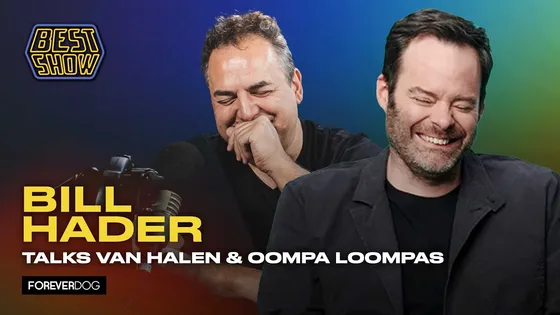
Bill Hader on Celebrity Text Chains, Van Halen Brothers, and the Oompa Loompa Union Meeting That Went Nowhere
The Barry creator stops by The Best Show to discuss fake press conferences, David Lee Roth's inexplicable EP, and a pitch to the Roald Dahl estate that died on arrival.
The circuit, read weekly. No noise.