DHH says one person can now build the 5 percent of Premiere or Photoshop they need on Linux
The Basecamp co-founder’s real claim isn’t that every solo coder is Adobe now, it’s that cloning the part you actually use has become weirdly plausible.
Listen on YouTube · Spotify · Apple Podcasts
 WATCH NOW↓
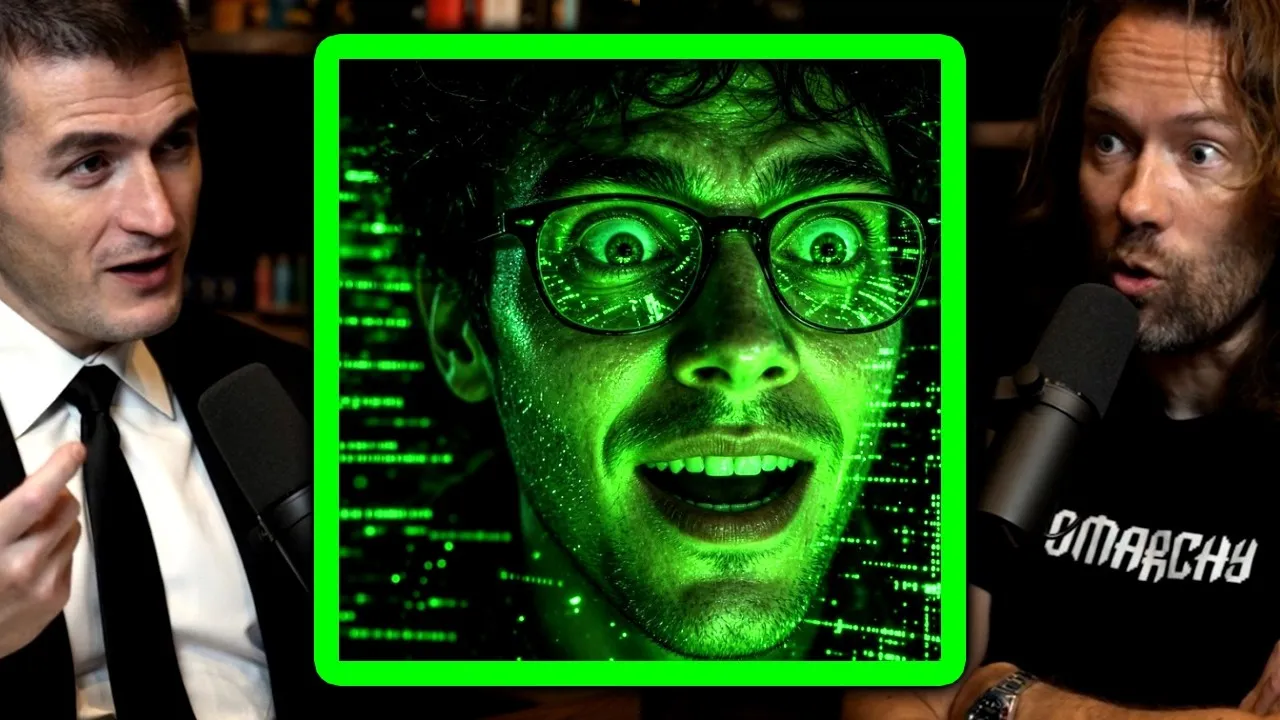
 DHH thinks the missing Adobe app on Linux is no longer a wall. On the Lex Fridman Podcast, David Heinemeier Hansson said one person can now start rebuilding the Mac or Windows software keeping them from switching, even Premiere or Photoshop, as long as they begin with the 5 percent they actually use.
That sounds deranged if you picture a lone developer recreating every corner of Adobe Premiere Pro, color panels, export presets, enterprise licensing weirdness, and all the little buttons that exist solely to humble you at 1:13 a.m. But DHH isn’t really selling a one-man Adobe. He’s selling something sneakier and more believable: the personal clone, the artisanal knockoff, the “I only need this bit” app built by a human with taste and an agent with no lunch break.
100% one person can.
The org chart eats the robot
DHH’s best point is not about code. It’s about companies. He has spent his career preaching small teams, fewer meetings, and the moral superiority of not turning every product decision into a hostage negotiation. So of course his theory of AI agents is that they work best when they are not routed through six people with calendar holds and a shared Figma file called Final_Final_New.
As soon as you’re having human teams work together on something, the bottleneck is rarely implementation. It’s human bandwidth and communication.
This is the part big-company AI decks tend to sand down into mush. DHH is saying the 10x fantasy dies the moment the agent becomes another worker trapped inside the approval machine. If a product manager, a designer, a VP, and a CTO all need to bless the thing, the agent may code fast, but the humans still move at human speed, which is to say, slowly, defensively, and with comments in Google Docs.
to get that magical 10x, 100x, in a few rare cases a 1,000x productivity boost, you have to interact with the agents directly.
He also takes a swing at the familiar question, if AI coding is so powerful, why haven’t Photoshop, Premiere, Office, and every ancient corporate interface been reborn overnight? His answer: because old software companies are built for the old speed. Their advantage becomes their ballast. They know how to run giant processes, not how to let one opinionated builder sprint at the machine.
The 5 percent doctrine
The search-friendly version of the claim, “one person can build Photoshop for Linux,” is the spicy one. The useful version is smaller. DHH invokes the old Microsoft Office joke: everyone only uses 5 percent, but everyone uses a different 5 percent. AI agents make that joke operational. Build your 5 percent. Ignore the rest. Suddenly the impossible app becomes a weirdly manageable personal tool.
If there’s a piece of software you depended on that bound you to Windows, it is completely within reach for you personally to start rewriting it.
That’s the claim worth arguing about on Reddit, because it hits exactly where desktop Linux has always hurt. Linux runs the internet, the cloud, your phone in disguise, and probably something in your kitchen. It has not run the mainstream creative desktop, mostly because professionals need specific apps with specific muscle memory. DHH says agents change the shape of that problem. Not by persuading Adobe to care. By letting users route around Adobe.
His proof is modest but real. He said that after moving away from macOS, he missed the clean Markdown writing environment of iA Writer, tried Typora, and then had an agent help build the simpler thing he wanted. Not a platform. Not a suite. A writing app.
And in I think about 20 minutes it had the first version. I started using and it wasn’t quite right. Within 2 days I’d given up Typora and I wrote and have written all of my essays since that moment in iA Writer.
That example is also the limit of the argument. A Markdown editor is not Premiere Pro. Video editing drags in codecs, hardware acceleration, effects pipelines, media management, weird camera formats, and the cursed goblin kingdom of export settings. DHH’s claim is strongest when it’s about taste-driven personal software and weakest when it starts wearing Adobe’s jacket.
Still, the provocation is useful. If the agent era produces better software, it may not arrive first as a gleaming replacement for the bloated apps everyone hates. It may arrive as a thousand smaller escapes, each built by someone who finally got impatient enough to stop waiting for the product roadmap.
- Did DHH really say one person can build Premiere or Photoshop for Linux?
- Yes, when Lex Fridman asked who would build Premiere and Photoshop for Linux, DHH answered, “100% one person can.” His more defensible version is narrower: don’t rebuild all of Adobe, rebuild the small part of the app you personally need.
- Why does DHH think big companies won’t get huge productivity gains from AI agents?
- DHH’s argument is that the bottleneck in large software companies is rarely typing code. It’s meetings, approval chains, product taste, and managers trying to be included in the shaping process.
- What example did DHH give from his own work?
- He said he used an agent to create a simple writing app in C++ and Qt, got a first version in about 20 minutes, and had stopped using Typora within two days. That’s a strong example for personal tools, not proof that a solo developer can match a full professional creative suite.
DHH says Omarchy's growth went vertical when it made Linux agent-first
The Rails creator argues that the Linux crowd’s hostility to AI is exactly why Omarchy can break out.
DHH says Omarchy's Linux install world record is 45 seconds
David Heinemeier Hansson turns a Linux distro install time into a philosophy of overbuilt software, Elon Musk ambition, and mildly deranged stopwatch joy.

Khabib Nurmagomedov says Islam Makhachev can pass Jon Jones, but age is already closing the window
Khabib makes the case for Islam Makhachev as a future GOAT, then immediately points to the thing that could beat him before another fighter does: the calendar.
Jensen Huang says NVIDIA will sell a few trillion dollars of computing over the next several years
The NVIDIA CEO turned a Taiwan walk-and-talk with Lex Fridman into a very expensive thesis about the future of compute.
The circuit, read weekly. No noise.