DHH says Omarchy's Linux install world record is 45 seconds
David Heinemeier Hansson turns a Linux distro install time into a philosophy of overbuilt software, Elon Musk ambition, and mildly deranged stopwatch joy.
Listen on YouTube · Spotify · Apple Podcasts
 WATCH NOW↓
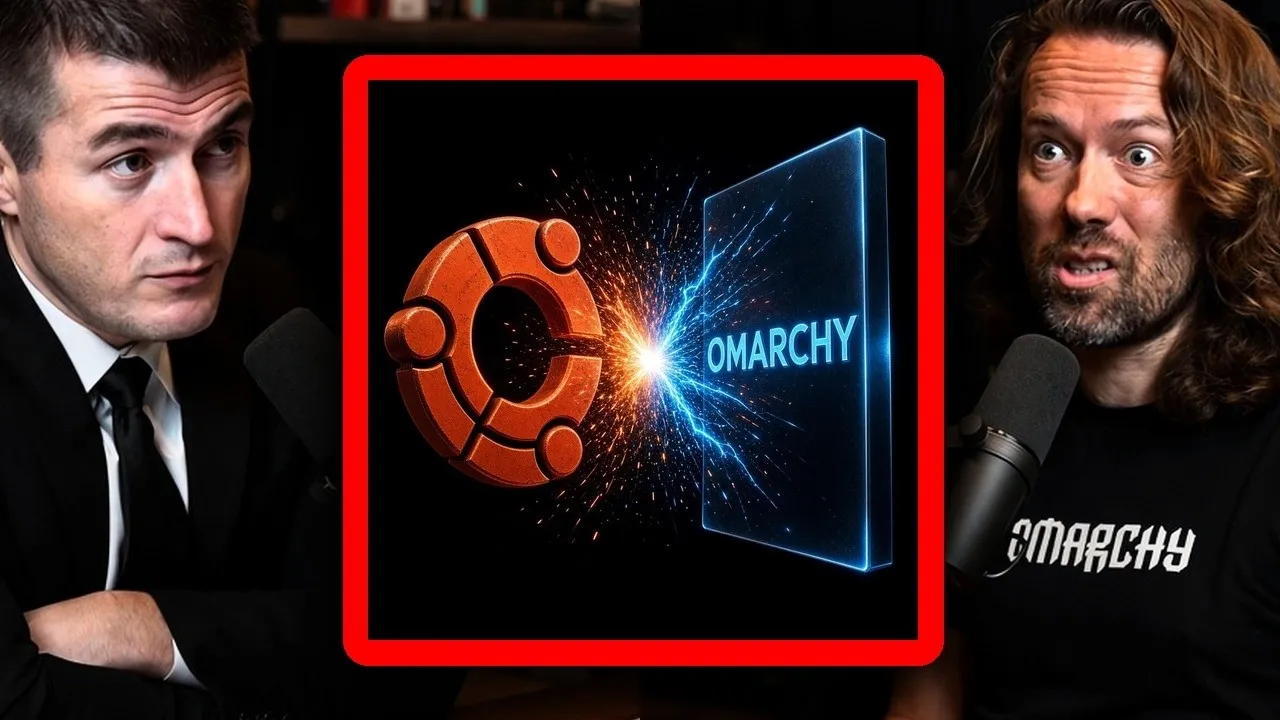
 DHH says Omarchy, his Linux project, can install in 45 seconds, and he calls that the current world record. This is the kind of claim that makes normal people ask if programmers are okay, and makes programmers immediately wonder what hardware he used.
On the Lex Fridman Podcast, David Heinemeier Hansson was asked the obvious heckle: who are you to think you can do better than Ubuntu? His answer was not humble, but it was usefully concrete. He did not offer a vague ode to developer freedom. He pulled out a stopwatch.
whether they should take 42 minutes to install or 45 seconds. That’s the current world record by the way.
There it is. Not “better user experience.” Not “cleaner defaults.” Forty-five seconds. A number you can argue about, benchmark, dunk on, or screenshot like a speedrun. Linux distribution discourse has produced many strange religions, but “install time as Nürburgring lap record” is one of the more charming ones.
The useful arrogance of the stopwatch
Hansson says the project did not begin as a grand attempt to dethrone Ubuntu or Arch. He started on Ubuntu, then kept finding more places to make decisions. Packages. Defaults. Appearance. The closer he got to the machinery, the more opinionated he became, which is basically the open-source creation myth with better fonts and more impatience.
No, no, it’s not the bar because there’s no speed limit. Like none of the things you take for granted are fixed pillars of reality in almost any case.
That line is the whole DHH worldview in miniature. The ceiling is fake. The default is lazy. Somewhere, a supposedly reasonable product requirement is just a dare wearing a cardigan.
Is the “world record” language official? Probably not in any meaningful Guinness sense. It sounds more like the glorious, chaotic record-keeping of a niche software community, where the trophy is a screenshot and the judge is whoever stayed up last night shaving three seconds off a script. But the comparison lands because operating systems really have trained users to accept dead time as natural law. Hansson’s point is that much of that “law” is just accumulated shrugging.
This is not proof Omarchy beats Ubuntu
A 45-second install is impressive. It is not the same thing as being better than Ubuntu. Ubuntu has the dull advantages that matter when your laptop’s Wi-Fi chip, printer, encrypted drive, weird monitor, and future security updates all want attention at once. Mature software is often boring because boring is what survives contact with strangers.
Still, Hansson’s argument is stronger than a vanity benchmark. He is making a product development claim: pick a number that seems frivolous, chase it hard, and the chase will expose better ways to build. Lex Fridman compared it to space exploration, where the stated goal becomes the engine for unrelated discoveries. Hansson went full Mercedes-Benz and Rolex, praising products overbuilt past practical need because humans enjoy evidence that somebody cared too much.
I want the fastest car breaking the speed limits. I want the diver watch that can go down the Mariana Trench. I want the operating system that can install in less than 60 seconds.
This is where the claim gets both infectious and a little ridiculous. Nobody needs a distro install to be a pit stop. Most users install an operating system approximately as often as they buy a mattress. But DHH is right that overkill can be clarifying. The unnecessary target forces necessary questions: why does this step block that one, why are these packages serialized, why are we waiting for input when the machine could be preparing the next move?
DHH wants a little Elon in the installer
Hansson explicitly credits Elon Musk as the model for preposterous targets that sometimes bend reality toward themselves. He even cops to having mocked Musk’s self-driving timelines in 2017 before admitting that the ambition mattered. You can feel the caveat trying to get into the room, because nobody should want every restaurant owner, dentist, and Linux maintainer operating at SpaceX cortisol levels.
When you refuse to just do what’s practical, and you strive for what’s slightly beyond plausible, that’s when the magic happens.
That is the best version of the Omarchy pitch. Not that DHH has already built a better Ubuntu. That would be a much bigger claim, and the stopwatch alone cannot carry it. The real claim is narrower and more interesting: he has turned a Linux install into a race, and races change what builders think is possible. If Omarchy really can make 45 seconds feel normal, the next question is nastier for everyone else: why were we all waiting 42 minutes?
- What did DHH say about Omarchy’s install time?
- He said Omarchy has reached a 45-second install, calling it the current world record and inviting people to beat it. His larger point was that a modern operating system does not have to accept the slow install times users have learned to tolerate.
- Is DHH saying Omarchy is better than Ubuntu?
- He says he started by building on top of Ubuntu, then became more ambitious as he got closer to the lower layers of Linux. His case is not a calm spreadsheet comparison. It is the DHH version of a garage manifesto: if the default can be made faster, prettier, and more opinionated, why not try?
- Why does DHH care so much about shaving seconds off an operating-system install?
- For him, the stopwatch is a forcing function. He argues that chasing a slightly absurd numerical goal creates discoveries, the same way moonshot projects produce side benefits that were not the original point.
DHH says Omarchy's growth went vertical when it made Linux agent-first
The Rails creator argues that the Linux crowd’s hostility to AI is exactly why Omarchy can break out.
DHH says one person can now build the 5 percent of Premiere or Photoshop they need on Linux
The Basecamp co-founder’s real claim isn’t that every solo coder is Adobe now, it’s that cloning the part you actually use has become weirdly plausible.
Don Lincoln says Maxwell's equations turned magnets and sparks into the internet
On the Lex Fridman Podcast, the Fermilab physicist makes the case that the weirdest, least practical physics is often the stuff that later rewires civilization.

Khabib Nurmagomedov says his father prepared him for Conor McGregor by making him lose judo matches at 15
On Lex Fridman’s podcast, Khabib turns his invincibility myth into something more annoying and more useful: repetition, discomfort, and losing early where nobody was watching.
The circuit, read weekly. No noise.