Dr. Daniel Amen says CTE is not untreatable and 80 percent of his NFL patients got better
Amen's football brain claim is the kind of thing parents, former players, and skeptics should all want proven by someone other than Amen.
Listen on YouTube
 WATCH NOW↓
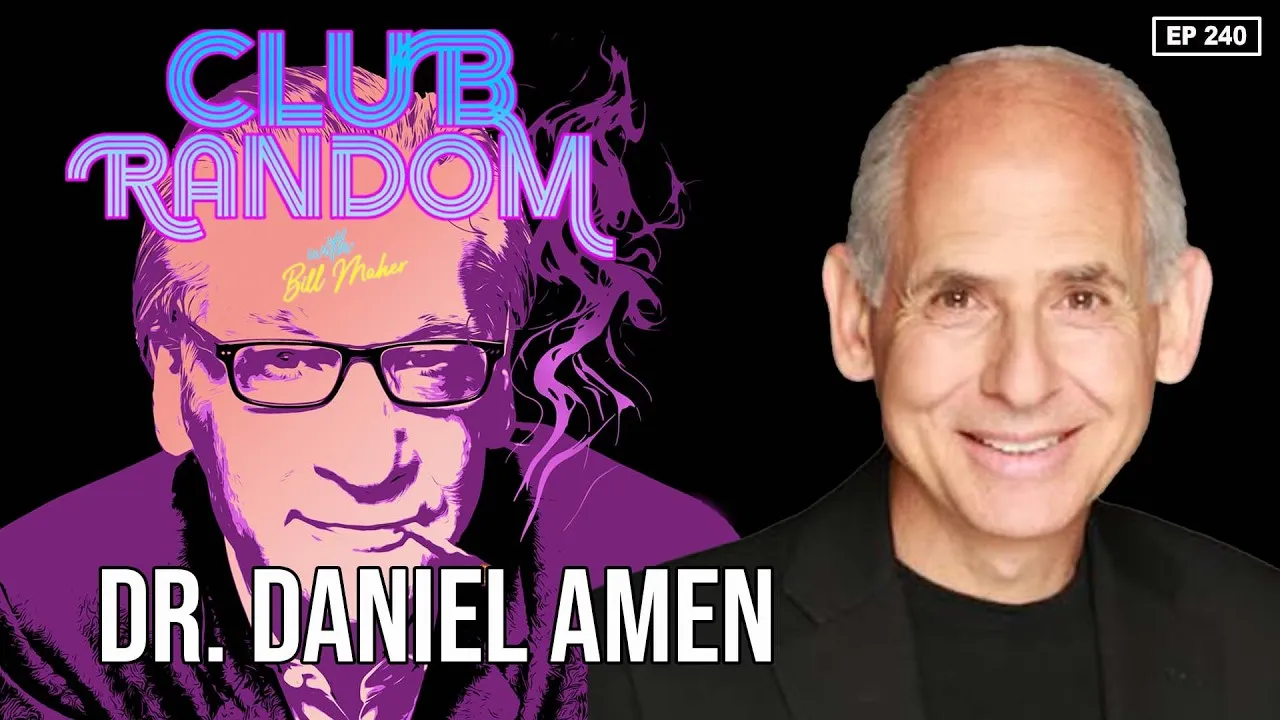
 Dr. Daniel Amen told Bill Maher that the bleakest line about football brain damage is wrong: CTE is not simply chronic, progressive, and untreatable. His evidence, he said, is his own work with 400 NFL players, where 80 percent improved after a rehabilitation plan.
But 80% of our players got better when we put them on a rehabilitation plan. So I hate the messaging around CTE. it’s chronic, progressive, and untreatable. I don’t think that’s true at all.
That is a huge claim, and Amen knows exactly where to place it. CTE has become the horror acronym hovering over football, boxing, and every parent watching a kid head a soccer ball. The public story is dread: the hits pile up, the brain decays, the ending is written in advance. Amen is selling the opposite of dread. He is selling action.
On Club Random, that sales pitch had the usual Maher garnish: joints, prostate exams, penis jokes, and a surprisingly tender Muhammad Ali story. But Amen’s real product was not a joke. It was a worldview. Stop treating the mind like mist. Look at the organ.
Amen’s big swing is that psychiatry is still guessing
Amen’s critique of psychiatry is clean enough to fit on a billboard, which is probably why it has powered so much of his career. Cardiologists look at hearts. Orthopedists look at bones. Psychiatrists, he says, mostly talk, categorize, and prescribe. In his telling, modern psychiatry is still wearing Abraham Lincoln’s stovepipe hat.
Psychiatrists are the only medical doctors who never look at the organ they treat.
This is why the CTE claim lands so hard. Amen is not merely saying football players should do breathing exercises and eat salmon. He is arguing that the medical system has been too incurious about the damaged brain itself. Scan it, track it, treat it, repeat. If he’s right, the old fatalism around repeated head trauma has been too lazy. If he’s wrong, he’s offering expensive certainty in the exact place where desperate people are most vulnerable.
The episode does not give us the details needed to settle that. No control group. No published protocol gets walked through. No independent neurologist drops in from the rafters to confirm the 80 percent. Amen gives numbers, confidence, and a lifetime of clinical anecdotes. That is not nothing. It is also not the same as proof.
The scanner is the diagnosis, and also the business
Maher does press the obvious criticism: Amen’s work is expensive. Amen’s answer is basically, yes, but so is a broken brain. The evaluation he describes is not a casual co-pay errand. It is a luxury-health purchase with medical stakes.
our whole evaluation is about $5,000, but it’s two scans, cognitive testing, our [clears throat] history. I think it’s pretty reasonable. And 73% of our patients at 6 months are significantly better. If you actually do what we say, that number goes to 85.
This is the part where the eyebrow should go up, not because Amen is obviously wrong, but because his strongest medical claim and his business model are welded together. He believes the scan changes everything. He also runs the clinics that sell the scan. The incentives are not hidden under a lab coat. They are right there, smiling for Instagram.
Amen’s defense is scale. He says he is not winging it from a few celebrity brains and a vibes-based PowerPoint. He claims a mountain of scan data.
we have a database now of 300,000 scans on people from 155 countries.
That number is impressive. It is also a challenge. If you have 300,000 scans, the next question is not whether Bill Maher should go to Encino and get his naked brain looked at. The next question is what outside researchers can reproduce from the data, especially on the NFL claim.
The hyperbaric fight hiding inside the health chat
Maher brings in one useful countervoice by proxy: Bryan Johnson, the longevity maximalist who apparently told him that hyperbaric chambers may age you unless you need them for injury recovery. Amen swats that away instantly.
No. Absolutely false.
That little clash captures the whole wellness era perfectly. One rich biohacker says the chamber ages you. One celebrity psychiatrist says it helped remake a brain. Everyone has a graph. Everyone has a protocol. Everyone has a discount code somewhere nearby.
Still, Amen’s CTE argument is not just wellness confetti. It has a real stake. If he is right, former players and worried families should not hear brain trauma as a life sentence. They should ask what can be measured, what can be rehabilitated, and who can prove it without selling them the answer in the same appointment.
The next question for Amen is boring and brutal: can somebody outside Amen Clinics reproduce the 80 percent?
- What did Dr. Daniel Amen claim about CTE?
- Amen said he hates the fatalistic message that CTE is chronic, progressive, and untreatable. He claimed that after scanning and treating 400 NFL players, 80 percent improved on a rehabilitation plan.
- How much did Amen say his brain scan evaluation costs?
- Amen said the full evaluation is about $5,000 and includes two scans, cognitive testing, and history. He defended the price by arguing that untreated brain problems are more expensive.
- Why does Amen think psychiatry needs brain imaging?
- Amen's core critique is that psychiatrists diagnose by talking and matching symptom clusters, while other specialists look at the organ they treat. His view is that brain imaging should become part of standard psychiatric assessment.

Howie Mandel says a clipped hand-job joke cost him a fortune
Mandel told Bill Maher that a joke clipped out of context made a brand walk away, which explains why the Comedy Store feels safer to him than the internet.

Kevin Spacey says he would have been benched for just seven games if he were an athlete
The actor tells Bill Maher his nine-year Hollywood exile is deeply unfair compared to the leniency shown in professional sports.
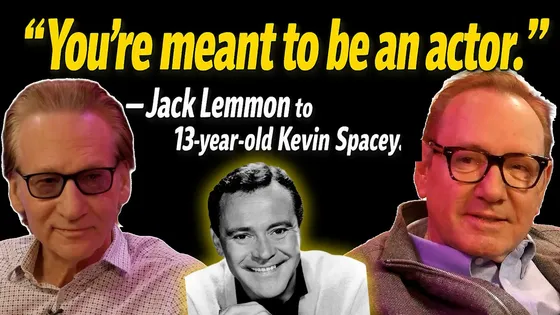
Kevin Spacey says Netflix is shelving Gore, a completed Gore Vidal movie he calls one of his best films
Spacey told Bill Maher that Netflix should release or give up the finished Gore Vidal film, and he made the pitch with maximum self-interest and one genuinely sharp point.

George Santos says the credit card scandal was straw donations and Ferragamo ties, not a shopping spree
On Club Random, Santos tried to shrink one of the ugliest parts of his federal case into a very Washington story about campaign optics, committee gifts, and elephant-print neckwear.
The circuit, read weekly. No noise.