Johnny Hamcheck says viral pranking became a dopamine addiction that made him feel sick without a new hit
The anonymous prankster used his first real face reveal to say the upload treadmill stopped feeling like a joke and started feeling like withdrawal.
Listen on YouTube · Spotify · Apple Podcasts
 WATCH NOW↓
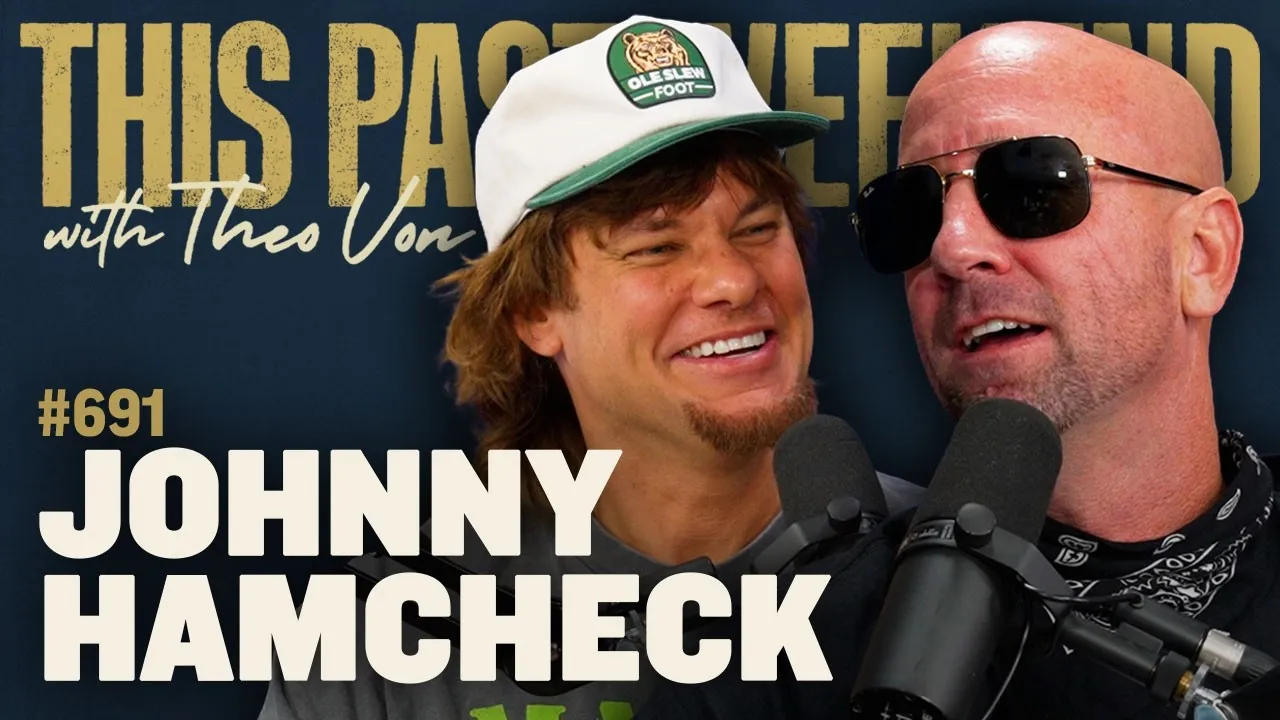
The funniest thing about Johnny Hamcheck finally showing his face is that the face is almost beside the point. On This Past Weekend, the anonymous POV prankster said the real reveal was uglier and more useful: viral prank videos had become “literally a dopamine addiction,” and he felt sick when he didn’t have a fresh one taking off.
That is the claim worth pulling out of the swamp. Not just, hey, the bald guy behind the construction-site voice has a head. The real story is that a man who got famous by making strangers briefly lose their footing now describes himself as the one who got captured by the bit.
This is the reveal that I’ve been holding off on doing for 5 years. You know, it’s been a game of cat and mouse with the internet. And to be honest, it feels great.
Hamcheck has one of those internet careers that sounds fake if you explain it too slowly. A man walks up to construction workers, car salesmen, doctors, McDonald’s employees, and unlucky civilians, speaks with the calm authority of a regional manager from a dream you had while eating gas-station nachos, and waits for reality to wobble. Millions of views followed. So did the mythology. Viewers tried to identify him from reflections in glasses. Fans liked not knowing. He kept the mask because the audience liked the mask.
Then the mask became a job. Then the job became a slot machine. This is where Hamcheck’s appearance gets more interesting than a normal creator confession, because he is not just saying fame is hard, the world’s least endangered sentence. He is saying the mechanics of posting pranks started resembling the other compulsions that had already run through his life: drugs, gambling, chasing the next score, walking back to the table or the dope house because the body has voted and the brain is now just filing paperwork.
I call it feeding the fish, feeding the internet and feeling that pressure to keep giving them something and they get so upset when I don’t post for a while. And it’s like, uh, yeah, it’s an addiction.
The prankster as lab rat
The addictive-language stuff can be corny when creators use it as a halo, like, sorry I filmed a stranger at his worst, officer, the algorithm made me do it. Hamcheck does some of that. He describes himself at one point as “more of a journalist sometimes,” which is a very funny thing to say about asking a urologist whether your balls can be lowered. But he also sounds unusually clear-eyed about the ugly bargain of prank comedy: the creator gets the clip, the stranger gets the consequences, and the internet gets to pretend it is only laughing at “human nature.”
it’s literally a dopamine addiction. Like when I if I don’t have a fresh killer video that’s going viral, then I I feel I start to get sick.
The verdict: believable, but not absolving. Yes, the dopamine loop is real enough. TikTok, Instagram Reels, YouTube Shorts, all of it trains creators to experience attention as weather, food, oxygen, proof of life. Hamcheck’s phrase, “feeding the fish,” is grossly perfect. The little mouths never stop opening. But calling the loop an addiction also makes a moral mess sound clinical. A prank video is not just a chemical event in the creator’s skull. It is also a stranger’s day, face, job, embarrassment, church congregation, doctor’s appointment, or McDonald’s shift.
To his credit, Hamcheck doesn’t dodge that completely. Theo Von presses him on whether some of this is exploitative, and Hamcheck admits he doesn’t always like it. He says he takes videos down sometimes, tells people after the fact when he is joking, and tries not to leave someone feeling humiliated. He also admits he has re-released a video when the channel got slow. That is the whole machine in one sad little loop: conscience, then analytics, then conscience again.
The face reveal was really an exit interview
There is a classic creator-brain irony here. Hamcheck reveals himself to stop hiding, but also because revealing himself is content. He is done being a mystery, and the announcement of being done is itself a premium cut of mystery meat. That does not make it fake. It makes it internet.
The most human parts of the interview are not the prank greatest hits, though some of those are mutant Americana. They are the moments when Hamcheck connects virality to social media addiction, gambling, relapse, and recovery. He says gambling wrecked his marriage and finances. He says fentanyl and pills entered his life again after years sober. He says the best Hamcheck videos came when he was sharp, not using. The prank persona starts to look less like a disguise and more like another way to keep the nervous system busy.
I’m not going to slave to the social media. I really want to take a break. Actually, I’m really wanting to put the phone down for a couple months and I’ll probably do it after this uh podcast actually.
If that holds, the face reveal will be remembered less as the day people learned what Johnny Hamcheck looks like and more as the day he said the game had started eating him back. For a creator whose whole act depends on making strangers react, the next question is brutally simple: can he stop reacting to the feed?
- Did Johnny Hamcheck reveal his face on Theo Von's podcast?
- Yes. Hamcheck said the appearance was the reveal he had been delaying for five years, after building a following around POV prank videos where viewers knew the voice but not the face.
- Is Johnny Hamcheck quitting prank videos?
- He did not announce a hard retirement. He said he is burned out on hiding, wants to stop being a slave to social media, and may put the phone down for a couple of months after the podcast.
- Why does Johnny Hamcheck compare posting prank videos to addiction?
- Hamcheck says the pressure to keep feeding the internet started to mimic withdrawal. If he did not have a fresh viral video, he said he felt sick and driven to go get another one.
Steven Wolt says many men under 40 are mistaking porn-induced sexual dysfunction for a testosterone problem
The porn recovery coach makes a strong case that the problem is not always the body, sometimes it is the phone.
Duncan Trussell says John Wayne Gacy was executed during a solar eclipse the same day Jeffrey Dahmer was baptized
The eerie serial-killer coincidence is real, but Trussell’s occult reading of it is where the podcast leaves the courthouse and starts lighting candles.
Josh Brolin says No Country for Old Men paid him $100,000 and he cleared about $30,000
Brolin used the number to puncture the fantasy that one great prestige role instantly turns an actor into a mansion with cheekbones.
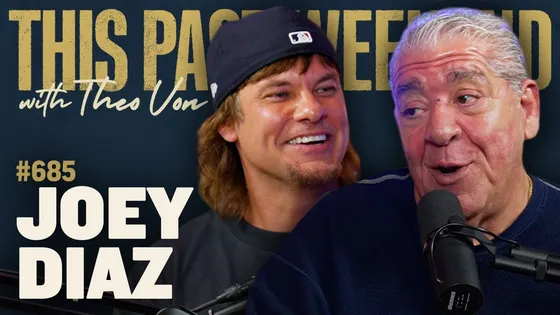
Joey Diaz says 19 years off cocaine gave him more than his first 44 years
Diaz turned a filthy, funny hang with Theo Von into a blunt sermon on sobriety, regret, and what finally showed up after the bag left.
The circuit, read weekly. No noise.