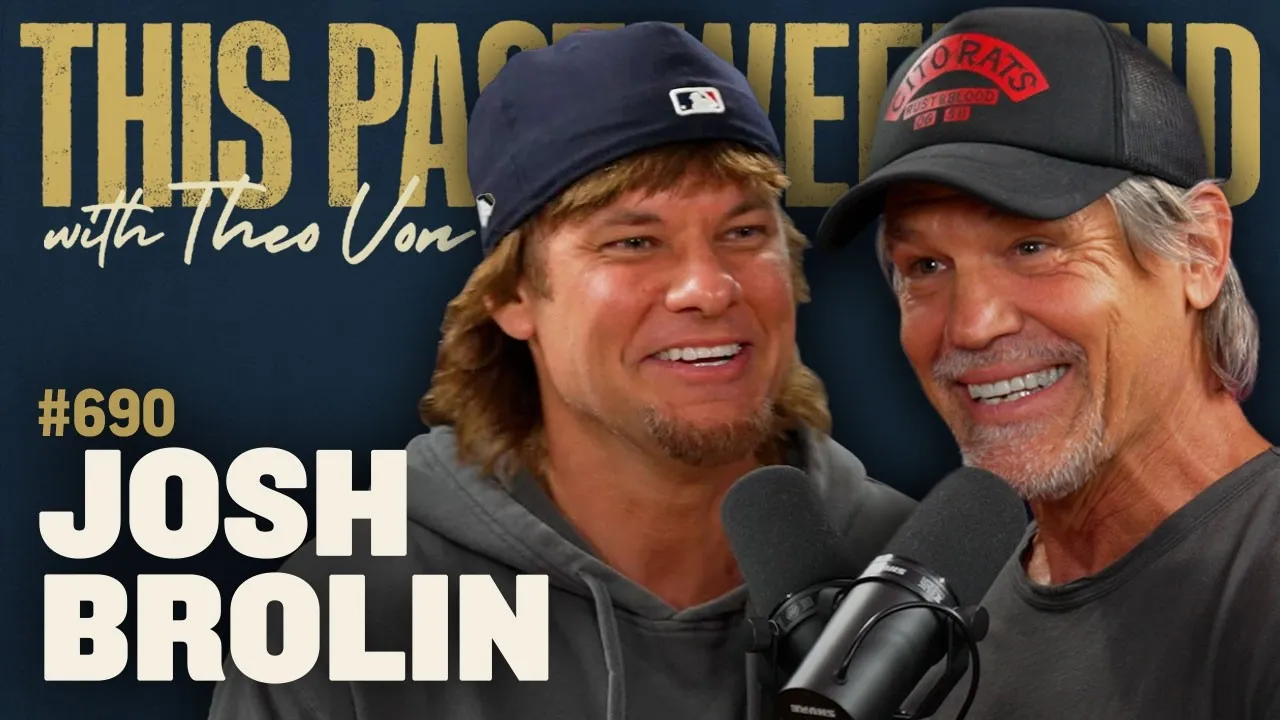
Josh Brolin says No Country for Old Men paid him $100,000 and he cleared about $30,000
Brolin used the number to puncture the fantasy that one great prestige role instantly turns an actor into a mansion with cheekbones.
Listen on YouTube · Spotify · Apple Podcasts
 WATCH NOW↓
Josh Brolin says No Country for Old Men paid him $100,000, and that he cleared about $30,000. The man who became one of that movie’s faces described the Best Picture winner less like a golden ticket than a respectable invoice wearing a tuxedo.
This is the kind of number that makes the movie-star economy look suddenly less like a dream factory and more like a regional HVAC business with better lighting. On This Past Weekend, Josh Brolin wasn’t complaining, exactly. He was doing something more useful, dragging the fantasy of instant Hollywood wealth into the parking lot and making it empty its pockets.
So I had 22 years of taking it seriously because nobody was interested until really I did No Country.
That line is doing the heavy lifting. Brolin was not some kid plucked from a mall after The Goonies. He had already been famous once, at least famous in the way an ’80s child actor can be, meaning immortal to a generation and still somehow not especially employable. He talks about being bad at auditions, doing theater, landscaping for a year, and living through the long actor purgatory where people recognize your past more readily than they hire your present.
Prestige paid him in reputation first
Brolin’s $100,000 claim isn’t a payroll record, and it should be treated as a remembered figure in a loose conversation, not a notarized court filing. But as a story about Hollywood math, it rings. Prestige movies often trade on seriousness, not giant upfront checks, especially when the actor has not yet been rebranded as essential. The Coen brothers gave Brolin the role that helped reset his career. The bank account apparently got a smaller memo.
That’s pretty good. That was a good guess. 100. 100. So I cleared what? 30?
Theo Von guessed Brolin got $200,000 for the film, which is a very civilian guess, generous enough to sound informed, low enough to sound tasteful. Brolin halved it. Then he shrank it again. Thirty grand cleared for a role in one of the defining American films of the century is not poverty, obviously. It is also not the number people picture when they think of a movie that put Javier Bardem’s haircut into the national bloodstream.
The better twist is that Brolin says day trading was more lucrative than acting for a while. Not a cute hobby. Not a rich actor cosplaying CNBC. A real detour.
The most I made more money I’d put it this way. I made more money in those four years really. It was five years, but it within four years than I had made in 20 years acting.
The backup plan beat the dream
That is the whole weird American joke in miniature. The art form that made him famous couldn’t reliably support him, so the guy from The Goonies sat at home with multiple screens, trading stocks, and apparently did better. Brolin said he learned from a man named Brett Markinson, traded full-time for almost five years, and was good at it. The image is delightful and slightly cursed, Llewelyn Moss scanning tickers instead of desert horizons.
His point wasn’t just, poor actors, pass the tiny violin. It was that identity is a trap. Actor, alcoholic, famous person, trader, survivor, son of an actor, kid from the Sito Rats, Brolin kept pushing against every label that seemed ready to harden around him. The money story works because it cuts through celebrity fog. If a role that helped make him a serious leading man paid like a solid used Camry, maybe the career wasn’t a rocket launch. Maybe it was a guy patching the boat while everyone else was clapping for the view.
That also makes his verdict on fame feel less like false modesty. Brolin knows what the public thinks fame is, a person walking a permanent red carpet. He has the useful irritation of someone who has seen the invoice.
I think that fame, what fame can do is define you in a way. And I don’t want to be defined.
- Did Josh Brolin really say he only made $100,000 for No Country for Old Men?
- Yes. When Theo Von guessed $200,000, Brolin corrected him to $100,000 and added, in rough net terms, that he cleared about $30,000. He framed it as proof that even a career-changing prestige movie didn't arrive with blockbuster money.
- Why would Josh Brolin's No Country for Old Men pay have been that low?
- Brolin's own explanation is that he wasn't yet the Josh Brolin people now imagine. He said he spent 22 years after The Goonies in a professional dead zone, taking acting seriously while the industry mostly ignored him. A prestige film can make a career look inevitable in hindsight, but it doesn't always pay like the hindsight.
- Did Josh Brolin say he made more money trading stocks than acting?
- He did. Brolin said that in roughly four years of day trading and swing trading, he made more than he had in 20 years of acting. The line is funny, but also grimly useful, Hollywood glamour apparently loses some shine when the backup plan is outperforming it from a home office with multiple screens.
Joey Diaz says 19 years off cocaine gave him more than his first 44 years
Diaz turned a filthy, funny hang with Theo Von into a blunt sermon on sobriety, regret, and what finally showed up after the bag left.
Theo Von says he has 46 days sober after falling out of his AA program
A solo episode that begins with haircut shame turns into a blunt recovery check-in from Theo Von.
Mark Dowdle says he reached Last Soul Ultra 15 minutes before the start, then ran 395 miles
Theo Von found the perfect endurance guest for a confessional bro hour, a man who treats an international travel disaster like pre-race seasoning.
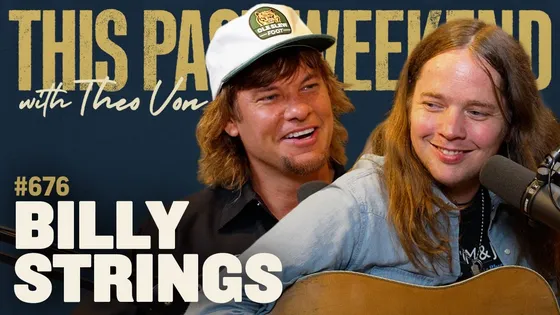
Billy Strings says he found his mom’s meth stash after her fatal overdose and wanted to save some for a rainy day
On This Past Weekend, the bluegrass star gave one of the rawest descriptions of addiction you’ll hear from a famous musician, because he refused to make himself the hero of it.
The circuit, read weekly. No noise.