Koa Smith says three grams of psilocybin mushrooms ended his post-concussion depression
The big-wave surfer’s story is powerful, but the leap from spiritual breakthrough to brain-injury treatment needs a warning label.
Listen on YouTube
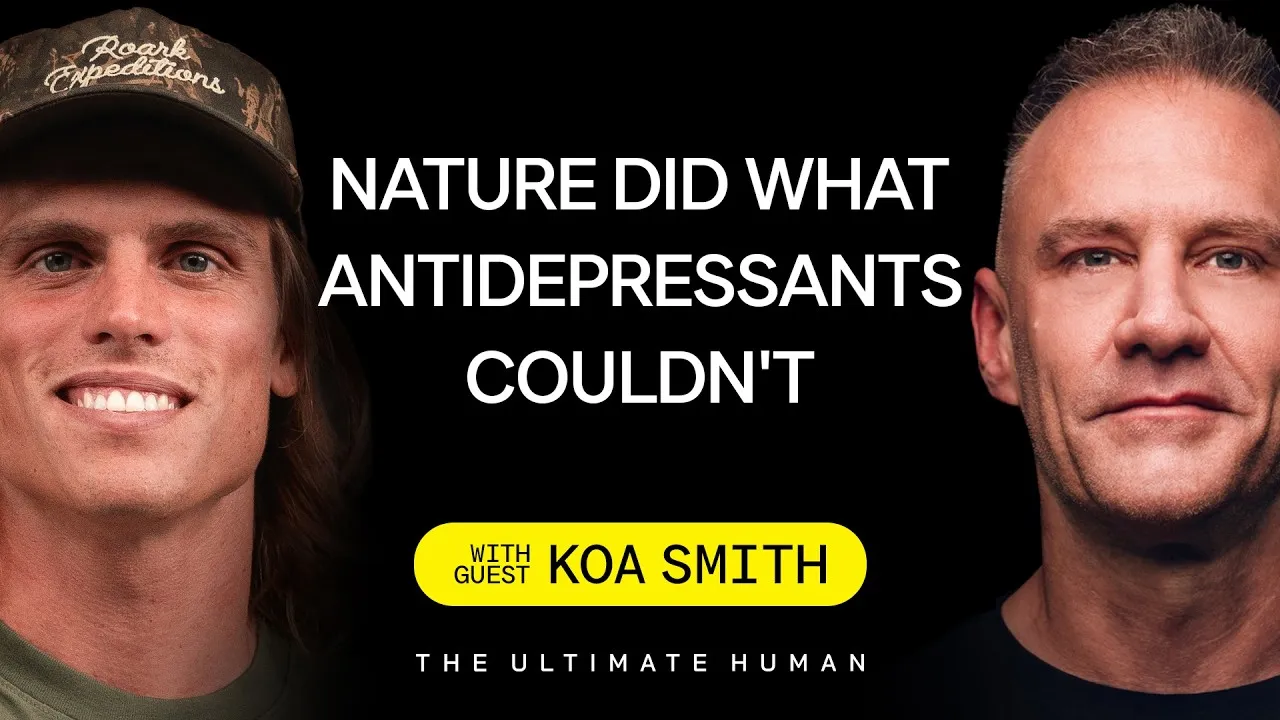 WATCH NOW↓
 Big-wave surfing already sounds like a sport invented by a liability lawyer having a nervous breakdown, so when Koa Smith says three grams of psilocybin mushrooms ended the numbness and depression that followed his traumatic brain injury, you can feel the internet reaching for two tabs at once. Not helped. Not inspired. Ended, at least in his telling.
That is the claim worth separating from the salt spray on The Ultimate Human. Smith tells Gary Brecka he had been run over by a jet ski, suffered a concussion, then later hit his head in the surf, blacked out underwater, heard peaceful violin music, came to, and surfaced with coral scratches across his body. After that came the less cinematic part, headaches, noise sensitivity, stress that made his head feel like an engine about to explode, and a loss of identity. Take surfing away from a surfer and you don’t just cancel a hobby. You yank out the power cord.
End your life. You could just do it. You can just end your life right now. That would solve it.
Smith is blunt about the darkness, which is part of why the story has force. He says the forest helped more than anything else at first, with a hammock, a journal, and hours away from the noise. But it didn’t fix him. A therapist offered antidepressants. Then he watched Paul Stamets talk about psilocybin in Fantastic Fungi, including the famous story about a mushroom trip and a lifelong stutter, and Smith’s brain made the jump that many desperate brains make: maybe that’s my door.
I really forgot who I was.
The miracle story, with a flashing caution sign
Smith says he and his brother went deep into an off-grid valley, stripped down in the sun, and took about three grams of mushrooms. He describes the trip like a ceremonial visitation, colors, figures, pyramids, light beings, a command to sit down, and a return to the five-year-old version of himself who was joyful, loved, and alive to the world. If this sounds like a deleted scene from Point Break written by a Jungian analyst, well, yes. But the emotional arc is clear. He wasn’t trying to party. He was trying to come back.
My heart just went boom. And that sensation went throughout my whole body and I could feel again.
Here is where the eyebrow goes up, not because Smith sounds fake, but because the phrasing gets medically slippery. He says the numbness and depression disappeared and that the experience gave him instructions that “healed my head injury.” Those instructions were sensible, even boring, which is usually where the useful stuff hides: no caffeine, no stimulants, clean diet, sleep, breath work, meditation, journaling, ocean time, forest time, and saying no to obligations he didn’t want. That sounds less like a mushroom cure for traumatic brain injury than a mushroom-assisted intervention that made him finally obey a recovery plan.
That distinction matters. Psilocybin research has become serious, especially around depression, end-of-life distress, addiction, and trauma. But a surfer’s post-concussion recovery, however vivid, is not a protocol. It is a story. A powerful one, yes. Also one that includes suicidal thoughts, a serious brain injury, and a drug experience in the wilderness. Nobody should hear this and think the move is to diagnose yourself, dose yourself, and hope the light beings have a good bedside manner.
The less sexy claim is probably the stronger one
Smith is more convincing when he talks about fear as a daily practice. Surfing, he says, does not grant permanent immunity. You don’t defeat fear once and hang the trophy over the fireplace. It shows up again tomorrow, possibly in the form of a wave that can fold you like a beach chair. His method is less macho than expected: sleep, food, meditation, and practicing tiny acts of fear, like talking to a stranger or saying the thing you’re afraid to say.
That is the part that travels beyond surfing. Smith’s big psychedelic claim will get the clips. The better takeaway is that fear management is physical before it is philosophical. If he slept badly, ate badly, drank too much caffeine, or felt anxious, he says fear swallowed him. When he took care of the basics, he could see through it. The ocean did not make him fearless. It made him honest about the bill.
He also undercuts the expected “mushroom guy” caricature. Smith says he is not eating mushrooms all the time and puts more daily faith in meditation, especially Joe Dispenza-style practice and the kind of attention training that catches the mind wandering and brings it back. Psychedelics, in his telling, are the emergency flare. Meditation is the long walk out.
But also there’s there’s you can get there through meditation but it takes a lot more self-realization, a lot of facing yourself, a lot of surrendering, letting go, dealing with with your stuff
- Did Koa Smith say mushrooms cured his brain injury?
- Smith said the mushroom experience made his numbness and depression disappear, then gave him clear instructions he followed, including no caffeine, clean food, sleep, meditation, journaling, forest time, and ocean time. That is a personal recovery story, not proof that psilocybin cures traumatic brain injury.
- How much psilocybin did Koa Smith say he took?
- He said he took about three grams of mushrooms with his brother in a remote forest setting. He contrasted that with a five-gram “heroic dose,” calling three grams enough to be serious without framing it as the biggest possible trip.
- What does Koa Smith recommend instead of psychedelics?
- Smith says meditation can reach some of the same territory, but more slowly and with more control. His pitch is not that everyone should trip, it is that psychedelics are a powerful tool when needed and meditation is the long road to similar self-confrontation.
Dr. Jordan Metzl says sports medicine doctors will prescribe GLP-1s for arthritic knees within five years
The sports physician’s most striking claim wasn’t that exercise is medicine, it was that Ozempic-era drugs may become part of orthopedic care.

Shawn Ryan says he went through four exorcisms after a psychedelic vision of hell
The former Navy SEAL and podcast host frames his recent supernatural experiences as a reason to push harder into Christianity, while Bishop Joseph Strickland calls it spiritual warfare.

Neil deGrasse Tyson says English-speaking cultures report vastly more alien sightings than other cultures
On The Diary of a CEO, Tyson argues that the alien boom says less about extraterrestrials than it does about human brains, Hollywood, and who knows how to file a weird story.
Carl Hayden Smith says DMT entities told him he was not scheduled to die in an fMRI scanner
The psychedelic researcher’s wildest claim is not that DMT produces entities, but that those entities appeared to treat his lab scan like a cosmic false alarm.
The circuit, read weekly. No noise.