Matt Ehret says 'Ku Klux' is Greek for 'circle,' making the KKK a straight rebrand of the Confederate secret society that killed Lincoln
A Canadian historian walks into a podcast and explains that John Wilkes Booth was probably Manchurian-Candidated in Montreal, and that the KKK is just the Golden Circle with a new logo.
Listen on YouTube
 WATCH NOW↓
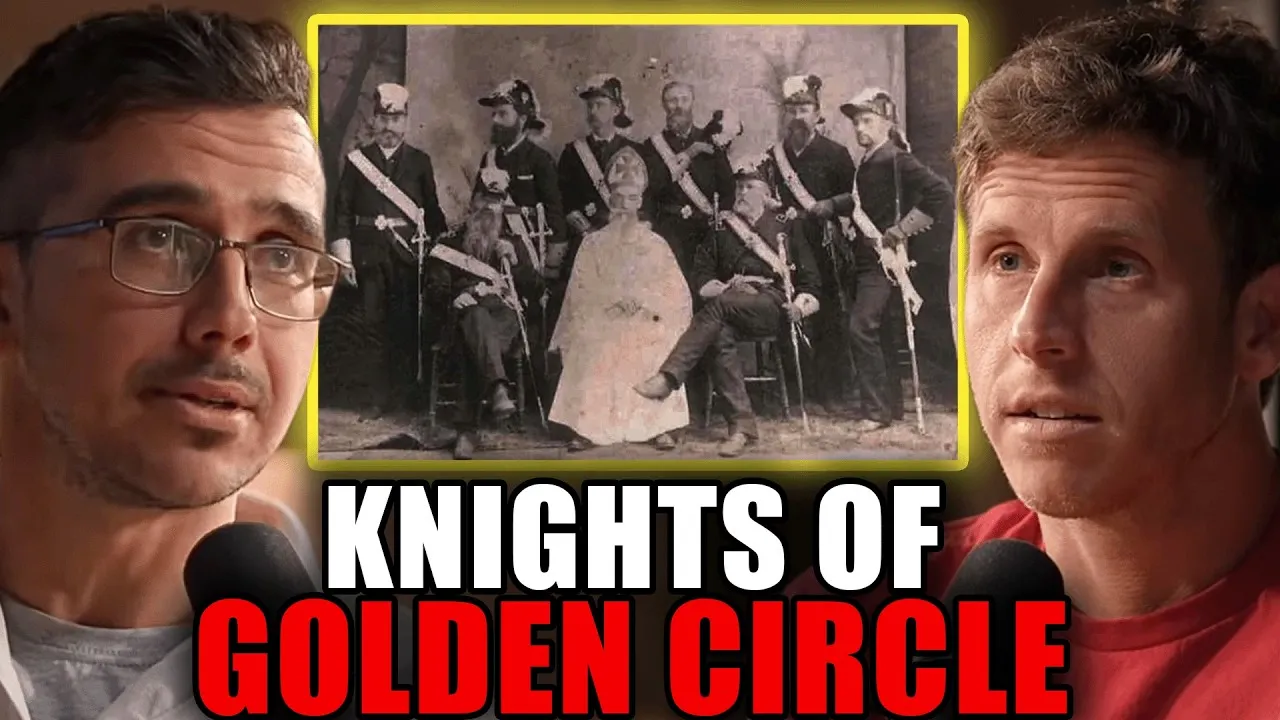
 The KKK is not an original idea. According to Matt Ehret, it is a rebrand, the Knights of the Golden Circle with a Greek paint job and a new wardrobe. ‘Ku Klux in Greek means circle,’ he tells Danny Jones, almost offhandedly, like he is correcting a minor spelling error rather than reframing the entire origin story of American white supremacist terror.
Ehret is a Canadian historian with a very large theory, which is roughly: a Confederate secret society called the Knights of the Golden Circle, led by the occultist Albert Pike, killed Lincoln, then immediately reconstituted itself as the Ku Klux Klan, then spent the next century and a half quietly running American geopolitics. He has a book about it. He has several books about it. Danny Jones, to his considerable credit, spends a meaningful portion of this episode just saying some variation of ‘I have no idea what you are talking about, but please continue.’
in outer space right now. I don’t have any knowledge about what you’re talking about. So I’m just sort of like going with going with it.
The etymology claim is the sharpest hook here, and it is worth stress-testing. The standard scholarly account of the name ‘Ku Klux Klan’ does link ‘kuklos’ to the Greek word for circle or band, and historians have noted the overlap between former Knights of the Golden Circle members and early Klan founders. Ehret is not fabricating that thread out of nothing. Where he leaves the reservation is the leap from ‘the names share a root’ to ‘it is a direct rebranding by the same organization.’ That is a much bigger claim, and he offers it as conclusion rather than argument.
Booth in Montreal, Five Lost Weeks, and the Manchurian Actor Theory
The Lincoln assassination material is genuinely interesting as historical texture, even if the connective tissue is doing a lot of lifting. Ehret cites a real book, Barry Sheehy’s City of Secrets, and a real historical detail: John Wilkes Booth did spend time in Montreal before the assassination, at the St. Lawrence Hall, which was a documented hub of Confederate activity in Canada. What Booth was doing there for five weeks, and what it meant, is a legitimate historical question. Ehret’s answer, that he was probably subjected to some form of psychological conditioning because actors are ‘already kind of habituated to go into outer body experience states,’ is where the sourcing gets thin.
Probably. I mean, he was an actor, and they really like actors cuz they’re already kind of habituated to go into outer body experiences states. So, they’re much more conducive to sculpting.
Jones asks if they did ‘some sort of like Manchurian Candidate mind control’ on Booth. Ehret says probably. This is the epistemological move that runs through the whole episode: a real archival detail, a speculative bridge, a confident landing. He is good at it. The confidence is the product.
The Statue That Bothers Him
The moment that gives the episode its current-events edge is Ehret’s claim that Albert Pike’s statue, the Confederate general and Scottish Rite architect who had been removed from Washington, D.C. during the 2020 protests, was reinstated in late 2025. He reads this as a deliberate signal. ‘For those in the know, it’s a direct statement of intention,’ he says. ‘Like this is like a manifesto or something.’ Jones sighs audibly.
I think for those in the know, it’s it’s a direct statement of intention. That’s how I’m reading that stuff. Is like this is like a manifesto or something.
Whether or not you buy any of Ehret’s framework, the Pike statue claim is the kind of specific, verifiable, present-tense thing that makes an otherwise deep-historical conversation feel urgent. That is smart podcasting, whatever you think of the underlying argument. The episode is not rigorous history. It is also not nothing. It is a confident man with an elaborate map of American darkness, and Danny Jones asking, more or less sincerely, where Cuba fits on it.
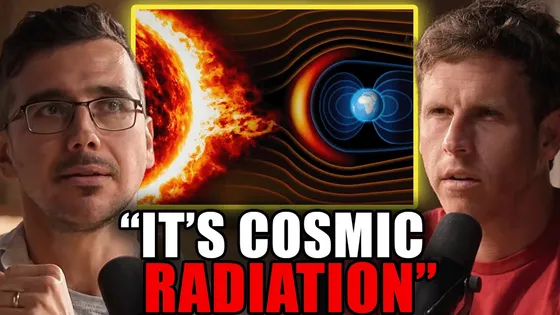
Matt Ehret says cosmic rays, not human CO2, are the real causes of climate change
On the Danny Jones Podcast, Ehret revives the Henrik Svensmark cosmic-ray theory and says the scientist was professionally punished for challenging the CO2 consensus.
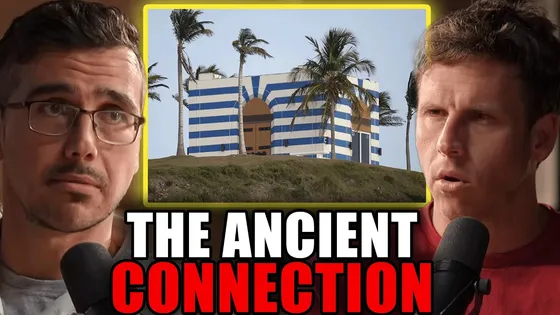
Matt Ehret says Jacques Cousteau wanted to eliminate 350,000 people a day
The Danny Jones Podcast swerves from Epstein island symbolism into Cousteau, Atlantis, and a very ugly population-control quote.
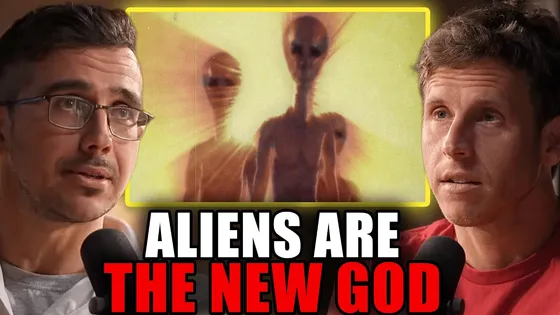
Matt Ehret says the CIA shaped the National Enquirer to seed a one-world alien religion
The claim is wonderfully lurid, and also a perfect example of how a real Cold War fact can become a cosmic corkboard theory in about 90 seconds.
Matt Ehret says Majestic 12 is fake because its typewriter and Truman signatures give it away
The UFO disclosure debate gets a paperwork problem, then turns into a full CIA myth-management theory.
The circuit, read weekly. No noise.