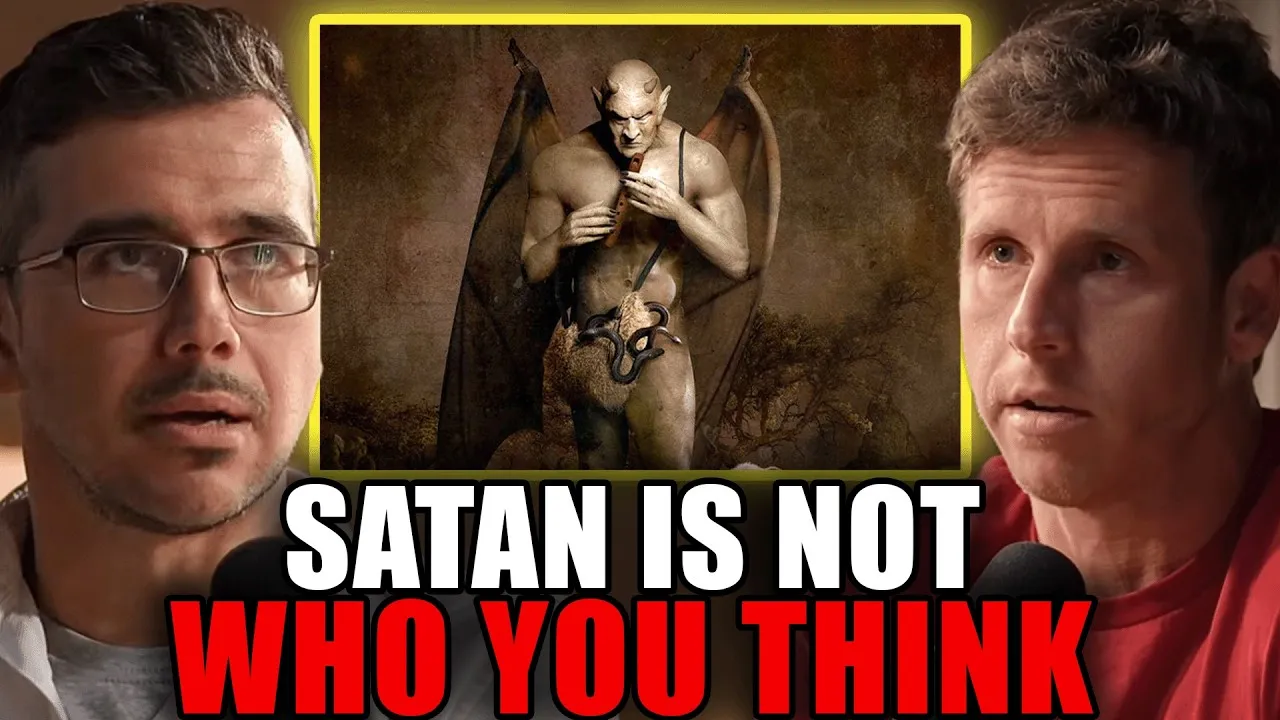
Matt Ehret says God letting Satan cause evil for a greater good is coping
On Danny Jones Podcast, Ehret pushed back on a Carmelite theory of Satan by arguing that divine permission for rape, murder, and genocide sounds less like theology than a bedtime story for the powerless.
Listen on YouTube
 WATCH NOW↓
 Matt Ehret has a blunt review of one classic Christian answer to the problem of evil: it sounds like coping. Not just bad theology. Coping. The target is the idea, relayed by Danny Jones from a Carmelite book about Satan, that God allows Satan to inflict horrors on human beings because the suffering somehow produces a greater good.
That is the kind of sentence that turns a podcast studio into a dorm-room seminar at 2:17 a.m., except with better microphones and more Epstein references. Jones is reading a theological book about Satan, apparently the same one recommended in a chain involving Diana Pasulka, and he’s trying to find the promised alien connection. He hasn’t found it. What he has found is an old, severe demonology in which Satan is not a red cartoon pest with a pitchfork, but a staggering intelligence just below God, perfect in power and knowledge, who chooses evil anyway.
he is like one level below God. And he’s like on the hierarchy of angels, he’s on the very tippy top right below God.
Jones is fascinated by this. Fair enough. A Satan who knows everything and still chooses evil is much scarier than the Halloween-store version. But Ehret is less interested in ranking celestial villains than in stress-testing the explanation. If Satan is inferior to God, and God is the creator, then why is Satan allowed to run the torture chamber? Why cancer? Why genocide? Why children? The book’s answer, as Jones understands it, is the standard furnace theory of suffering: pain makes souls stronger, wiser, purer, or useful to someone else’s salvation arc.
God lets Satan do evil on people, like kill people, do genocides, give people cancer, whatever whatever have you, because God believes that that is going to do an ultimate good for humanity.
Ehret hears theology. He calls it surrender.
Ehret’s objection is not gentle. He doesn’t do the polite interfaith panel thing where everyone agrees that mystery is beautiful and then goes to lunch. He asks what this explanation does to human action. If evil is permitted because it might secretly improve a soul or teach a cosmic lesson, what happens to the moral obligation to stop it?
This is where the conversation gets ugly in the useful way. Ehret invokes rape, murder, Epstein Island, and corporate-backed genocide in Africa, not as shock confetti but as a pressure test. Theodicy often sounds plausible when it stays abstract. “Suffering builds character” is easy to say over coffee. Try saying it while a child is being harmed. Try making it the operating system for politics.
maybe we have to do that then have faith rather than stopping rather than doing the proactive thing which is to stopping the rape and stopping the murder.
That is the real claim here, and it lands because Ehret is not merely saying “bad things are hard to explain.” Everyone knows that. He is saying a certain explanation for evil can become a permission structure for passivity. It can turn moral horror into metaphysical paperwork. The child suffers, the believer files it under Providence, and the machine keeps humming.
Jones, to his credit, doesn’t dodge. He supplies the book’s logic as best he can: God permits Satan because it will lead to a greater good. Ehret rejects the emotional architecture of that answer. He reads it less as revelation than as self-protection, a sacred blanket for people who cannot bear the weight of preventable evil.
that seems more like coping than anything. Yeah, a sense of self disempowerment maybe and you just have to come up with some meta like sacred story that will give you a reason to go to bed at night with a clear conscience
The alien connection is still missing
The funny part is that Jones began with a much more podcast-native mystery: what does this Satan book have to do with aliens? That’s the Danny Jones bingo card: Diana Pasulka, demons, upper atmosphere, altered perception, maybe UFOs lurking behind the incense. But the clip accidentally finds a better subject. The alien breadcrumb trail fizzles, while the old problem of evil walks in wearing steel-toed boots.
Ehret’s own preferred frame seems more Platonic than devotional. He says he tests hypotheses by whether they create fewer internal contradictions and increase agency. That’s a very Matt Ehret way to put it, half philosopher, half strategic consultant for the soul. Still, the standard is clean: does your theory of evil help you act against evil, or does it sedate you?
The verdict: Ehret’s critique is sharper than the book’s defense, at least in the version Jones presents. The “greater good” answer has centuries of theological muscle behind it, and serious thinkers have tried to make it less cruel than it sounds. But in this room, with these examples, it buckles. If a doctrine explains atrocity by turning it into God’s long game, it had better also explain why humans should intervene immediately, fiercely, and without waiting for the cosmic lesson plan to reveal itself.
Jones may still be looking for the aliens. Ehret found the trapdoor. A theology of Satan that begins as a map of demonic power ends up asking whether your explanation for evil makes you braver, or just lets you sleep.
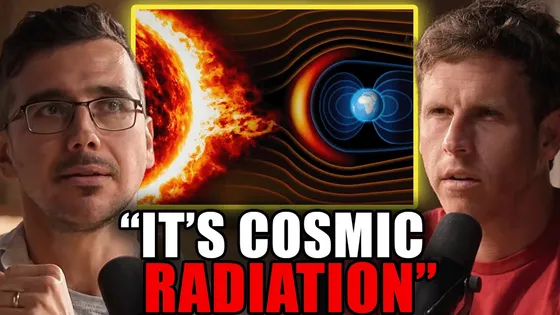
Matt Ehret says cosmic rays, not human CO2, are the real causes of climate change
On the Danny Jones Podcast, Ehret revives the Henrik Svensmark cosmic-ray theory and says the scientist was professionally punished for challenging the CO2 consensus.
Matt Ehret says Jacques Cousteau wanted to eliminate 350,000 people a day
The Danny Jones Podcast swerves from Epstein island symbolism into Cousteau, Atlantis, and a very ugly population-control quote.
Matt Ehret says the CIA shaped the National Enquirer to seed a one-world alien religion
The claim is wonderfully lurid, and also a perfect example of how a real Cold War fact can become a cosmic corkboard theory in about 90 seconds.
Matt Ehret says Majestic 12 is fake because its typewriter and Truman signatures give it away
The UFO disclosure debate gets a paperwork problem, then turns into a full CIA myth-management theory.
The circuit, read weekly. No noise.