Nathaniel Gillis says Chris Bledsoe's 'Merlin' label means a category of UFO contactee, not the wizard
On Danny Jones Podcast, Gillis turns the goofiest-sounding Bledsoe lore into a darker theory about government study, contactees, and weaponized ridicule.
Listen on YouTube
 WATCH NOW↓
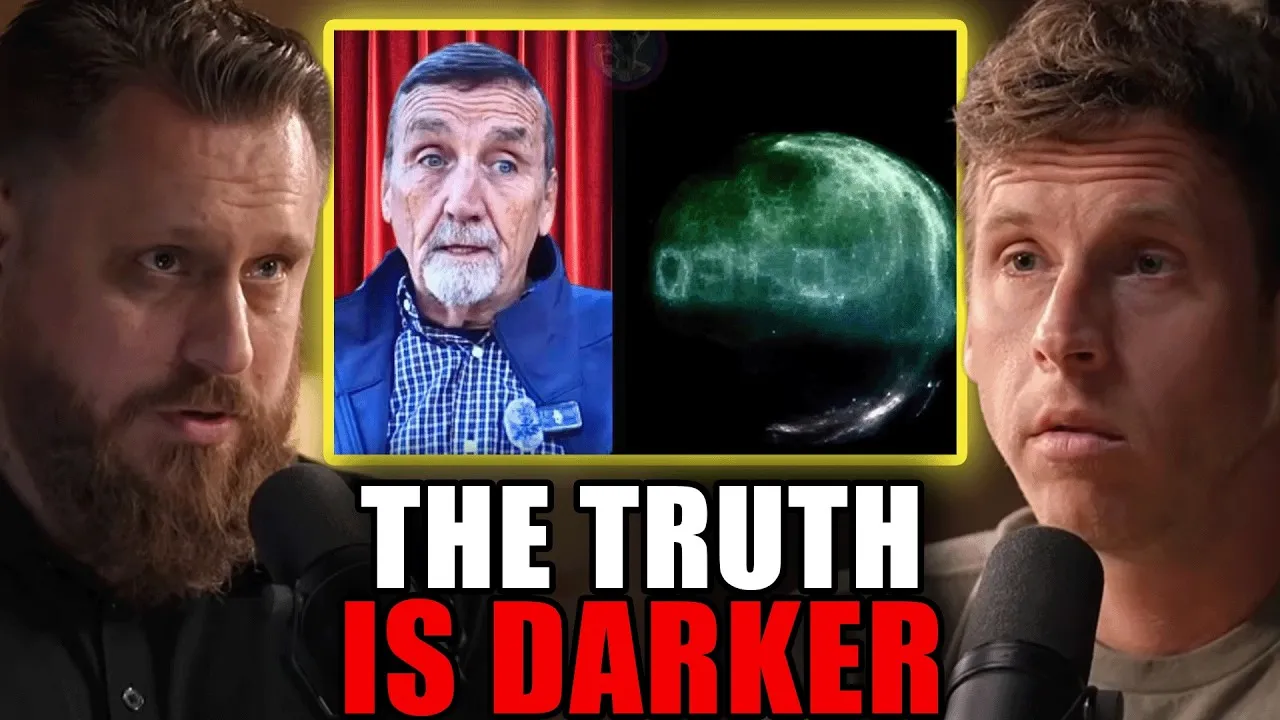
 Nathaniel Gillis thinks the strangest part of the Chris Bledsoe story isn’t the orbs. It’s the word ‘Merlin’: on Danny Jones Podcast, Gillis argues that if officials used that label for Bledsoe, they weren’t calling him a robe-wearing wizard, they were treating him as a type of contactee.
That sounds ridiculous until you remember where UFO culture lives now, somewhere between congressional hearings, haunted-house testimony, and a Reddit thread that has been awake for 36 hours. Chris Bledsoe has become one of the central folk saints of disclosure-era weirdness, a man associated with orb footage, a mysterious female entity, and alleged attention from government-adjacent figures. Gillis’s move is to drain the meme of its punchline. Merlin, he says, is not a Halloween costume. Merlin is a job description.
it’s not like, “Okay, he’s actually Merlin.” Merlin. Merlin was a category.
Merlin, but make it a case file
The claim works because it makes the Bledsoe mythology sound less like fantasy and more like bureaucracy, which is somehow creepier. Nathaniel Gillis is not saying a government handler opened a drawer labeled WIZARDS. He is saying that old mythic language may describe a recurring role: the civilian who appears to have a relationship with whatever the phenomenon is, and therefore becomes useful, risky, and disposable.
Danny Jones immediately supplies the nastiest version of that theory. If the government found someone with a connection it didn’t understand, Jones says, it would study him intensely and then make him sound insane enough that the public would ignore him. That is a very podcast-brained sentence. It is also not an absurd read of how institutions protect secrets, reputations, and plausible deniability.
if I was the government and I found a person, I knew I I had the best I, you know, I knew what was going on and we were trying to keep it a secret and not let it out into the public. And we found a person, a civilian who had some kind of crazy connection I didn’t understand, I would study the [ __ ] out of him and I would also make him believe that he was Jesus Christ.
Here is where the piece needs the adult supervision lamp turned on. Gillis does not prove the government did this to Bledsoe. He is building a theory out of patterns, folklore, testimony, and suspicion. That is valuable as interpretation, not as a verdict. The claim is searchable because it answers a real question people in UFO circles argue about, why the hell is everyone suddenly talking about Bledsoe as Merlin? The answer, in Gillis’s telling, is that the wizard language is code for contact.
The white lady gets uglier
Gillis’s broader argument is that the UFOs story has been sanded down for public consumption. Orbs are cinematic. A radiant woman is marketable. ‘Raise our consciousness’ fits nicely on a hoodie. But Gillis keeps dragging the conversation back toward the stuff that ruins the poster: shadow figures, terrified families, voices in the house, and the dreaded hitchhiker effect, where the weirdness follows a witness home.
It’s almost as if even some of the witnesses to UAPs, it’s like, yeah, we tell the witnessing of the UAP story disclosure. We don’t talk about the shadow figures, the disembodied voices, and the malevolent haunting that followed.
This is the most useful part of Gillis’s appearance, even if you don’t buy the whole haunted-intelligence-complex package. He is pushing against the self-helpification of the paranormal. His complaint is that believers often keep the pretty iconography and discard the frightening data. In religious terms, they want angels without awe. In horror terms, they want the glowing doorway and not the thing scratching at the nursery wall.
Gillis also makes a sharp distinction between Bledsoe himself and the forces around him. He says he thinks Bledsoe is ‘generally a good dude,’ but he doesn’t trust the phenomenon. That matters. The target of his skepticism is not just the experiencer. It is the entity, the story, the handlers, and the whole disclosure machine that turns terror into branding.
So, is the Merlin claim true? As evidence, no. As a map of how modern UFO belief works, it is weirdly clarifying. A man sees orbs. Officials show interest. A myth gathers around him. Then the myth becomes either proof of destiny or proof he can be dismissed. Gillis’s best point is that those two outcomes might not be opposites. They might be the mechanism.
I just I don’t trust the government and I don’t trust the phenomenon.
- Did Nathaniel Gillis say Chris Bledsoe is literally Merlin?
- No. Gillis says the interesting part is not the literal wizard idea. He argues that 'Merlin' functions as a category for a person in contact with the phenomenon, which makes the claim less goofy and more unsettling.
- Why does Gillis think the Chris Bledsoe story is darker than the usual orb narrative?
- He says the public story focuses on orbs, spiritual uplift, and the 'white lady,' while leaving out accounts of shadow figures, fear, voices, and haunting-style experiences. His point is that the phenomenon is being sold as love and light when the case file, in his telling, looks much messier.
- Is Gillis's government theory proven?
- No. The episode offers a theory, not proof. Gillis connects Bledsoe lore, intelligence-community interest, and folklore patterns into a coherent suspicion, but the evidence presented here is anecdotal and interpretive.
Nadia Drake says Susan Gough's psyops résumé is normal comms work, not proof of a UFO cover-up
The Danny Jones Podcast tried to turn a DoD spokeswoman's LinkedIn into a smoking gun, and Drake refused to salute.
Matt Ehret says the CIA shaped the National Enquirer to seed a one-world alien religion
The claim is wonderfully lurid, and also a perfect example of how a real Cold War fact can become a cosmic corkboard theory in about 90 seconds.
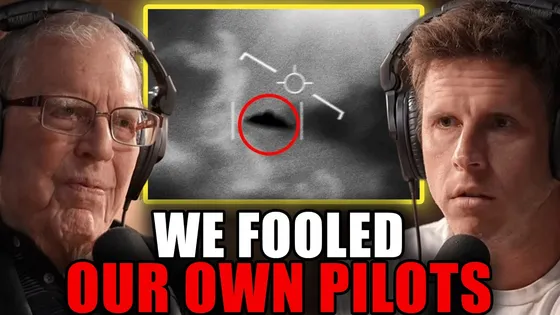
T.D. Barnes says the Tic Tac UFO sightings were probably radar spoofing tests, not alien craft
The former Area 51 operator argues the famous Navy UAPs look less like visitors from another world than a very familiar Pentagon habit: testing pilots without telling them.
Matt Ehret says Majestic 12 is fake because its typewriter and Truman signatures give it away
The UFO disclosure debate gets a paperwork problem, then turns into a full CIA myth-management theory.
The circuit, read weekly. No noise.