Patrick Bet-David says foreign leaders snubbed JD Vance because they think Marco Rubio will be president next
The PBD Podcast turned a few awkward diplomatic clips into a 2028 power read, and the read says JD Vance has a respect problem.
Listen on YouTube
 WATCH NOW↓
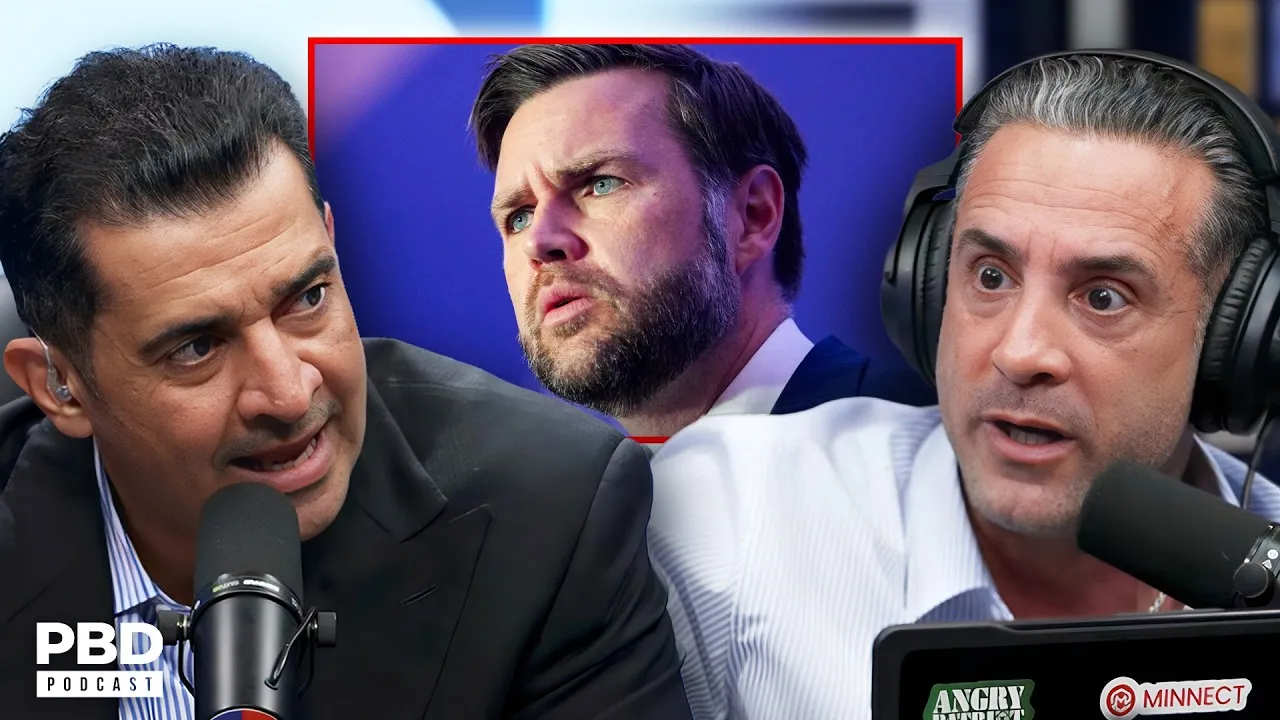
 The funniest thing about diplomatic body language is that everyone suddenly becomes a teenage girl analyzing a text bubble. On PBD Podcast, Patrick Bet-David watched clips of JD Vance in Switzerland during Iran related negotiations and came away with a brutal little theory: the room did not treat Vance like the next president, because the room may think Marco Rubio is the next president.
That is the claim here. Not that the Iran talks were messy. Not that handshakes in international politics are weird little dominance rituals performed by men in expensive suits. Bet-David’s real read was pure succession politics: if foreign leaders believed Vance was the future commander in chief, they would have behaved differently.
100% of what I’m saying to you right now, speculation.
Credit where due, Bet-David did not pretend this was a leaked cable from the State Department. He stamped the segment with a warning label. But then he did what PBD does best, took a few seconds of awkward footage, added a salesman’s instinct for status, and turned it into a theory of Republican hierarchy.
Handshake Kremlinology, now with a 2028 primary
The clips being discussed were all about posture: a leader appearing not to shake Vance’s hand, delegates leaving a meeting, regional brokers looking surprised. Tom Ellsworth treated the public drama as partly theatrical, arguing that the real signal was shipping traffic through the Strait of Hormuz. Bet-David was more interested in the room. Who gets deference? Who gets brushed off? Who walks in and makes everyone recalibrate?
The way they handled him is they don’t think he’s going to be the president next. That’s my impression.
This is where the take becomes more than just Vance got disrespected. Bet-David’s argument is that every serious foreign leader keeps a mental depth chart of American power. A president gets respect because he is president. A vice president gets respect only if people believe he is about to become something bigger. If the room shrugs, the room is voting.
Maybe in 10 years, but we think the next president’s going to be Marco Rubio.
Is that too much weight to put on a few clipped moments from a diplomatic scrum? Absolutely. International meetings are full of choreography, translation delays, protocol weirdness, and people trying to look important while waiting for someone else to open a door. Still, Bet-David’s read works as a conservative media artifact. Vance is supposed to be the movement’s future, the podcast fluent populist heir. Rubio, in this telling, is the institutional foreign policy pro who commands the room without needing the internet to explain why.
The toughness complaint
Bet-David was not simply dunking on Vance. He sounded more like a coach who thinks his talented player is using the wrong swing. His diagnosis was that Vance was stuck in a good cop role when the moment required a little more Trumpian pressure. Jared Kushner and Steve Witkoff, he argued, could be the softer messengers. Vance should be the one reminding everyone who sent him.
JD needs to go a little bit and also be a second representation of Trump and show a little bit toughness.
That is the useful part of the segment, even if the Rubio leap is doing pushups on a tightrope. Bet-David is articulating a standard that Vance’s own side is going to apply to him again and again: can he project force outside the friendly rooms, not just on podcasts, panels, and campaign stages? The PBD crew kept circling back to respect, not policy. The deal could be good or bad, real or performative. The question was whether Vance looked like the man who could make other men sit up straight.
For Vance, that is the concrete stake. If Bet-David’s read catches on, every handshake becomes a poll, every awkward pause becomes a Rubio data point, and every foreign trip becomes an audition he did not formally agree to take.
- What did Patrick Bet-David say about JD Vance and Marco Rubio?
- Bet-David said the way foreign leaders treated JD Vance made him think they do not believe Vance will be the next president. He suggested they may instead think Marco Rubio is the more likely future president.
- Was Bet-David claiming he had inside information?
- No. He explicitly said his read was speculation. The argument was built around viral clips, diplomatic body language, and his belief that powerful leaders reveal their expectations through how much respect they show a vice president.
- What did Bet-David think JD Vance should do differently?
- He said Vance needed to project more toughness and act less like the good cop in the negotiation. In Bet-David's view, Jared Kushner and Steve Witkoff could play the softer role, while Vance should look more like a second representative of Trump.
Patrick Bet-David says Iranian mourners held Kill Trump banners while the U.S. was negotiating with Iran
The PBD Podcast turns a funeral clip into an argument against negotiating with a regime whose street theater still knows exactly which American buttons to push.
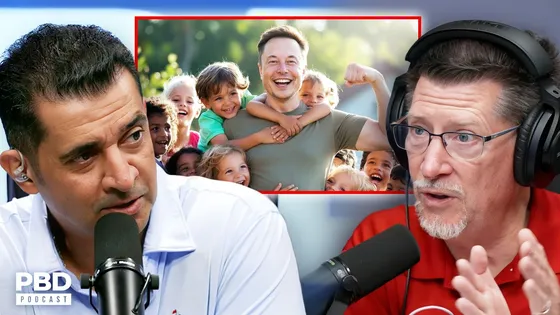
Patrick Bet-David says raising a kid requires exactly 500 five-minute conversations.
The podcast host rejects the new tech-billionaire trend of mass surrogacy, arguing that spreading your DNA does not make you a father.
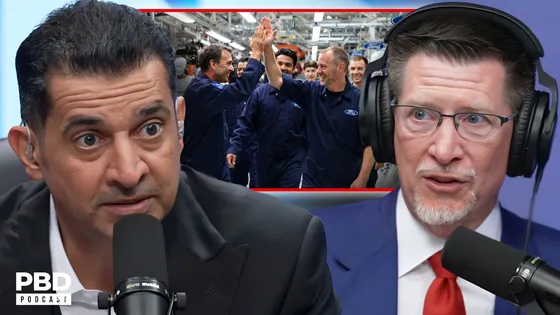
Patrick Bet-David says a $300,000 AI UBI would make most people miserable
A Ford AI quality-control story turned into Bet-David’s bigger anti-utopia: money without resistance is not freedom, it’s spiritual mush.
Patrick Bet-David says Elon Musk made a friend's $1 million SpaceX investment worth $100 billion
Bet-David's magnet stunt is really a sermon about proximity, but the SpaceX example is the number that makes you stop and check the math.
The circuit, read weekly. No noise.