Patrick Bet-David says Elon Musk made a friend's $1 million SpaceX investment worth $100 billion
Bet-David's magnet stunt is really a sermon about proximity, but the SpaceX example is the number that makes you stop and check the math.
Listen on YouTube
 WATCH NOW↓
 Patrick Bet-David says a friend of Elon Musk turned a $1 million SpaceX investment into a stake worth $100 billion. That is the kind of sentence that makes a motivational video briefly become a forensic accounting assignment.
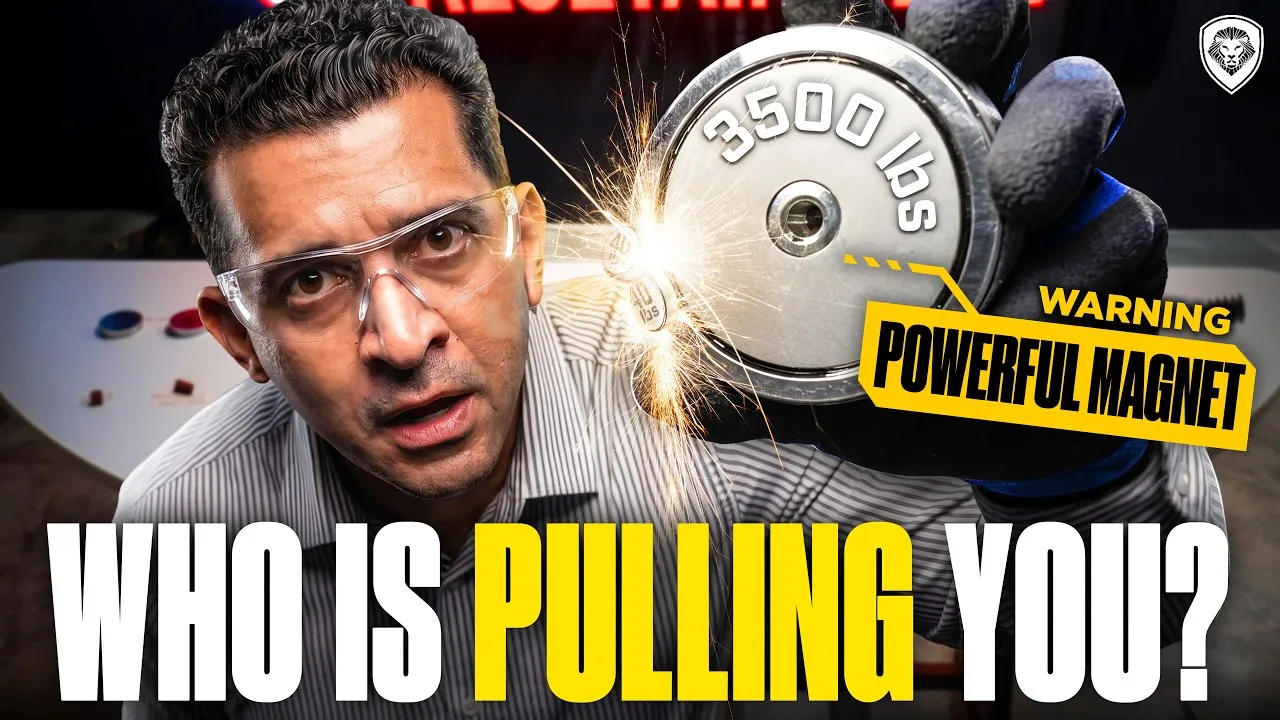
The short solo segment on PBD Podcast is built around magnets, literally. Patrick Bet-David has a table full of them, from tiny half-pound pull magnets to a hulking 3,500-pound monster, and he uses them to explain how people are pulled up or dragged down by the forces around them. The metaphor is not subtle. It is a TED Talk if TED Talks came with safety goggles and the constant threat of smashed fingers.
There is positive forces that pull us up, that we do better things, and there’s negative forces magnets that pull us down.
Most of the lesson is familiar self-improvement physics. Friends influence you. Bad crowds are bad. Winners attract winners. If you hang around a human 3,500-pound magnet, you either go to the moon or get flattened on the floor like a paper clip in a shop class demonstration.
The SpaceX math is the actual magnet
Then Bet-David reaches for Elon Musk, because in business-influencer cosmology, Musk is not a person so much as a unit of measurement. Bet-David says a friend of Musk put $1 million into SpaceX, owned 7.3 percent, and now has something worth $100 billion.
You know, there was a friend with Elon Musk that put a million dollars on SpaceX many, many years ago. He owned 7.3% of SpaceX. Do you know when SpaceX goes public what that million dollar investment is worth now? It’s called a hundred billion dollars.
This is a spectacular anecdote, and spectacular anecdotes should be treated the way Bet-David treats the big magnet, with gloves on. The episode does not name the friend. It does not cite a source. SpaceX is still private, which means there is no public share price that lets a viewer verify the claim with a brokerage app and a calculator. And if 7.3 percent is worth $100 billion, that implies a company valuation of roughly $1.37 trillion. Maybe someday. Not a number you casually toss on the table between magnets without expecting someone to ask for the receipt.
Cuz a big ass magnet Elon Musk made a lot of his friends around him wealthy and he pulled everybody up, right?
The point Bet-David wants is obvious, and not crazy: proximity matters. Early employees, founders’ friends, investors, and operators can make fortunes by getting into the right orbit early. Silicon Valley is full of people who got rich not because they were the biggest magnet in the room, but because they were close enough when the rocket lit. Still, the difference between that truth and a specific $100 billion claim is the difference between a motivational poster and a cap table.
Influence as a contact sport
Bet-David’s better material is less about valuation and more about social gravity. He argues that collective small forces can beat a stronger individual one, which is a useful way to think about peer pressure without saying the phrase peer pressure like a 1998 D.A.R.E. assembly. Five little magnets overpower one larger magnet. Fifty little magnets embarrass it. The table becomes a tiny Wall Street, a tiny high school cafeteria, a tiny sales floor.
Somehow, some way, the negative crowd finds each other. Somehow, some way, the positive crowd finds each other.
That is the piece of self-improvement advice here that doesn’t need SpaceX math to survive. Bet-David says he could tell whether a new hire was positive or negative by who they chose to have lunch with. Blunt, maybe unfair, but legible. Offices do have gravitational clusters. So do friend groups. So do group chats, which may be the most dangerous magnets of all.
The $100 billion SpaceX line is the shiny object, and it deserves the scrutiny shiny objects attract. The sturdier claim is smaller and less sexy: choose your orbit carefully, because you are probably less independent than you think.
- What did Patrick Bet-David claim about SpaceX?
- He claimed that a friend of Elon Musk invested $1 million in SpaceX, owned 7.3 percent of the company, and that the stake is worth $100 billion. He used the story as proof that being near an unusually powerful person can drag everyone around them upward.
- Is the $100 billion SpaceX stake claim verified?
- Not from the material here. Bet-David presents it as a fact, but SpaceX is private, and the episode does not name the friend or provide a source for the ownership percentage or valuation.
- What was the point of the magnet experiment?
- Bet-David uses magnets as a visual metaphor for influence. Small magnets can overpower bigger ones when they group together, while an enormous magnet represents the rare person whose pull can reshape careers, companies, and lives.
Patrick Bet-David says robots will make sports teams more valuable because fans will pay more to watch humans
The PBD panel was reacting to Elon Musk’s sci-fi future reel, but the sharpest business take was about why the robot age may be great for the Cowboys, Lakers, and UFC.
Patrick Bet-David says Elon Musk can identify who is paying for fake bot attacks on X
The PBD Podcast host makes a very searchable claim about Musk, bots, and platform power, but the leap from suspicious traffic to a clean money trail is doing a lot.
Adam Sosnick says the Lindsay Clancy case is the new prenup
The PBD panel turned the Clancy mistrial into a brutal dating question, and the answer they want is not subtle.
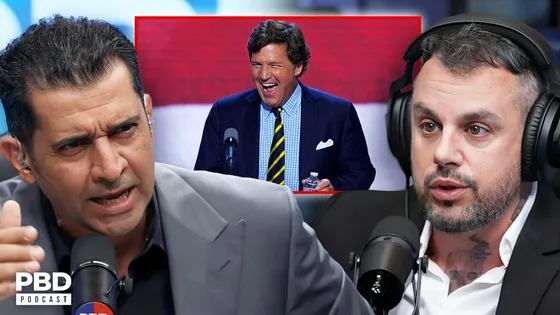
Patrick Bet-David says Tucker Carlson is going to run for president after rejecting the Republican Party
PBD reads Carlson's Republican breakup less as a purity stand than a 2028 audition, and his own panel doesn't buy the martyr act.
The circuit, read weekly. No noise.