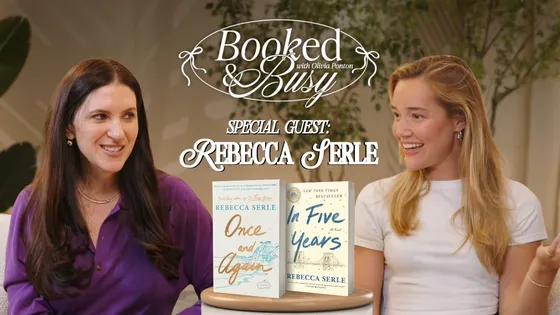
Rebecca Serle says In Five Years came from a psychic love prophecy that was off by one day
Serle’s origin story for In Five Years is either fate, marketing gold, or the cleanest possible explanation of why her novels feel like destiny with a trapdoor.
Listen on YouTube · Spotify · Apple Podcasts
 WATCH NOW↓
 Rebecca Serle says In Five Years began with a medium who predicted her love life, down to details that were, in her words, “off by a day.” That is either the most on-brand novelist origin story imaginable or the universe doing publicity.
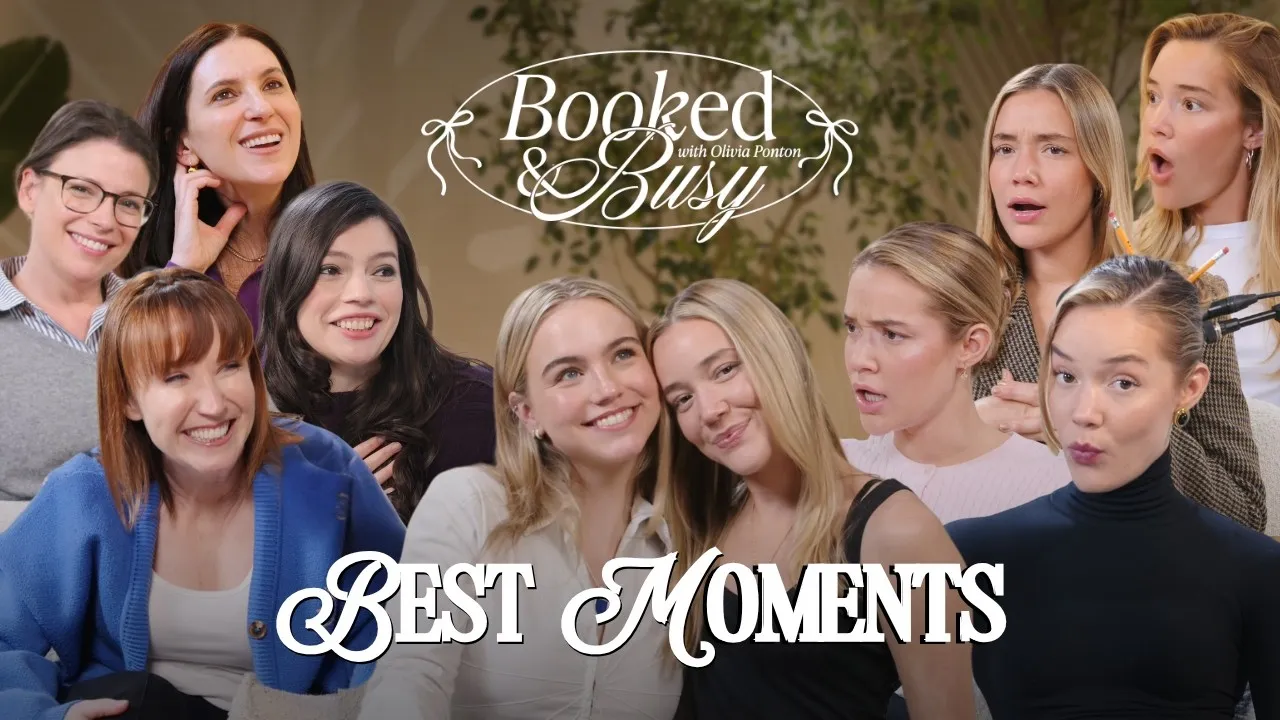
On Booked, Blonde & Busy, Olivia Ponton’s season-highlight episode is mostly a confetti cannon of book crying, friendship yearning, adaptation chatter, and people admitting they don’t know where the U goes in “restaurant.” Then Rebecca Serle drops the sort of claim that makes a listener stop folding laundry. In Five Years, the sleek little emotional ambush about a woman who sees a future she doesn’t understand, apparently has a real-life woo-woo seed.
In Five Years was inspired almost entirely from this medium reading who gave me a psychic prophecy about my love life.
This is not just cute author lore. It is the whole Serle machine in miniature. Her books tend to treat fate like a beautifully wrapped box with a live raccoon inside. You think you’re opening romance, then suddenly you’re bleeding from the knuckles and texting your mother. A psychic prediction is almost too perfect as source material, because it gives the reader the intoxicating part first, certainty, then yanks away the part humans actually want, control.
The psychic was right, except where being right matters
Serle says she was 24 when the medium told her who her future husband would be, what his name was, how she would meet him, and when. Olivia Ponton, correctly representing every person with a pulse, asks if it was true.
she told me who my future husband would be and like what his name was and like how I would meet him and when.
Um yeah, and it was all true and I ended up meeting him and then like the timing was just like it was honestly off by a day.
Here is where the claim gets good. Not because it proves psychic mediums are real, please do not Venmo a stranger named MoonDeborah your rent money. It gets good because Serle says the prophecy pointed her toward a man who did appear, but he was not the ending. “Thank God it didn’t work out,” she says, because she later met her actual husband, whom she calls her “genuine like true soulmate.”
That makes the anecdote less a supernatural flex than a craft confession. The medium didn’t give Serle a love story. She gave her a premise. What if the future is visible but illegible? What if destiny gives you the right image and the wrong caption? That is a much better engine for romance novels than the standard airport-book version of fate, where the universe is basically a smug wedding planner.
This idea that even if we can see what’s coming, we can’t see what it will mean.
Believe the feeling, not the fortune
The smart skeptical read is that Serle’s story is most credible as a writer’s explanation, not as evidence of clairvoyance. Memory is a ruthless editor. Coincidences become cleaner when they’ve been retold a few dozen times. A prediction that is right in some details and wrong in the ultimate identity of the spouse is, depending on your tolerance for crystals, either uncanny or conveniently elastic.
But as an explanation for why In Five Years works, it’s excellent. Serle isn’t asking the reader to believe in the medium. She’s asking the reader to recognize the terror of getting exactly what you once begged for and realizing you didn’t understand the terms. That’s why her later comments about manifestation don’t feel like random wellness frosting. They connect to how she writes. She talks about chasing the feeling first, then building the scene around it.
I think I approach writing a little bit like that. I’m like, what is the feeling that I want to deliver here? And I get into that feeling and then I write the scene.
That is also why the anecdote has more bite than the usual “I had a dream and wrote it down” origin story. Serle’s medium story is not about prophecy coming true. It’s about prophecy failing in the most useful way possible. The wrong man, the right dread, the right book.
If the claim is true, the psychic didn’t predict Rebecca Serle’s future husband. She predicted Rebecca Serle’s brand.
- Did Rebecca Serle really say In Five Years came from a psychic reading?
- Yes. Serle said the novel was inspired almost entirely by a medium reading that gave her a prophecy about her love life. The point, in her telling, wasn’t that the psychic handed her a perfect happily-ever-after. It was that even a glimpse of the future can be emotionally useless if you don’t know what it will mean when you get there.
- Was the psychic prediction accurate?
- Serle said the details were close enough to be eerie, including timing that was off by a day. But the man the medium seemed to predict was not the person she ultimately married. That gap is the whole trick, the prophecy was accurate enough to scare you and wrong enough to become a novel.
- Why does this claim matter for In Five Years?
- It explains why the book is less interested in wish fulfillment than in the cruelty of getting what you thought you wanted. Serle is writing against the Pinterest version of destiny. Her version says the future can arrive exactly on schedule and still not be the life you meant to order.
Rebecca Serle says In Five Years came from a psychic who predicted her future husband’s name and timing
The novelist’s fate-obsessed bestseller has a very on-brand origin story, though it works better as literary fuel than as evidence for the supernatural.

Carly Fortune says George didn't set out to wreck Frankie's wedding in Our Perfect Storm
The romance novelist gives George an alibi for the book's messiest twist, though the man is still not exactly getting a civic medal.
Veronica Roth says she never finished 'The Hunger Games' because the violence is too emotionally difficult
The architect of the 'Divergent' universe admits she tapped out of her rival dystopian franchise because it was just too bleak.
Kier Gaines says Xaden's protection in Fourth Wing is still manipulation
The licensed therapist gave BookTok's favorite brooding protector the clinical side-eye, and honestly, he earned it.
The circuit, read weekly. No noise.