Rich Roll says The Rich Roll Podcast started as a one-off recording on a mango farm
At the 1,000 episode mark, Roll's origin story is less media empire, more broke-family fever dream with a microphone.
Listen on YouTube
 WATCH NOW↓
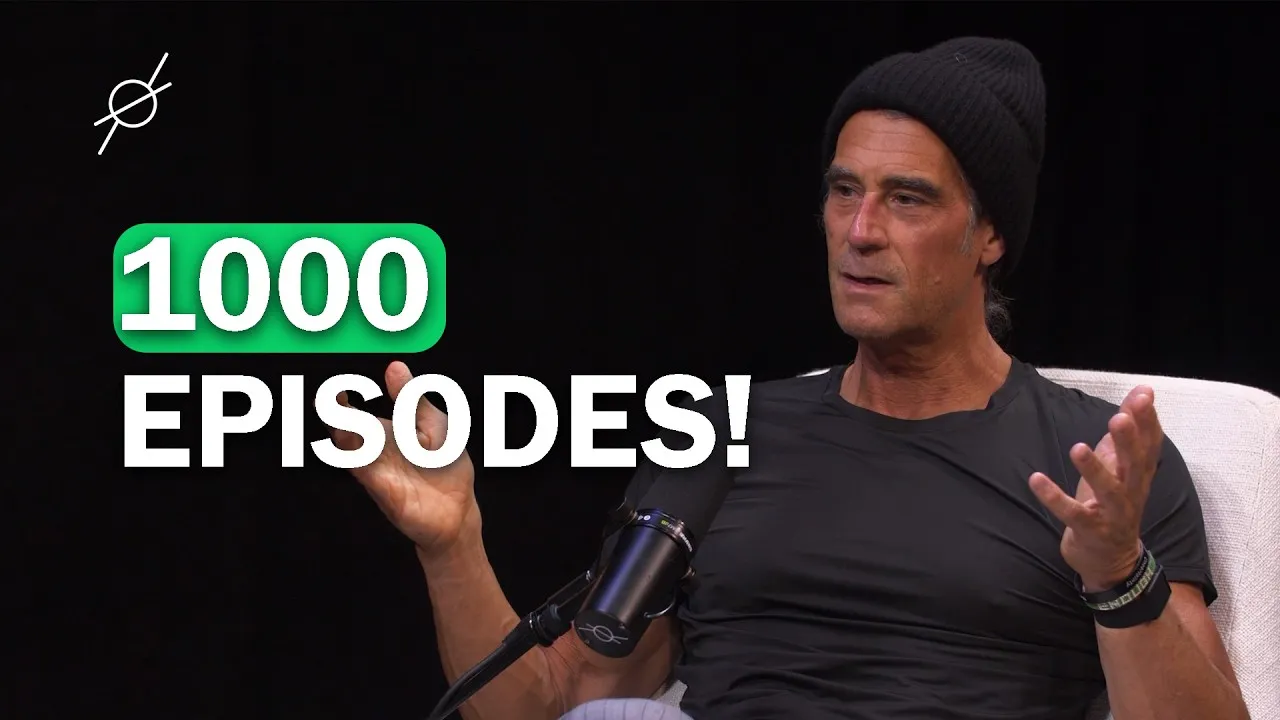
 Rich Roll says The Rich Roll Podcast began in a warehouse on a mango farm, not in a studio, not in a pitch deck, and not as the first square on some future wellness mogul’s content calendar. He says he didn’t even know there would be an episode two.
That is the useful claim in this thousandth-episode self-portrait. Not the incense-cloud language about destiny, though there is plenty of that. Not the soft-focus gratitude. The useful part is the origin myth with dirt under its nails: two people, a farm, a microphone, household money problems, and a thing that was apparently too informal to qualify as a plan.
That’s how it started. It was you and me hitting record in a warehouse on a farm on a mango farm and just seeing what would happen.
I didn’t even know there was going to be an episode two. It was just like a fun creative experiment.
For a podcast that now functions like a secular cathedral for endurance, sobriety, plant-based living, and optimized sincerity, this is a charmingly unoptimized beginning. Roll’s whole brand can feel engineered for the person who owns both a hydration vest and a stack of books about consciousness. Here, though, he makes the show sound like something that escaped from a hard season before anyone could turn it into an asset.
The anti-business plan origin story
The podcast boom has trained everyone to reverse-engineer inevitability. A show succeeds, so suddenly its first episode becomes proof of vision. The ugly haircut in the yearbook becomes evidence of genius. Roll and Julie Piatt resist that, mostly. They keep saying, in different keys, that they had no idea what was coming.
Piatt goes further, placing the podcast in the category of things that happen when ambition gets exhausted and life starts throwing furniture. She calls Roll’s place behind the mic his dharma, his rightful work, but the interesting part is that she says he did not recognize it that way. No vision board. No neat ladder from Finding Ultra to interview empire. Just a door that opened while the house was metaphorically, and sometimes literally, smoking.
it really is your rightful place. Like it and I don’t you didn’t see it. It wasn’t like on your vision board.
This is where the episode gets both more persuasive and more woo-woo. Piatt talks about the Divine Mother, cosmic force, surrender, devotion. Depending on your tolerance for capitalized spirituality, your reaction may range from nodding along to checking whether your AirPods have become a crystal. But the spiritual language is wrapped around a hard, ordinary fact: the Roll-Piatt household had been broke in the humiliating, logistical way. Not abstract scarcity. Trash-can scarcity.
or have cars repossessed and have our garbage cans taken away because I couldn’t scrge up 80 bucks
The claim is true, but the lesson is slippery
Roll’s narrow claim is credible: the show began without certainty, without a launch machine, and apparently without the kind of branding anxiety that now infects every person with a ring light. That matters in podcasting, a medium still obsessed with seeming casual after it has become extremely professional. The weird little irony is that the most valuable thing Roll built may have come from not treating it as valuable at first.
The broader lesson is more dangerous. Piatt frames deprivation as spiritually fertile, the place where creativity heightens and purpose is revealed. There is truth there, but also a trapdoor. Financial insecurity can sharpen people. It can also wreck them, numb them, shorten their horizon, and make art feel like a luxury item for people with better dental insurance. The fact that Roll’s story resolved into a beloved podcast does not mean everyone else’s unpaid bill is secretly a portal.
Still, the episode is strongest when it refuses the clean founder myth. Roll doesn’t say he hacked the algorithm. Piatt doesn’t claim they had the whole map. Their story is more annoying and more useful than that: they were lost, and one of the things they did while lost became the thing.
That’s when creativity heightens. That’s when the real materia is there. That’s when it gets really rich is when you’re in lack
- Did Rich Roll plan The Rich Roll Podcast as a real show from the beginning?
- No. Roll describes the first recording as a casual experiment with Julie Piatt in a warehouse on a mango farm. His point is that the show did not begin as a strategic launch, a brand extension, or a polished business plan.
- Why does the mango farm detail matter?
- Because it cuts against the usual founder mythology. Roll is not presenting the podcast as the inevitable next step in a master plan. He is saying the thing that became his defining platform arrived sideways, during a period when he and Piatt were under serious financial strain.
- Is Rich Roll's origin story convincing or just wellness-brand mythmaking?
- Both, a little. The practical detail, no planned second episode, makes the story believable. The spiritual framing around destiny, dharma, and being chosen gives it the glow of a self-made parable, which will either move you or make your immune system reject incense.
Lewis Howes says he called his podcast The School of Greatness because his ego needed to die
On Young and Profiting, Howes makes the rare personal-branding confession that the brand was partly built to keep himself from becoming the whole point.
Maureen Callahan says Alex Cooper is complicit in Unwell’s alleged toxic workplace, not a bystander
The sharpest charge here is not that Matt Kaplan allegedly screamed at employees, it is that Alex Cooper’s feminist boss brand collapses if she stood by while it happened.
Pete Holmes Went to Ayahuasca, Neal Brennan Is Scared of His Dog
Two comedians closing in on 20 years of friendship talk God, plant medicine, body dysmorphia, and whether love is just a dog following a turkey leg.

Tamra Judge Has Built a Full Life After RHOC and Would Like You to Stop Calling It Thirst
The Real Housewives of Orange County veteran stops by Up and Adam! to set the record straight on naked wasted, Shannon Beador, and why she does not need your television show back.
The circuit, read weekly. No noise.