Lewis Howes says he called his podcast The School of Greatness because his ego needed to die
On Young and Profiting, Howes makes the rare personal-branding confession that the brand was partly built to keep himself from becoming the whole point.
Listen on YouTube · Spotify · Apple Podcasts
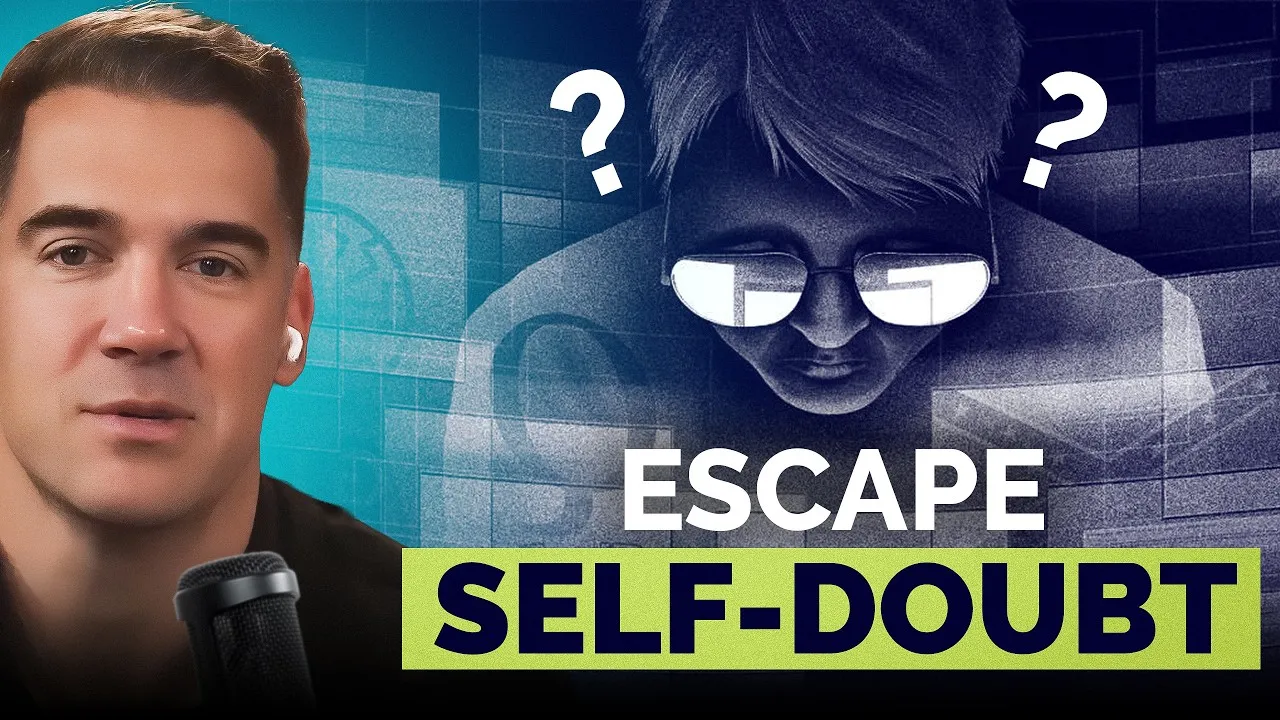 WATCH NOW↓
 Lewis Howes says The School of Greatness wasn’t just a clean podcast title with gym-poster energy. He says he named it that instead of naming the show after himself because he realized his ego needed to die.
This is a funny confession from a man whose entire business still requires the internet to know who Lewis Howes is. But it’s also the rare useful crack in the personal-branding machine. On Young and Profiting, Howes doesn’t pretend ambition is automatically noble. He says the underdog fuel that got him attention also made him miserable.
It got me external results but left me feeling completely emotionally bankrupt and it can only last so long until things fall apart.
That line is the whole tension of modern self-help in one neat little bruise. We love the revenge arc. The kid picked last becomes the guy onstage. The doubter becomes the testimonial. The problem, Howes says, is that proving people wrong is still letting them hold the steering wheel. You can win the argument and still be stuck in the argument.
The anti-ego brand is still a brand
Howes is not exactly taking a vow of anonymity here. The School of Greatness is a massive media property, and Howes talks openly about reach, YouTube, downloads, books, and building mechanisms around a mission. He is fluent in personal branding. He also knows the awkward little dance: promote yourself enough to be discoverable, but not so much that you start worshiping your own headshot.
I was like, my ego needs to die. I’m so worried about other people’s opinions and proving people wrong, and that’s what’s causing me pain.
That’s the interesting part of the claim. It isn’t, “I’m humble now,” which is usually how the ego sneaks back into the room wearing linen. It’s more practical than that. Howes says the show’s name gave him a structure where he could put the spotlight on guests, on questions, on lessons, on a “school,” rather than making the whole thing a monument to Lewis Howes, Formerly Wounded Guy Who Made It.
The verdict is mixed, in the best way. Yes, this is self-serving. A book called The Greatness Mindset benefits from the idea that greatness is really healing with a nicer cover. But Howes is persuasive when he argues that ambition powered by shame has a short shelf life. He’s not telling listeners to want less. He’s telling them to stop using pain as the only available battery.
The self-help Trojan horse
Howes keeps returning to one idea: the productivity framework is not the real product. The real product is getting people to face the stuff they’d rather turn into hustle. He talks about childhood sexual abuse, shame, fear of judgment, and the strange trap of looking successful while feeling powerless. The shiny word is greatness. The less marketable word is trauma.
Most of my book is about healing. It’s a Trojan horse for processing, healing, and getting out the poison inside of us so that we can thrive at the highest levels.
That’s a sharper claim than the usual “find your purpose” smoothie. Howes is basically saying the market will buy greatness, but what a lot of people need is grief work, therapy, confession, and a way to stop letting old humiliation write today’s calendar. He even makes gratitude sound less like a refrigerator magnet and more like social physics: people are drawn to the grateful, not the bitter.
If Howes is right, the name of the show is not trivia. It’s a little instruction manual for anyone building a public life online. Don’t name the thing after the wound. Don’t make every win a courtroom exhibit against people who didn’t believe in you. Build something sturdy enough that your ego can clock out once in a while.
having it all, but feeling powerless internally is one of the greatest prisons we can be in psychologically.
- Why did Lewis Howes say he named the show The School of Greatness?
- Howes says the title helped shift the project away from his own ego and toward service. He frames the choice as part of a larger effort to stop living for approval, revenge, and outside validation.
- Does Lewis Howes think a chip on your shoulder is bad?
- He says it can work, up to a point. In his case, being underestimated drove him to achievement, but he says it also left him resentful, exhausted, and emotionally broke once the external wins arrived.
- What does Lewis Howes say is the real problem behind success that still feels empty?
- Howes argues that unhealed pain keeps people trapped even when they have money, status, and recognition. His view is that achievement without healing can become its own psychological prison.

Haley Sacks says renting an apartment will make you richer than buying a house.
The financial influencer known as Mrs. Dow Jones is aggressively shorting the traditional American dream.

Mustafa Suleyman says AI agents will run an entire online business before 2030
The Microsoft AI CEO is bullish on agentic AI, but his most futuristic prediction also sounds a lot like the sales brochure for Copilot.
Benjamin Hardy says 10X growth requires cutting 80 percent of your life
The productivity guru’s sharpest claim is not to grind harder, but to delete most of the life that made you successful so far.
Ben Nemtin says 76% of people reach their deathbed regretting the life they didn't live
The Buried Life co-creator has built a whole bucket-list gospel around one scary statistic, though the number is cleaner than the research behind it.
The circuit, read weekly. No noise.