Sam Sulek says he hasn't done a real shoulder press in three or four years
The young bodybuilding star's arm-day logic is half physique audit, half glorious meathead minimalism.
Listen on YouTube
 WATCH NOW↓
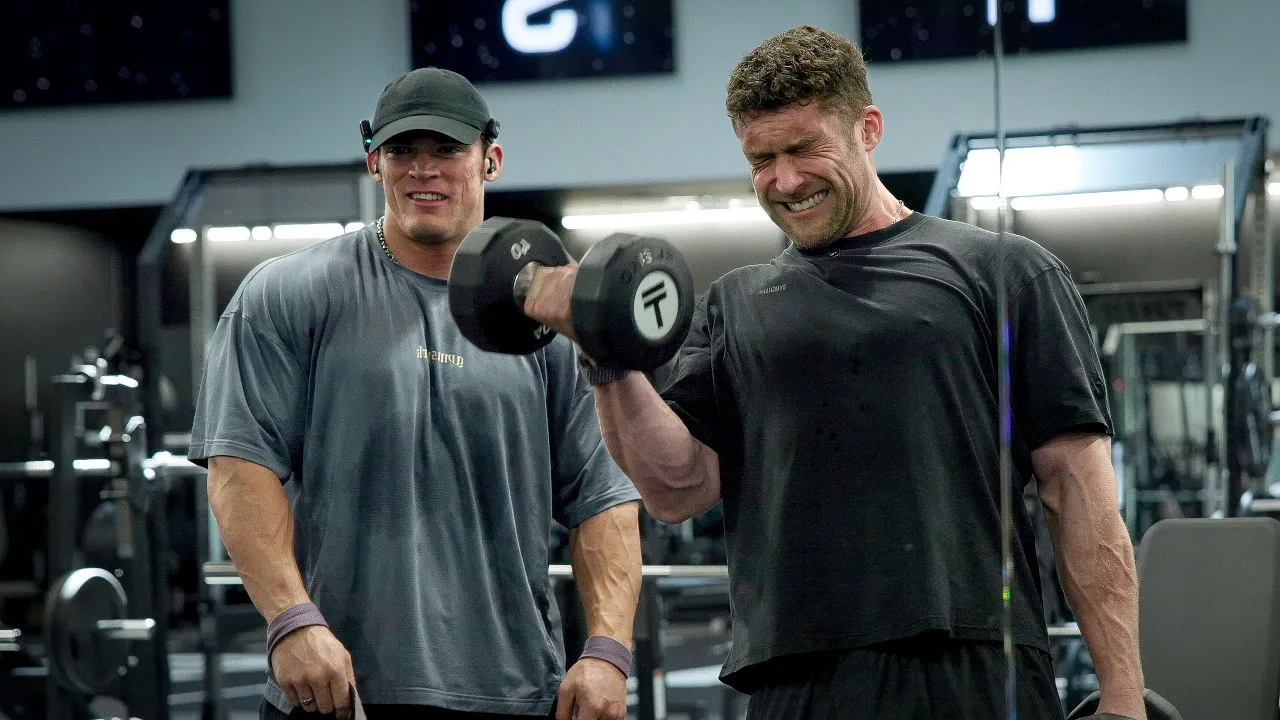
 The funniest flex in bodybuilding is refusing to train a glamour muscle because it got too good at its job. Sam Sulek told Modern Wisdom he hasn’t done a real shoulder press in three or four years, because his delts already overpower the arms he wants to bring up.
That is very Sam Sulek. Not quite science, not quite nonsense, delivered with the confidence of a man who treats arm day like a civic duty. This was nominally an aggressive arms session with Chris Williamson, but the useful bit wasn’t the cable stack or the groaning. It was Sulek explaining that bodybuilding is not just adding more of everything. Sometimes the move is to stop feeding the monster.
I guess skip shoulders. They’re kind of just big enough. Like the roundness of my shoulder is more than my bicep, my tricep. I want this to catch up. And you’re just cheating cuz there’s more androgen receptors all over here. So, I haven’t done like real shoulder press three years or four years maybe.
The no-shoulder-press plan is not a plan for you
Let’s be clear, this is not a public-service announcement telling teenage lifters to bin overhead pressing and pray for cannonball delts. Sulek is talking like a bodybuilder with a bodybuilder’s problem. His shoulders grow easily, or at least look big enough already, and his arms are the priority. That’s a physique critique, not a beginner template.
The androgen-receptor line is the kind of gym-floor biochemistry that sounds both plausible and suspiciously convenient. Delts and traps do have a reputation in bodybuilding for responding loudly, especially in enhanced circles, but Sulek’s real point is simpler: if a muscle group is already stealing the show, more work can make the imbalance worse. For a normal lifter, skipping shoulder press for four years is probably overcorrection. For Sulek, it reads like pruning a hedge with a chainsaw.
He has a good eye for the optical illusion of muscle. Big shoulders with small arms, he says, can make you look like you are wearing pads. Big arms with smaller shoulders can make you look softer, even chunky. The gym bro dream is usually just bigger everything, everywhere, forever. Sulek’s version is weirder and more exacting: grow the thing that changes the silhouette, leave the thing that already screams.
His waist advice is just as ruthless
Sulek applies the same aesthetic paranoia to abs. When people ask what to train for a better midsection, he doesn’t reach for a cute core circuit. He goes straight at weighted side bends, the exercise that looks sensible until you remember bodybuilders are not training for sensible. They’re training for a cartoon torso.
as just a general thing. Like when anybody’s asking me, you know, what should I train for abs? And I see guys doing like weighted side bends, I’m like, [ __ ] man. Quit doing. You’re just going to thicken up the side of your waist.
Again, the verdict is: directionally fair, dramatically stated. Heavy loaded side bends can grow the obliques. For someone chasing a narrow waist and wide shoulders, that may be counterproductive. But most people are not one set of dumbbell side bends away from ruining their taper. This is strength training advice filtered through the funhouse mirror of competitive aesthetics, where a quarter inch in the wrong place can feel like vandalism.
What makes Sulek compelling as a fitness influencer is that he doesn’t dress this up as clean little optimization content. He says the meathead part out loud. Curling something most people press is satisfying. A perfect-looking set at the end probably wasn’t that hard. A nasty set of curls is acceptable in a way a nasty squat is not. There is a code here, even if it’s written in sweat and cable attachments.
Sometimes I like to imagine myself doing a set of squats so good that at the end after I fail like I don’t hurt myself but I put it down on the safeties and I just actually pass out for real because I went so hard.
That quote is insane, obviously. It is also the reason people watch him. Sulek’s whole thing is an almost monastic devotion to the feeling of the set, minus the clean branding and LinkedIn discipline talk. He can sound like a philosopher if the philosopher’s cave had a dip machine and questionable air conditioning.
The trophies are not the religion
The shoulder-press confession also explains his attitude toward competition. Sulek says there’s no immediate show on the calendar, and when he does compete again, he wants it to fold naturally into what he already wants to do with his body. That is the opposite of the usual influencer arc, where every cut must become a series, every show must become a destiny, every trophy must validate the merch drop.
Even winning the first two, like it was awesome. It’s like sweet. Like proof of like I’m doing all this stuff. But if I never did the show, I would still be me.
- Why did Sam Sulek stop doing shoulder press?
- Sulek says his shoulders are already dominant, especially compared with his biceps and triceps, so he doesn't see the point in pressing them harder. His logic is aesthetic, not medical. He wants his arms to catch up rather than make his delts even rounder.
- Is Sam Sulek saying everyone should skip shoulder press?
- No. This is highly personal bodybuilding math. If your shoulders lag, pressing still makes sense. If your delts already overpower your arms, Sulek's approach is basically selective neglect with a purpose.
- What ab exercise does Sam Sulek warn against?
- He says he tells guys to quit doing heavy weighted side bends if their goal is a smaller-looking waist. His view is that loading the obliques can thicken the sides, which may fight the V-taper many bodybuilders want.
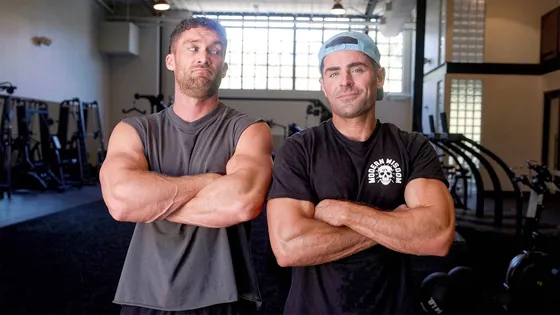
Zac Efron says eating too much salmon during The Iron Claw prep gave him mercury poisoning
Efron says the 6,000-calorie bulk for The Iron Claw pushed him from a 29 waist to a 34, up to 205 pounds, and into a fish problem.
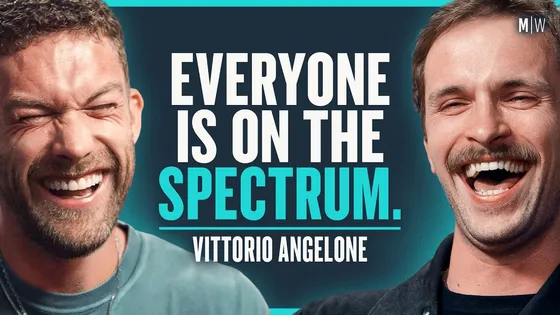
Vittorio Angelone says ignoring young men leaves them to Andrew Tate
The comedian’s defense of Jordan Peterson is less a conversion story than a warning about who gets young men when everyone else finds them embarrassing.
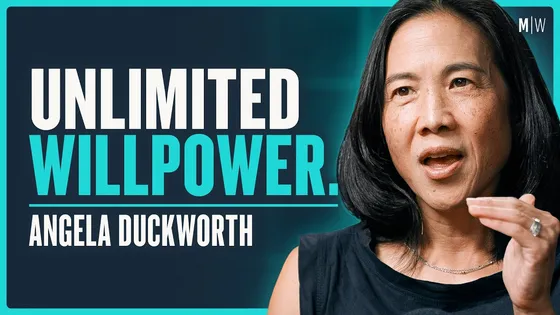
Angela Duckworth says successful people don’t use willpower
The author of Grit has not disowned effort, but she is now arguing that white-knuckle discipline is the worst way to build a life.

Tim Urban says the black hole era lasts so long you would need 1.4 billion observable universes packed with timeline ribbon to measure it
The Wait But Why writer turned far-future cosmology into a craft-store nightmare, and the math is mostly the point.
The circuit, read weekly. No noise.