Suzanne Venker says daycare is the bottom of the bottom for children under 3
The author argues that career-first culture pushes mothers into outsourcing the exact years when children need quantity time most.
Listen on YouTube
 WATCH NOW↓
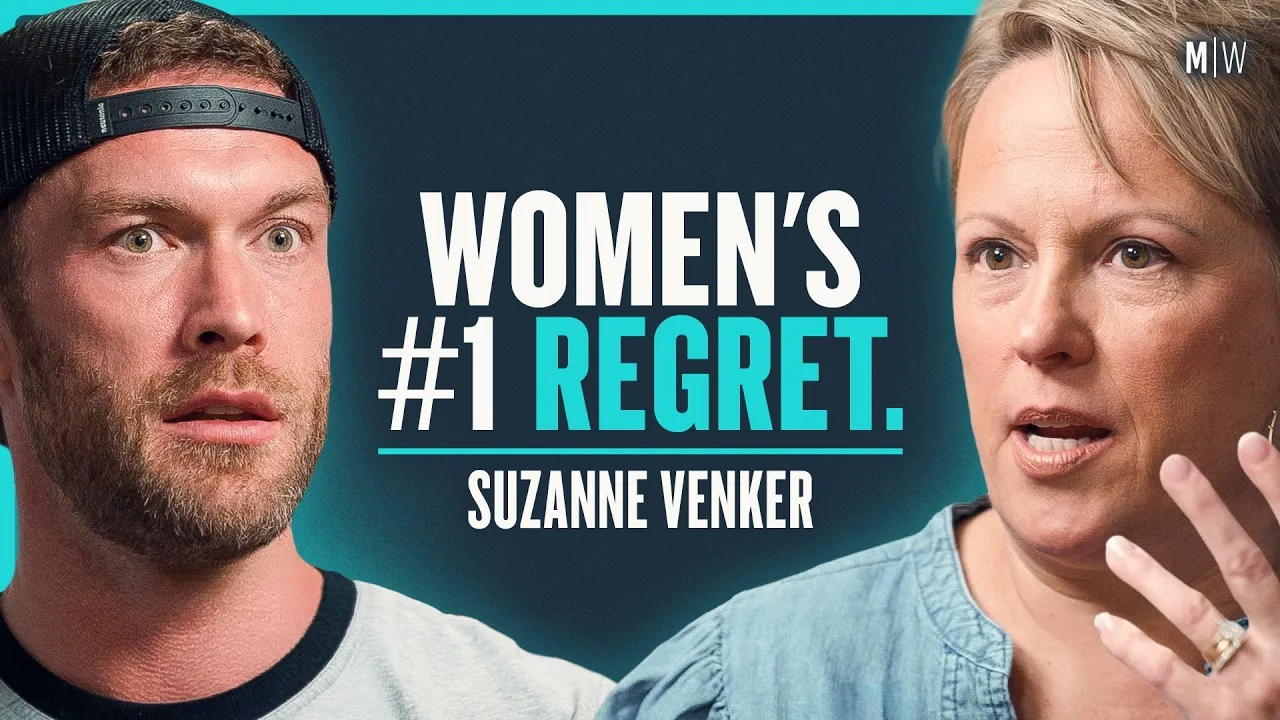
 Suzanne Venker says daycare is “the bottom of the bottom” for babies and toddlers, especially before age 3. Her argument on Modern Wisdom is that the modern career script doesn’t just make mothers exhausted, it pushes the attachment bill onto children who may pay it later in their adult relationships.
That is the grenade in a conversation full of grenades. Suzanne Venker, an author and relationship coach with a gift for saying the thing that gets everyone escorted out of brunch, frames the whole mess as a decades-long bait and switch. Women, she says, were prepared for work but not for marriage and motherhood. Then, around 30, the body, the marriage market, the student loans, and the baby question all arrive like four separate invoices from hell.
That whole quality time thing is bogus. That’s not real. Children need tons and tons and tons of quantity time, not quality time. It’s just not something you can just do in leftover time.
The target here is not only daycare. It is the adult alibi called “quality time,” the comforting little phrase that lets a parent cram a relationship into the margins and call it intentional. Venker thinks that idea is a fraud. A baby, in her view, does not need a TED Talk from mom between Slack notifications. A baby needs mom there, repeatedly, boringly, physically. The boring part is the point.
The daycare claim is blunt, and too clean
Daycare is the last place that that littles belong. Littles belong at home with their mom. If not with mom, with dad. If not with dad, then grandma. If not with grandma and nanny. If not with a nanny. A neighborhood small. I mean, daycare is the bottom of the bottom.
There is a real claim here, and a real overclaim. Venker is strongest when she talks about scale, turnover, hours, and age. A six-week-old in ten hours of group care is not the same thing as a three-year-old spending a few mornings at preschool. Even she makes that distinction. The problem is that her slogan does what slogans do. It bulldozes the middle.
The best version of the argument is not “all daycare wrecks children.” That’s bumper-sticker sociology. The better argument is that the youngest children are more vulnerable to instability, long separations, high ratios, overstimulation, and caregiver churn. A calm nanny, a grandparent, a parent swapping shifts, or a tiny two-family childcare trade is not magically holy, but it is closer to the kind of stable attachment environment Venker is defending.
The weaker part is the moral sorting hat. Venker can sound as if any mother using daycare has been hypnotized by feminism, social media, and the ghost of a conference-room pantsuit. That’s neat. Too neat. Some families use daycare because rent exists. Because health insurance exists. Because America looked at parental leave and said, “Best we can do is a lactation room near the copier.” Venker knows this, but her rhetoric keeps sprinting past it.
The Emma Grede detour made the fight clearer
Chris Williamson plays Venker a clip of Emma Grede, the entrepreneur behind Good American and a founding partner of SKIMS, defending her “three-hour mom” line. Grede’s point is basically that working parents are depleted and that three focused hours with the kids can be good enough. Venker hears something else: a worldview built to protect the career at the expense of admitting what children lose.
This is where Venker’s argument sharpens. She says the issue is not whether a stay-at-home mother spends twelve hours on the floor playing wooden trains with the glazed devotion of a Montessori hostage. Of course she doesn’t. The difference, Venker says, is that the mother is available. The child can wander in and out of her presence. Attachment is built in the small returns, not the scheduled performance of presence.
the most important thing for a child in the first three years of life is to develop the intangibles of love and trust that will then carry them into their own adult relationships later on.
That is the part of the episode most likely to make two different listeners throw two different objects. One hears a long-overdue defense of motherhood as actual work. The other hears a woman making already guilty parents feel like they personally fed their toddler into an attachment wood chipper. Both reactions make sense.
The career trap behind the daycare fight
Venker’s bigger thesis is that women are told to build lives as if their priorities at 22 will survive contact with 32. She thinks that is a lie with compound interest. Pick the wrong degree, take on the wrong debt, marry a man without professional footing, normalize two full-time careers, then try to add a baby. Congratulations, you have assembled a machine that requires daycare and then tells you daycare is liberation.
the running joke is, well, I’m trying to get to you when you’re 22 before you come to me at 32. But at 22, you’re not interested. But at 32, you’re like, “Help me. Help me.”
This is where Venker is most persuasive, even if you don’t buy the whole traditionalist bundle. Life planning really is downstream of values. If you want kids, and especially if you want serious time at home with them, it is absurd to pretend career choice, debt, partner choice, housing expectations, and childcare philosophy are separate tabs in the browser. They’re the same tab. It’s just been open for ten years and is now slowing down the entire system.
Still, Venker’s answer asks a lot from young women who may not yet want the thing she says they’ll want later. Build your career around a future baby you don’t currently desire. Choose flexibility before you know what you’re flexing for. Date for marriage while everyone else is sliding into shared rent and a dog named Moose. She is asking 22-year-olds to act on 32-year-old information. That may be wise. It is also a brutal sales pitch.
If Venker is right, the stake is not whether daycare moms are good moms or bad moms. That framing is useless and cruel. The stake is whether parents are being sold a life model that creates the childcare problem, then forbids them from saying the solution might be bad for very young children. If that’s true, the uncomfortable question is not “Can I afford daycare?” It is “What did I build that made daycare feel inevitable?”
- Did Suzanne Venker really say daycare is bad for young children?
- Yes. Venker argued that daycare is the lowest option for babies and toddlers, especially when it means long days in group care. Her case is that children in the first three years need stable, intimate attachment from a parent or one consistent caregiver, not rotating staff and institutional routines.
- Is Suzanne Venker right that daycare causes attachment problems?
- She has a point about age, hours, caregiver turnover, and stability mattering. But her phrasing is too absolute. Childcare quality varies enormously, and the evidence does not reduce cleanly to daycare equals damage. The stronger version of her claim is that long, low-quality, high-turnover care for very young children is a real developmental risk.
- What does Venker recommend instead of daycare?
- Her hierarchy is mother first, then father, then grandmother, then nanny, then a small neighborhood arrangement. She also floated workarounds like parents tag-teaming shifts or mothers trading childcare with friends, because her real enemy is large-scale group care for very young children.

Angela Duckworth says successful people don’t use willpower
The author of Grit has not disowned effort, but she is now arguing that white-knuckle discipline is the worst way to build a life.

Tim Urban says the black hole era lasts so long you would need 1.4 billion observable universes packed with timeline ribbon to measure it
The Wait But Why writer turned far-future cosmology into a craft-store nightmare, and the math is mostly the point.

Zac Efron says eating too much salmon during The Iron Claw prep gave him mercury poisoning
Efron says the 6,000-calorie bulk for The Iron Claw pushed him from a 29 waist to a 34, up to 205 pounds, and into a fish problem.

Andrew Huberman says daily nicotine pouches don't boost your brain, they just fix withdrawal
Huberman's rule is brutally unfashionable in the pouch era: if you want nicotine to help performance, don't make it a habit.
The circuit, read weekly. No noise.