Anthony Kaldellis says the Plague of Justinian probably did not kill half the Roman Empire
The historian's case is brutally practical: if half the empire died, why did Justinian's wars, taxes, and courts keep running?
Listen on YouTube · Spotify · Apple Podcasts
 WATCH NOW↓
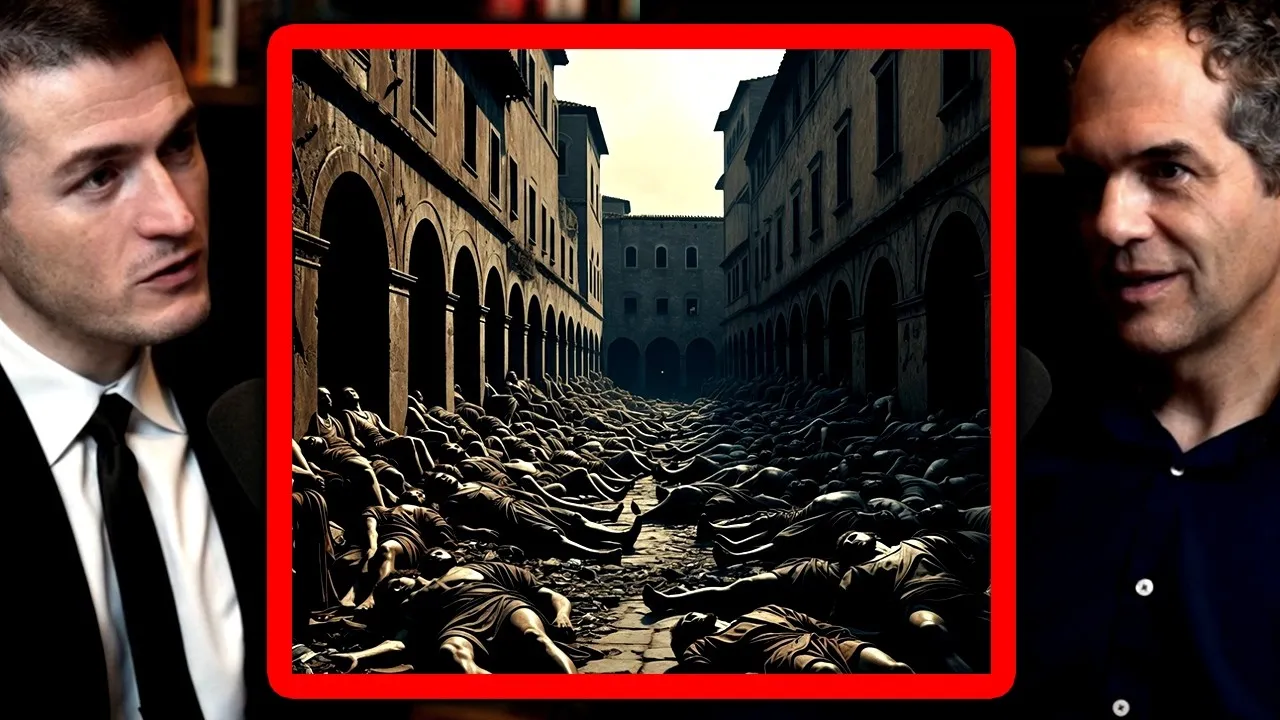
 Anthony Kaldellis is not buying the sexiest version of the Plague of Justinian story. On Lex Fridman’s podcast, he pushed back on the claim that the sixth-century bubonic plague killed half the Roman Empire, arguing that a disaster on that scale would have made the empire visibly seize up, and it did not.
This is the kind of historical argument that feels almost annoyingly simple once someone says it out loud. Forget, for a moment, the apocalyptic vibe. Forget the attractive neatness of a single plague explaining imperial decline, the way every documentary needs a skull, a map, and a thunderclap. Kaldellis’s test is administrative. Did the machine stop? Did armies stop fighting? Did taxes stop being collected? Did courts stop functioning? His answer is no.
some scholars argue for a kind of maximalist position of 50%. I think that would have brought this society to a halt. Just logistically speaking.
That is the whole knife twist. The 50 percent figure is not merely big. It is civilization-breaking. If every other person in the empire died, the result would not be a bad quarter for the tax office. It would be a dead hand on the steering wheel. Kaldellis’s skepticism comes from the Roman state doing the most Roman possible thing in the middle of a supposed demographic cataclysm: continuing to file paperwork and fight wars.
The plague was real. The half-the-empire number is the problem.
Kaldellis is not doing plague denial, ancient history edition. He accepts the disease, and he accepts the modern science identifying the pathogen. The Plague of Justinian begins around 541 AD, hits Constantinople and other cities, and belongs to a longer wave of bubonic plague that comes and goes for roughly two centuries. Thanks to ancient DNA work, historians are no longer guessing in the dark about whether this was actually plague.
It’s Yersinia pestis. Like we know this. Just like a generation ago, this was just guesswork.
The distinction matters because plague discourse loves a clean apocalypse. A pathogen gets identified, then the imagination immediately starts shopping for collapse. But knowing the bug is not the same as knowing the body count. Kaldellis draws the line between laboratory certainty and historical consequence. Science can tell you what organism was present. It cannot, by itself, tell you how many died, how fast institutions buckled, or whether the Roman state lost the ability to do empire things.
It still doesn’t tell you, however, like mortality rates and historical impact. Like for that you still need standard old-fashioned non-laboratory historical work.
This is where Kaldellis’s broader identity matters. He is a historian of the Eastern Roman Empire, a field forever fighting bad branding. Byzantium has often been treated as Rome’s ghost, decadent and doomed, waiting around for an Ottoman curtain drop. Kaldellis has spent much of his career objecting to that framing. So yes, his suspicion of a neat plague-killed-the-empire story fits his larger project. But that does not make it wrong. If anything, it makes him alert to a lazy habit: using disaster as a shortcut explanation for a state that was still very much alive.
His best evidence is Justinian’s terrible calendar
The funniest part of the argument is that Justinian, emperor, builder, conqueror, legal compiler, exhausting boss, was apparently too busy waging war everywhere for the plague-collapse thesis to work cleanly. Kaldellis points out that at the very moment the plague is supposed to have gutted the empire, Justinian was fighting on multiple fronts. Not symbolically. Not in a ceremonial, one-legion-and-a-press-release way. The wars continued.
In fact, Justinian is at that time waging war on something like four or five different fronts. If you read the narratives of those wars, there’s no pause.
That comparison to the later Black Death is doing real work. For fourteenth-century Europe, the records show societies staggering, labor systems convulsing, local economies snapping and re-forming. If half a population disappears, people notice. Institutions notice. The calendar notices. Kaldellis’s point is not that sixth-century sources were perfect ledgers of suffering. They were not. His point is that a 50 percent mortality event should leave more than a weird silence where the operational consequences ought to be.
Verdict: Kaldellis makes the stronger case, at least against the headline version. The Plague of Justinian was real, serious, and historically important. But the claim that it killed half the Roman Empire sounds overcooked unless you can explain why the empire’s armies, taxation, and courts kept moving. Catastrophes do not have to be fake to be inflated. Sometimes the more interesting history is not the plague that ended everything. It is the plague that arrived, killed, terrified, disrupted, and still failed to stop the paperwork.

Anthony Kaldellis says Diocletian ended Italy’s tax haven and made taxation the core of the Roman state
The Byzantine historian’s best line on Lex Fridman is not that Diocletian invented the deep state, but that he made the conquerors finally pick up the tab.
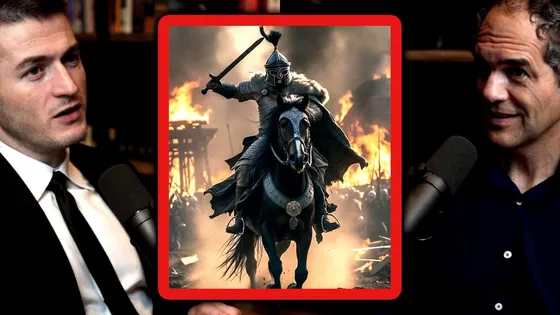
Anthony Kaldellis says Rome’s three biggest disasters were the Arab conquests, the Seljuk conquest of Asia Minor, and the Fourth Crusade
The Byzantine historian’s Roman Empire is not a marble statue collapsing in 476, but a long-running state repeatedly injured by three fast, brutal shocks.

Anthony Kaldellis says Roman families voluntarily castrated their sons to place them at the emperor's court
The Byzantine historian explains how castration was sometimes a family's smartest power move, not just a cruelty imposed on slaves.

Anthony Kaldellis says Byzantine Greek fire came in hand grenade form
The historian’s best detail on Lex Fridman was not just that Greek fire burned on water, but that the Romans apparently bottled the stuff and threw it at siege engines.
The circuit, read weekly. No noise.