Anthony Kaldellis
A historian of Byzantium and the Eastern Roman Empire known for arguing that Byzantium should be understood as a continuation of Rome.
Circuit updated November 22, 2026
- Anthony Kaldellis says Constantinople became a 500,000 person city by importing senators and stealing Rome’s grain
“That rate of growth is impossible for an ancient city.” 0:23
- Anthony Kaldellis says Christian orthodoxy was often settled after the fight, then treated as eternal truth
“In reality, what happens is that this truth is something that's evolving in the course of the controversies.” 3:57
- Anthony Kaldellis says 46 percent of Constantinople's emperors were overthrown through violence
“just take the the thousand years that I study. Uh there's something like 120 civil wars.” 0:42
- Anthony Kaldellis says Diocletian ended Italy’s tax haven and made taxation the core of the Roman state
“I have not come across the idea of some sort of sinister elements, you know, who are working within the administrative apparatus to undermine the emperor.” 0:42
- Anthony Kaldellis says Rome’s three biggest disasters were the Arab conquests, the Seljuk conquest of Asia Minor, and the Fourth Crusade
“There's the Arab conquests in the 630s. This is a decade. In a decade, that war was lost. It is the Seljuk Turk conquest of Asia Minor, modern Turkey, in the 1070s.” 0:23
- Anthony Kaldellis says Byzantine Greek fire came in hand grenade form
“Well, it's a state secret. They didn't want this getting out. So, they kept it pretty well. The fact that we're debating it will tell you that they were pretty good at keeping secrets.” 1:33
- Anthony Kaldellis says the Plague of Justinian probably did not kill half the Roman Empire
“some scholars argue for a kind of maximalist position of 50%. I think that would have brought this society to a halt. Just logistically speaking.” 1:33
- Anthony Kaldellis says Roman families voluntarily castrated their sons to place them at the emperor's court
“We are pretty sure that this happened within the empire because there were some families that like really wanted to place a eunuch at the court. So they would, it was almost like a family's strategy.” 3:51
-
“Eunuchs were perfect for this reason because often their origin was from outside the empire or they were former slaves. They weren't connected to like networks of powerful families. So, you knew that they would generally be loyal to you because they depended entirely on you, the emperor, for their position and their power.”
Anthony Kaldellis · Lex Fridman Podcast -
“Up until then Italy was exempt from taxes. Italy was the land of the conquerors. The conquerors don't pay taxes to themselves. The conquerors live off the taxes that others pay, right? So Italy was this big tax haven.”
Anthony Kaldellis · Lex Fridman Podcast -
“often they don't know that they you know believe that until in retrospect once they've had the fight and the winner has this position. Oh, now that turns out to have been the position we always held, right?”
Anthony Kaldellis · Lex Fridman Podcast -
“We are pretty sure that this happened within the empire because there were some families that like really wanted to place a eunuch at the court. So they would, it was almost like a family's strategy.”
Anthony Kaldellis · Lex Fridman Podcast -
“Well, it's a state secret. They didn't want this getting out. So, they kept it pretty well. The fact that we're debating it will tell you that they were pretty good at keeping secrets.”
Anthony Kaldellis · Lex Fridman Podcast -
“There's the Arab conquests in the 630s. This is a decade. In a decade, that war was lost. It is the Seljuk Turk conquest of Asia Minor, modern Turkey, in the 1070s.”
Anthony Kaldellis · Lex Fridman Podcast
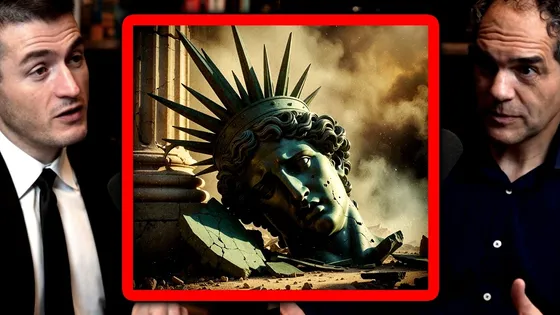
Anthony Kaldellis says Constantinople became a 500,000 person city by importing senators and stealing Rome’s grain
The Byzantine historian’s best point is that Constantinople was not a miracle city. It was an imperial relocation project with free bread and a moving truck full of senatorial servants.
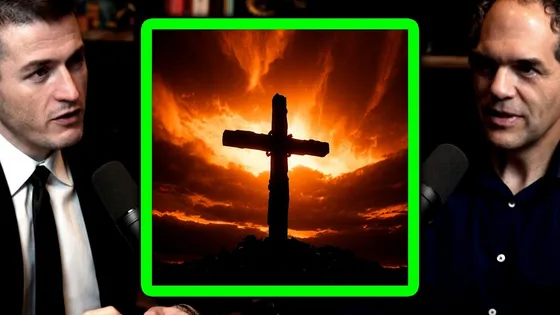
Anthony Kaldellis says Christian orthodoxy was often settled after the fight, then treated as eternal truth
The historian’s most provocative point is not that Christianity unified Rome, but that its claims to timeless unity were produced through conflict.
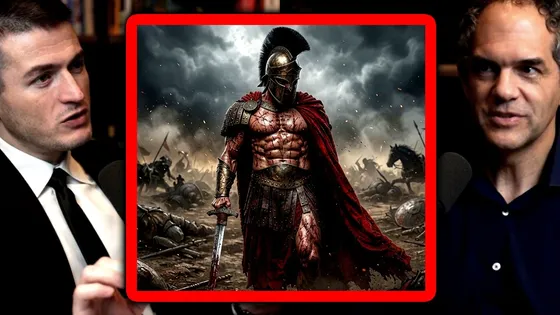
Anthony Kaldellis says 46 percent of Constantinople's emperors were overthrown through violence
The Byzantine historian argues that riots, coups, and civil wars were not glitches in the East Roman system, they were the brutal pressure valve that kept emperors nervous.
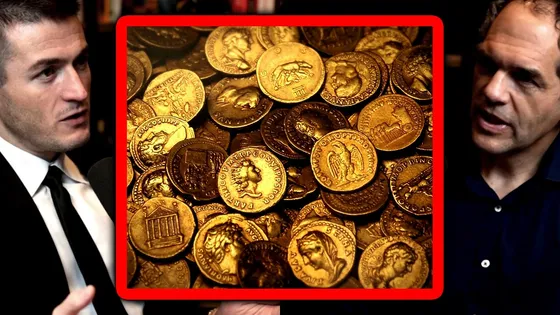
Anthony Kaldellis says Diocletian ended Italy’s tax haven and made taxation the core of the Roman state
The Byzantine historian’s best line on Lex Fridman is not that Diocletian invented the deep state, but that he made the conquerors finally pick up the tab.
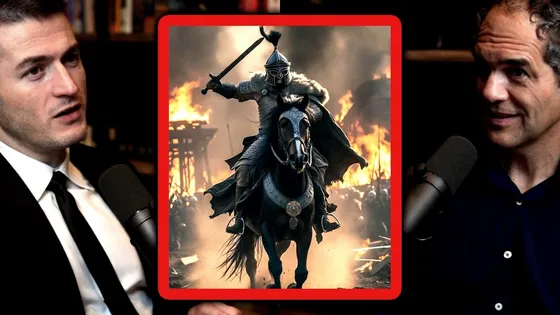
Anthony Kaldellis says Rome’s three biggest disasters were the Arab conquests, the Seljuk conquest of Asia Minor, and the Fourth Crusade
The Byzantine historian’s Roman Empire is not a marble statue collapsing in 476, but a long-running state repeatedly injured by three fast, brutal shocks.

Anthony Kaldellis says Byzantine Greek fire came in hand grenade form
The historian’s best detail on Lex Fridman was not just that Greek fire burned on water, but that the Romans apparently bottled the stuff and threw it at siege engines.
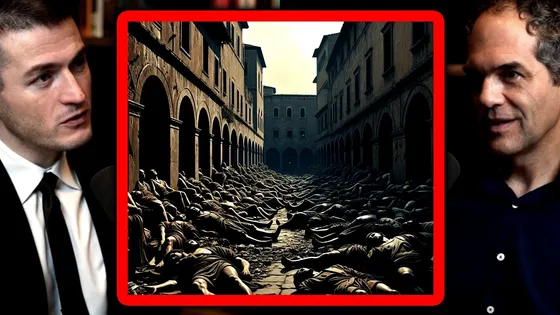
Anthony Kaldellis says the Plague of Justinian probably did not kill half the Roman Empire
The historian's case is brutally practical: if half the empire died, why did Justinian's wars, taxes, and courts keep running?
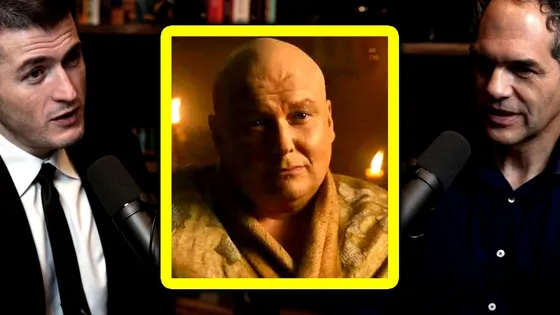
Anthony Kaldellis says Roman families voluntarily castrated their sons to place them at the emperor's court
The Byzantine historian explains how castration was sometimes a family's smartest power move, not just a cruelty imposed on slaves.