Don Lincoln Has Spent 30 Years Looking for Dark Matter and Has Absolutely No Idea What It Is
The Fermilab physicist makes a compelling case for something he cannot find, cannot name, and cannot stop thinking about.
Listen on YouTube · Spotify · Apple Podcasts
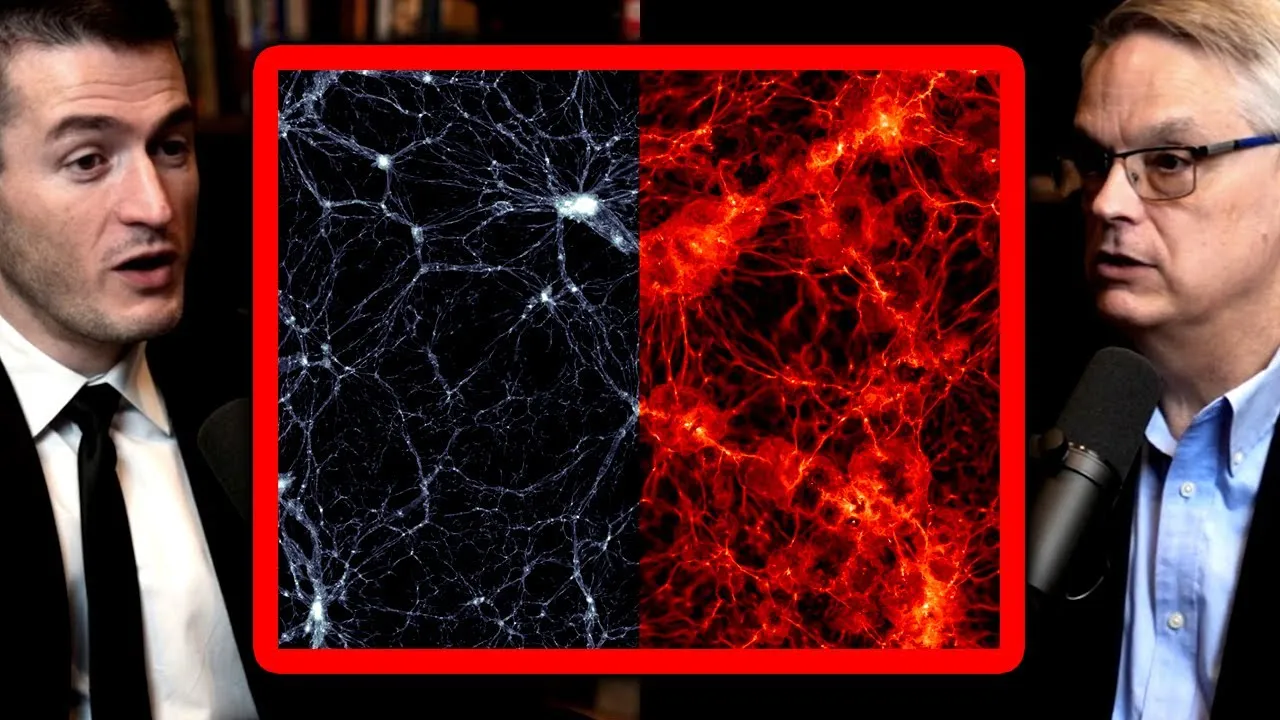 WATCH NOW↓
 Five times. Dark matter, whatever it is, outnumbers the ordinary matter that makes up every star, every planet, every atom you have ever touched, by a factor of five. Don Lincoln, a physicist at Fermilab, knows this. He has spent decades trying to catch the stuff in a detector, watched generations of experiments come back empty, and his conclusion, stated with the cheerful serenity of a man who has made peace with professional humiliation, is: ‘I don’t know. But I know what it isn’t.’ That is either the most honest sentence in modern physics or a very polished shrug. Probably both.
Lincoln walks through the evidence with the confidence of someone who has given this talk a hundred times and still finds it genuinely weird. Galaxies spin too fast. They should, by all Newtonian logic, fly apart. They don’t. Clusters of galaxies move too quickly. The gravitational lensing of distant objects does not match what visible matter can account for. Three separate problems, same impossible answer. Either gravity is wrong, inertia is wrong, or there is a massive amount of stuff we simply cannot see. Lincoln admits that twenty-five years ago he would have bet on modified gravity. He no longer would.
The Bullet Cluster Changed His Mind
The thing that flipped Lincoln was the bullet cluster, two giant galaxy clusters that passed through each other. When they did, the gas clouds, which interact electromagnetically, slammed together and stopped in the middle. The galaxies themselves, and whatever dark matter accompanied them, sailed straight through. Gravitational lensing showed the mass concentrated where the galaxies ended up, not where the hot gas was sitting. That is the smoking gun. If modified gravity were the explanation, the lensing would follow the gas. It doesn’t.
The bullet cluster is strong evidence that dark matter is a real thing.
Then came a genuinely strange piece of supporting evidence: two galaxies, Dragonfly 2 and Dragonfly 4, that rotate exactly according to Newton. No discrepancy. Perfect textbook behavior. Which sounds like evidence against dark matter until you think about it for a second. If the anomalous rotation is a property of matter itself, some modified inertia built into physics, then every galaxy should show it. These two don’t. They appear to have had their dark matter stripped away somehow. A galaxy with no dark matter turns out to be surprisingly useful proof that dark matter exists.
The existence of a galaxy with no dark matter is very strong evidence that dark matter is real because you can take the dark matter out.
Thirty Years of Nothing
Here is where the story gets uncomfortable. We have looked. We have really looked. Three distinct strategies: deep underground detectors waiting for dark matter particles to bump into something as they blow through the earth like a wind; gamma ray telescopes pointed at galactic centers hoping to catch dark matter annihilating with its antimatter counterpart; and particle colliders, Lincoln’s own territory, smashing protons together and watching for the telltale hole in the momentum budget where an invisible particle escaped. All three methods. Decades of experiments. Sensitivity a million times better than when Lincoln was starting out. Nothing.
There are people who are really really religiously hating dark matter largely because we’ve looked so hard for so many years and the experiments in today’s world are a million times more sensitive than when I was a starting student and they still haven’t seen anything.
The problem, Lincoln explains with audible frustration, is the parameter space. If dark matter is a particle, its mass could range from roughly an asteroid down to something far lighter than an electron. That is not a search window. That is a continent. Any given experiment covers one little patch of it. You run for ten years, rule out a narrow band, and dark matter just sits there, presumably, somewhere else on the map, unmoved and unbothered. Lincoln says this is exactly why he personally steered away from dark matter experiments. Not because the question is unimportant. Because the odds of any single team being the one to look in the right place are, mathematically, rough.
What he wants, what he says he genuinely hopes to see in his lifetime, is not just a statistical anomaly buried in a detector readout. He wants the answer. The actual thing. Dark matter is five times more prevalent than everything we have ever studied, and we are still, essentially, at step one.
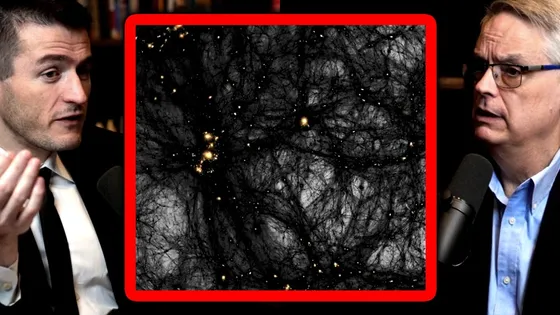
Don Lincoln says galaxies with no dark matter are strong evidence dark matter is real
The physicist’s best pro dark matter argument is wonderfully backward: the missing stuff looks more real when you can find places where it’s missing.
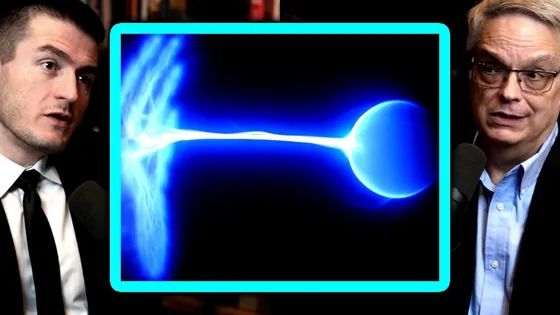
Don Lincoln says the speed of light comes out of Maxwell's equations for electricity and magnetism
The Fermilab physicist makes the old physics story feel properly weird again, then uses it to defend basic research from the eternal question, what good is this?
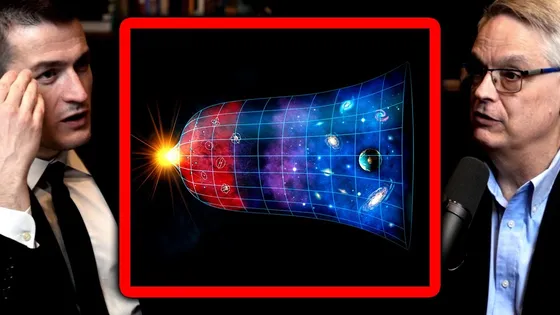
Don Lincoln says we exist because the early universe had one extra matter particle per billion antimatter particles
The Fermilab physicist framed existence as the leftover scrap from a cosmic matter-antimatter wipeout, then admitted nobody knows what caused the imbalance.
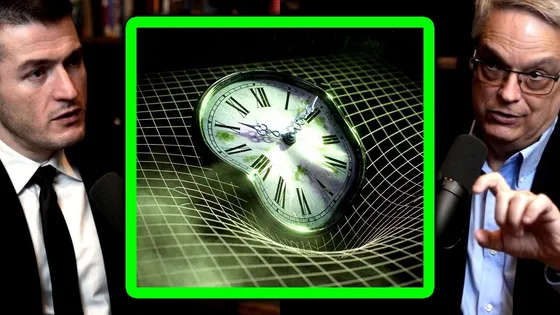
Don Lincoln Wants You to Understand Why Time Is Weirder Than You Think
A Fermilab physicist walks Lex Fridman through the history of spacetime, and the most interesting part is what nobody actually understands.
The circuit, read weekly. No noise.