Arthur Brooks says conspiracy theories are a meaning crisis, not a facts problem
The happiness scholar's best point on Modern Wisdom is also his riskiest one: your uncle's rabbit hole may be less about bad information than a life that stopped making sense.
Listen on YouTube
 WATCH NOW↓
 The conspiracy theorist in your family does not need another link to a debunk. Arthur Brooks thinks they need a reason the world makes sense.
On Modern Wisdom, Brooks makes the neat, unsettling claim that conspiracy theories are often a symptom of a meaning crisis, not merely a facts problem. That is a kinder read than most dinner-table combat manuals offer, and also a convenient one. If every bad belief is a cry for meaning, nobody has to admit they just watched six hours of algorithmic sludge and came out thinking the moon has a communications department.
Conspiracy theories are nothing more than crying out for an answer to the coherence question, which is a meaning problem.
Brooks is working from Michael Steger’s three-part model of meaning: coherence, purpose, and significance. Or, less like a seminar handout: Why is this happening? Why am I doing this? Why does my life matter? The interesting move is that Brooks does not treat coherence as a luxury for people with journals and morning routines. He treats it as psychological load-bearing wall. Pull it out, and people start grabbing for the nearest explanation with handles.
The rabbit hole as a bad substitute for religion
Brooks gives three examples of coherence. A religious person may say things happen because of God’s will. A scientific person may say things happen because of the laws of the universe. A conspiracy theorist says things happen because powerful people are pulling strings. The first two are socially acceptable meaning systems. The third gets you a Telegram channel and a Thanksgiving intervention.
They’re they’re having a meaning crisis. They’re having a happiness crisis is the reason they’re doing this in the first place.
The verdict: Brooks is persuasive on the psychology and a little too tidy on the cure. Yes, people often reach for conspiracies when the world feels random, humiliating, or rigged. Anyone who lived through the last decade online has seen confusion harden into identity. But calling it a happiness crisis can sand down the sharper edges. Conspiracy theories do not just soothe believers. They can also accuse, isolate, radicalize, and monetize. The lonely guy looking for coherence can become the loud guy ruining a school board meeting.
Still, Brooks’s advice beats the usual smug ritual of throwing data at someone and expecting them to thank you for the spreadsheet. Facts matter, obviously. But if the emotional engine is panic about randomness, facts alone arrive like IKEA instructions during an earthquake.
Purpose is not the same thing as vibes
Brooks’s second meaning question is purpose: why am I doing what I’m doing? This is where the episode shifts from the conspiracy uncle to the professional-class zombie who wakes up, scrolls, joins a Zoom for a company he does not care about, and calls that a life. Brooks’s phrase for purpose is beautifully blunt: goals and direction. Not destiny. Not a scented candle. Direction.
His cruise-ship metaphor is mean, and correct. A cruise moves constantly while going nowhere in particular, which makes it the perfect floating monument to modern drift. Brooks argues that even arbitrary goals can make people happier because they restore the feeling of progress. The catch is that bad goals expire the second you reach them. His diet example is brutal: lose the weight, hit the number, and your prize is permanent culinary sadness.
I need goals I can’t meet.
That line is the whole Brooks worldview in miniature. Happiness is not arrival. It is motion toward something that keeps asking more of you. Better parent, better spouse, better friend, better citizen. Conveniently, these are also the kinds of goals that cannot be captured in a before-and-after Instagram carousel, which may be why they are so annoying and so useful.
Achievement is a lousy love language
The episode’s other live wire is Brooks’s theory of the striver. He describes high achievers who learned as children that attention came when they performed. Good grades. First chair. Making the team. Building the freakishly successful lemonade stand. Parents think they are teaching ambition. Brooks says they may be teaching a worse lesson: love is earned.
Anybody who makes you earn their love doesn’t love you.
That is a hard sentence to dodge. Brooks connects it to success addiction, the endless chase for specialness, applause, money, beauty, youth, status, and the adoration of strangers. He is not anti-ambition. He is anti-confusing applause with attachment. The more talented you are, he says, the more danger you are in, because the world is extremely happy to keep rewarding the wound.
So yes, the conspiracy claim is the searchable one. But the deeper insult lands on the rest of us. If Brooks is right, the crank with the secret theory and the executive refreshing LinkedIn for praise may be trying to solve the same problem with different costumes: make the chaos mean something, make the striving point somewhere, make the self feel like it counts.
- What does Arthur Brooks think conspiracy theories are really about?
- Brooks frames conspiracy thinking as a failed search for coherence. When life feels random, people grab onto an explanation that gives them agency, even if that explanation is false or paranoid.
- Does Brooks say you should argue facts with conspiracy-minded relatives?
- No. His advice is that fact-bombing misses the emotional problem underneath. He thinks the person may be looking for meaning, control, and a reason the world feels the way it does.
- What are the three questions Brooks says create meaning?
- He breaks meaning into coherence, purpose, and significance. In plain English: why is this happening, why am I doing what I'm doing, and why does my life matter?
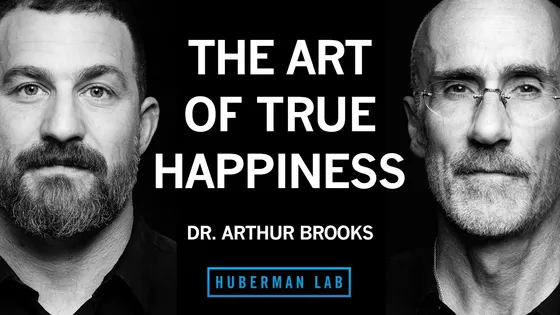
Arthur Brooks says trying to avoid unhappiness makes you miss happiness
On Huberman Lab, Brooks argues that happiness is built from enjoyment, satisfaction, and meaning, and none of the three comes pain-free.
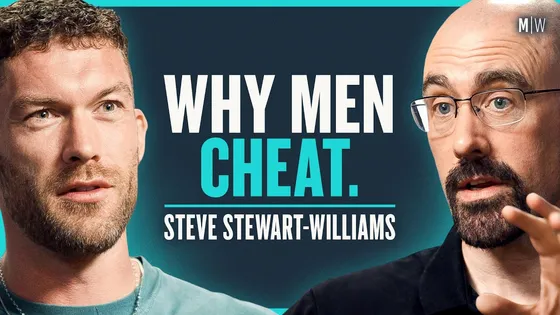
Steve Stewart-Williams says castration before puberty could erase the male lifespan gap
The evolutionary psychologist’s bleak little longevity claim is less a life hack than a warning label on testosterone.
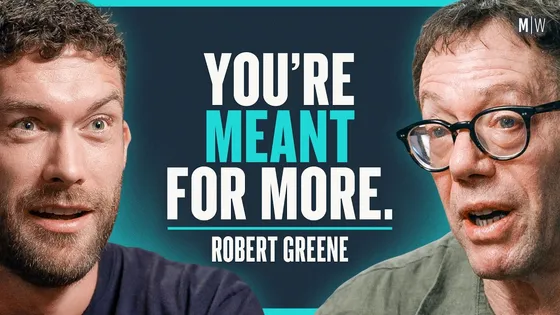
Robert Greene says Christianity is a pagan religion
The author of The 48 Laws of Power has traded boardroom knives for hummingbirds, Aphrodite, and the claim that Christianity still carries paganism in its bones.

Vittorio Angelone says ignoring young men leaves them to Andrew Tate
The comedian’s defense of Jordan Peterson is less a conversion story than a warning about who gets young men when everyone else finds them embarrassing.
The circuit, read weekly. No noise.