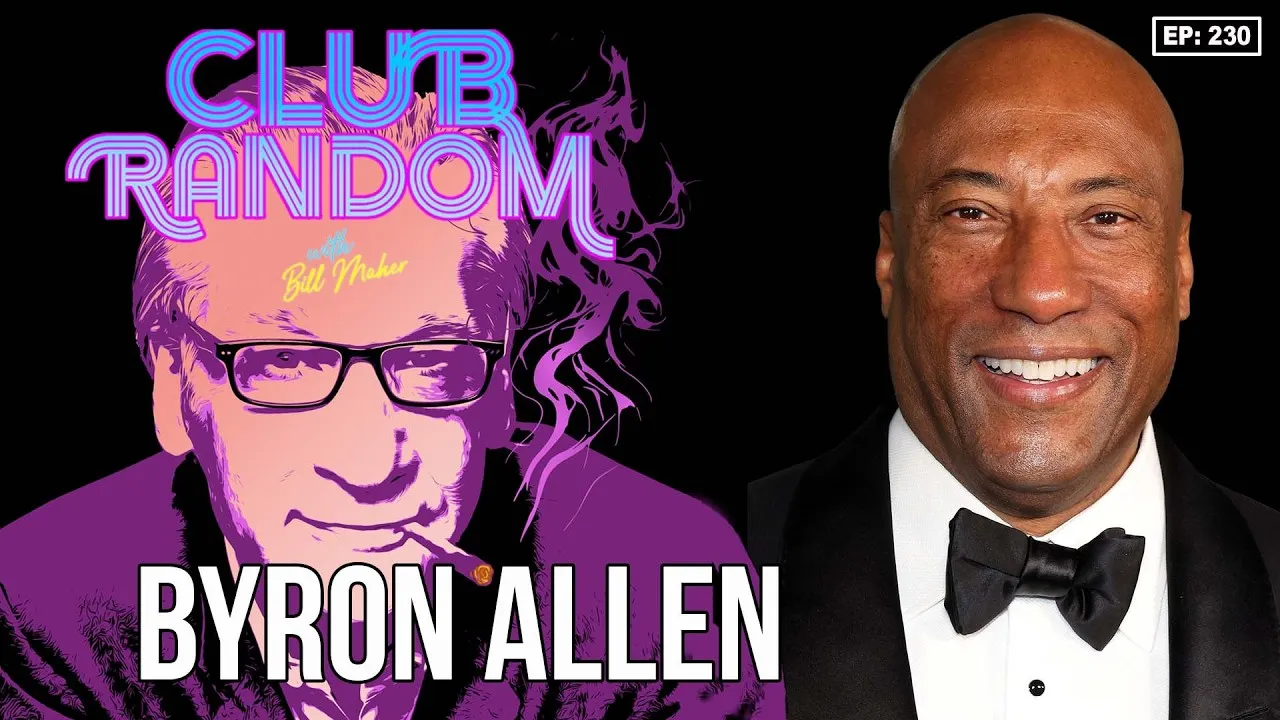
Byron Allen says Johnny Carson let him strike The Tonight Show set for his own show
Allen’s best story on Club Random isn’t about becoming a billionaire, it’s about getting the king of late night to say yes to an absurdly intimate favor.
Listen on YouTube
 WATCH NOW↓
 Byron Allen’s Hollywood origin story has a line item most comics would trade a kidney for: Johnny Carson let him remove The Tonight Show set so Allen could tape his own show in the room. On Club Random, Byron Allen says the magic words were not money, not status, not a studio threat, but simply that the request came from Byron Allen.
This is the kind of showbiz story that sounds fake until it gets too weirdly logistical to dismiss. Allen doesn’t just say Carson believed in him. He talks about Friday night strikes, Sunday tapings, Monday resets, parking spaces, a white Corvette, and the expensive stupidity of moving a sacred late-night set every other week. That’s not mythmaking. That’s a production manager’s migraine.
The ask was insane. That’s why it’s a Byron Allen story.
Allen, now a billionaire media owner, tells Bill Maher that the whole thing began when he was a kid hanging around NBC because his mother worked there. He watched Carson’s timing, his entrances, his cue-card setup, his exit. Later, when Allen had The Byron Allen Show in the late ’80s, he went looking for a studio and decided the obvious thing to do was ask for Carson’s.
Just one favor. Ask him and and tell him the request is coming from me. just say my name to him.
NBC staff, in Allen’s telling, reacted like he had asked to borrow the Ark of the Covenant. Carson’s set was not a couch and some fake plants. It was the altar. Allen says Carson’s first instinct was exactly what you’d expect from a man who knew every inch of his kingdom.
You’re out of your mind. Don’t touch my set. Don’t even think about it.
Then came the name. Allen says the staff told Carson the request was his, and Carson flipped.
Let the kid strike my set.
Do I buy it? Mostly, yes. Carson was famously chilly when crossed, and Maher says as much here, but Allen’s version has the grain of an old NBC lot story. It’s not flattering in the mushy way. Carson doesn’t hug him. He lets him solve a scheduling problem at great cost to himself, then gives him notes in the parking lot. Very old Hollywood. Very Nebraska Caesar.
Carson’s real gift was not the studio
The set story is the searchable bit, but the sharper inheritance is creative. Allen says those parking-lot talks taught him what late-night television actually was. Not celebrity chat. Not promotional oatmeal. A comedy machine with guests attached.
I’m not really doing a talk show.
That sentence explains a lot about Allen’s later career, and not just the comedy shows. He hears formats as business plans. Where Maher hears a club, Allen hears a system. The studio has the right seats. The host has the right posture. The guest has the right lane. The parking space even has a strategy, because Allen says he refused spot number two next to Carson’s Corvette, worried his black car might nick Carson’s white one, and had consumer reporter David Horowitz parked there instead. This is either adorable or psychotic. In television, those are often the same thing.
Maher keeps calling him ridiculous, which is the correct response. Allen’s stories all have the same moral: he was the kid who got there at 9 in the morning for a 7 p.m. Comedy Store tryout, the teenager who turned down The Tonight Show at 17 because he thought it was too early, the operator who asked for Carson’s room because why ask for the second-best room? It’s motivational content with better tailoring.
The eyebrow goes up because Allen is also very good at making Allen sound inevitable. Still, the story’s power is that it makes success look less like destiny and more like access plus nerve plus terrifying follow-through. He didn’t inherit Carson’s throne. He learned how the throne was bolted to the floor.
Pull back. Let them shine and your job is to step in when they’re not shining.
- What did Byron Allen say Johnny Carson did for him?
- Allen says Carson approved letting him temporarily remove The Tonight Show set so Allen could tape his own show in the same NBC studio. According to Allen, NBC staff thought Carson would never allow it until they told him the request came from Byron.
- Why did Byron Allen want Johnny Carson’s studio so badly?
- Allen says Carson’s studio was the best room in town for a comedian because Bob Hope had designed it with stadium seating, which let a performer play to both the cameras and the audience. To Allen, it wasn’t just sentimental, it was better television engineering.
- What advice did Johnny Carson give Byron Allen?
- Allen says Carson told him he wasn’t really making a talk show, he was making a comedy show. The lesson was to lead with comedy, let guests shine, and only step in when they needed saving.
Jay Leno says he hid in an NBC closet twice to hear executives decide The Tonight Show
The old late-night villain story gets funnier when Leno describes himself less as a backstabber than as a network sitcom burglar with incredible timing.
Jack Whitehall says Channel 4 pulled his show at 11 p.m. because Michael Jackson died after it had a pedophile sketch about him
On Club Random, Whitehall described the sort of pre-smartphone comedy near-disaster that now sounds less like showbiz lore than a deleted scene from Broadcast Standards Hell.
Bill Maher says his high school talent show was canceled after he stole a risqué Johnny Carson joke
Maher’s first cancellation story is less a free-speech epic than a very on-brand origin myth: a teenage comic, a Carson bit, and a room full of parents who were not having it.
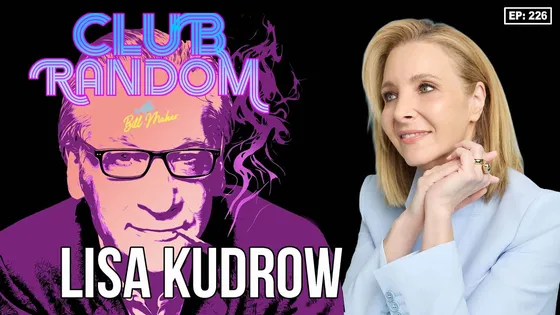
Lisa Kudrow says Sam Kinison was shooting heroin on set while they filmed a sitcom together
The Friends icon drops a genuinely startling piece of TV history buried inside a very pleasant chat about mushrooms and Spartacus.
The circuit, read weekly. No noise.