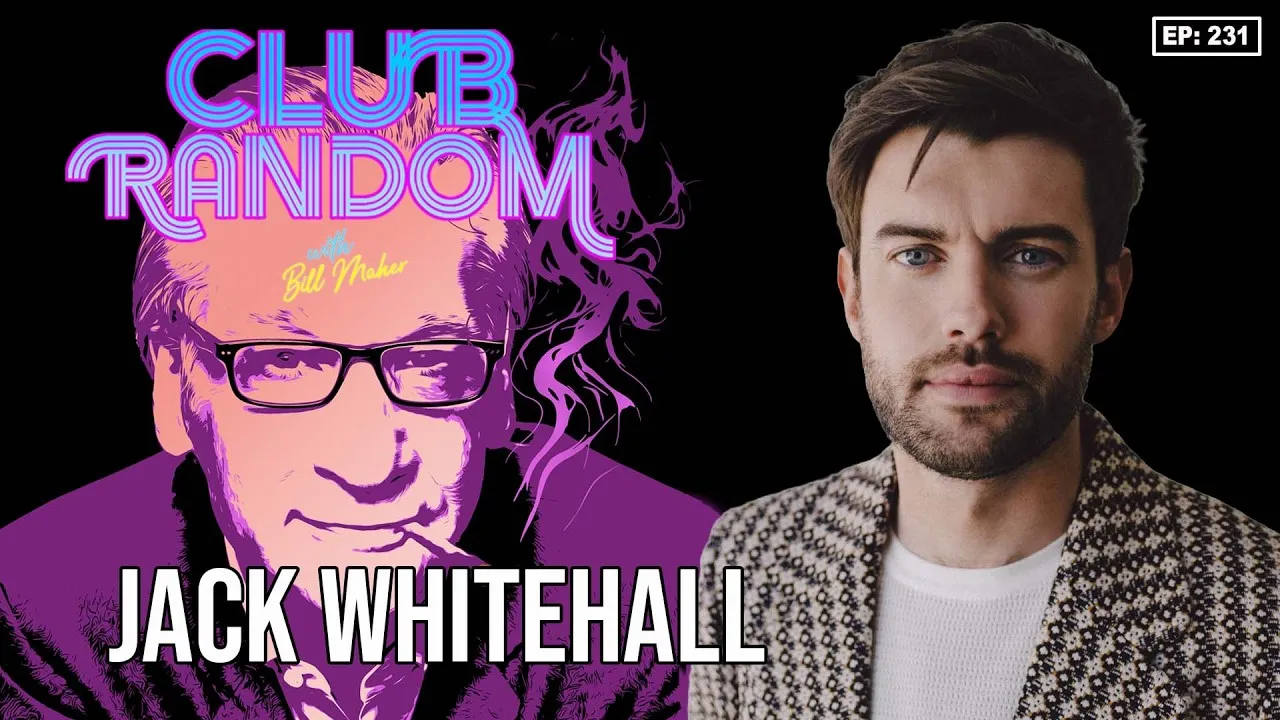
Jack Whitehall says Channel 4 pulled his show at 11 p.m. because Michael Jackson died after it had a pedophile sketch about him
On Club Random, Whitehall described the sort of pre-smartphone comedy near-disaster that now sounds less like showbiz lore than a deleted scene from Broadcast Standards Hell.
Listen on YouTube
 WATCH NOW↓
 Jack Whitehall says Channel 4 pulled his late-night show at 11 p.m. because Michael Jackson had just died and the episode contained a Michael Jackson pedophile sketch. That is not a humblebrag, it is a fire drill with a laugh track, the kind of comedy-industry war story where every sentence makes a standards executive age six months.
The revelation came on Club Random, where Jack Whitehall and Bill Maher were supposed to be doing the usual Maher salon thing, weed, marriage, soccer, the Queen, and whether young men have forgotten how to talk to women. Then Whitehall opened a trapdoor into British TV’s old shock-comedy basement. Baby Hitler was involved. Naturally.
The note was baby Hitler. The crisis was Michael Jackson.
Whitehall described working on a UK late-night show where a network producer pushed what he called “route one” shock comedy. The producer’s big pitch, according to Whitehall, was literal baby Hitler. Not metaphorical baby Hitler. A baby, dressed as Hitler, with the mustache and the uniform. This is what happens when a commissioning executive confuses courage with Halloween.
I remember the notes that he that he used to give like he genuinely at one point he was like we I want a baby dressed as Hitler.
The problem, Whitehall said, was that saying yes to baby Hitler changed the room. Once the show accepted that, the producer kept escalating. Eventually, Whitehall said, they ended up with a Michael Jackson visual gag built around the abuse allegations, not because Jackson was newly in the news, but because somebody wanted a cheap jolt at the end of a monologue.
So, we did the Michael Jackson pedophile joke, and I’m watching it go out and feeling like, you know, I have no spine, and I I’m just like a puppet for this idiotic man doing his stupid ideas, watching it, waiting for it to go out.
That is the useful part of the story, beyond the gossip. Whitehall is not telling it like a comedian bravely silenced by the mob. He is telling it like a comedian who knew, even then, that the joke was junk. The near-disaster wasn’t that a brilliant taboo bit got suppressed. It was that a bad bit almost got fossilized into infamy because the news cycle detonated under it.
And on the news, they they announced that Michael Jackson has died.
A technical difficulty card saved him from becoming the villain of the day
Whitehall said he called the producer, who then had to get the network to yank the episode in real time. This is where the story becomes wonderfully antique. No TikTok apology. No Notes app statement. Just someone at Channel 4 trying to reach a switchboard before a Michael Jackson predator sketch aired into a country watching candlelight vigils.
the whole thing on every news network was about how Michael Jackson had died and people like candle lit vigils and tears and then we’ve got this really like [ __ ] horrendous
According to Whitehall, they made it just in time. The opening credits rolled, the screen went black, and a technical difficulty card appeared. Somewhere, a scheduler probably deserved a medal, or at least a drink served in a glass the size of a vase.
They they they literally had the opening credits and then suddenly it went to black and it was just a screen saying unfortunately there’s been a technical difficulty and it was just like a holding card and then they put something else on
Whitehall’s verdict on his younger self was more interesting than Maher’s reflexive anti-cancel culture framing. He wasn’t saying the audience had gotten too soft. He was saying he had been too compliant. That’s rarer than the usual comedian’s complaint, which tends to translate as, “Why did everyone notice the thing I said in public?”
Maher heard a free-speech parable. Whitehall told a cowardice story.
Maher, predictably, folded the anecdote into his larger argument about outrage cycles, public shaming, and the way everyone forgets the scandal once Britney Spears gets a new boyfriend. He also argued that old jokes about Michael Jackson look different after later documentaries and testimony. That’s Maher’s house style, half libertarian scold, half guy at the bar who has one more example.
But Whitehall’s anecdote is strongest when it resists becoming a clean free-speech sermon. The comic lesson here isn’t “you can’t joke about anything anymore.” The joke didn’t air in 2009 because the most famous pop star on Earth had died hours earlier and the show had a predatory Michael Jackson gag ready to go. That is not censorship. That is triage.
It also explains why Whitehall sounded almost grateful for the pre-phone era. He admitted that early in his stand-up career he tried shock comedy and said things he’s glad were not being filmed every night. There is a difference between being silenced and being lucky your worst drafts didn’t become your biography.
If the story has a moral, it’s not that comedy used to be freer. It’s that comedy used to have more trapdoors. Sometimes the floor opened, the screen went black, and the holding card did what no apology tour ever could.
- What was the Michael Jackson joke Jack Whitehall talked about?
- Whitehall said he couldn’t remember the exact line, but described it as a visual gag with a man dressed as Michael Jackson, a prop baby, and jokes about Jackson being a predator. His point was not that it was brave comedy, but that it was a crude network-driven bit he regretted agreeing to.
- Did the episode actually air?
- According to Whitehall, no. He said the opening credits began, then the broadcast cut to black and a technical difficulty card appeared before the network put on something else.
- Why did Whitehall bring it up?
- He was talking with Bill Maher about old jokes, public backlash, and the strange luck involved in surviving comedy before every misfire lived forever on phones and social media. The Jackson story was his example of a career-ending pile-on that almost happened by sheer timing.
Howie Mandel says a clipped hand-job joke cost him a fortune
Mandel told Bill Maher that a joke clipped out of context made a brand walk away, which explains why the Comedy Store feels safer to him than the internet.
Kevin Spacey says he would have been benched for just seven games if he were an athlete
The actor tells Bill Maher his nine-year Hollywood exile is deeply unfair compared to the leniency shown in professional sports.
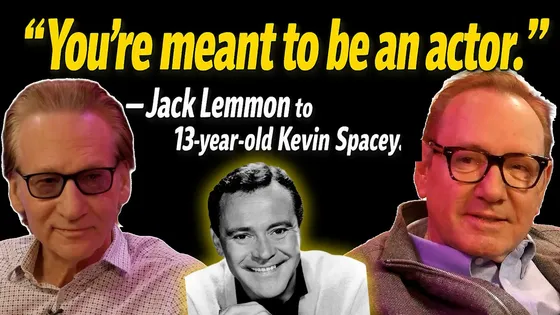
Kevin Spacey says Netflix is shelving Gore, a completed Gore Vidal movie he calls one of his best films
Spacey told Bill Maher that Netflix should release or give up the finished Gore Vidal film, and he made the pitch with maximum self-interest and one genuinely sharp point.
Jay Leno says he hid in an NBC closet twice to hear executives decide The Tonight Show
The old late-night villain story gets funnier when Leno describes himself less as a backstabber than as a network sitcom burglar with incredible timing.
The circuit, read weekly. No noise.