Caleb Hammer says Gen Z is doom spending because algorithms make the future feel hopeless
The personal-finance YouTuber argues that young people are spending like the apocalypse is already on layaway, and he’s mostly right, with one big caveat.
Listen on YouTube
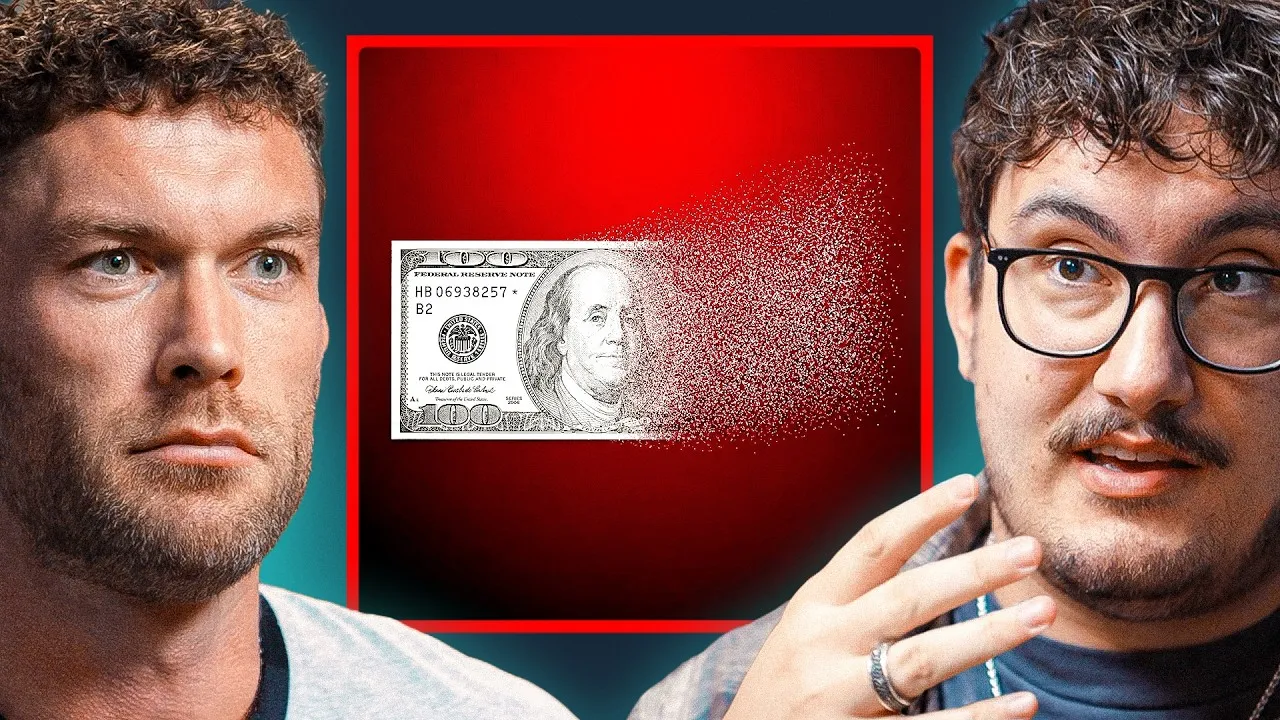 WATCH NOW↓
 Caleb Hammer’s theory of Gen Z spending is not that young people are uniquely stupid with money. It’s that they’ve been algorithmically convinced the future is cooked, so they might as well tap to pay now and let the bill arrive in whatever Mad Max sequel comes next.
That’s the claim worth arguing about here, because it’s more interesting than the usual boomer-coded sermon about oat milk and concert tickets. Hammer is saying the debt isn’t only a math problem. It’s a mood disorder with a checkout button.
mostly because of the information out there and the algorithms they find themselves in, they think everything’s going to be so bad forever. Why not just spend the money? Why not just put it on a credit card?
This lands because Hammer’s whole brand is watching people explain, often with the eerie calm of someone describing a dental cleaning, how they got themselves into five figures of consumer debt. He’s not a macroeconomist in a bow tie. He’s the guy across the table saying, with increasing volume, that your motorcycle loan is not a personality.
The apocalypse is available in four interest-free payments
The clip opens with a tidy little horror stat: Gen Z borrowers are carrying more credit card debt than millennials did at the same age, despite growing up with more financial information than any generation before them. Hammer isn’t shocked by the buy now, pay later numbers either. Those services are everywhere, especially at the exact digital choke points where discipline goes to die: concert tickets, clothes, travel, the thing you absolutely need because the feed made it feel like the last normal weekend before society collapses.
Paying for CLA everything. It’s a very Gen Z thing. Tap to pay. super easy to use those. They’re at every checkout for any concert you go to, pretty much anything you want to do.
The persuasive part of Hammer’s argument is that he doesn’t pretend the bad vibes came from nowhere. Housing is expensive. New graduates are running into a weak entry-level job market. AI is making white-collar career planning feel like choosing a seat on the Titanic. The old bargain, work hard, buy a house, be normal, has begun to resemble one of those fake luxury apartment listings with a rendering of a rooftop pool that will never exist.
But Hammer’s sharper point is that the despair gets monetized. Negative content travels because it feels urgent. The feed is always yelling fire, and eventually people start budgeting like the building is already gone. That’s not just a vibe. Consumer sentiment has been historically sour despite an economy that, by several broad measures, is not Great Recession bad or early-COVID bad. The feelings are worse than the dashboard.
You make money on negativity.
That’s the cleanest version of the Hammer thesis: the news feed becomes the financial plan. If everything is doomed, saving looks naive. Debt starts to feel less like failure and more like realism. The problem, of course, is that Visa does not accept vibes as payment.
Then comes the $91,300 TikTok
Hammer’s argument gets its perfect lab rat in a TikTok from a woman explaining that she filed Chapter 7 bankruptcy over $91,300 in debt. The numbers are brutal in a very American way: about $51,000 on a vehicle, a motorcycle, a camper, medical bills, student loans, and $7,700 in credit card debt. She says she can’t afford a house, so she lives in the camper.
This is where Hammer stops sounding like a theorist of generational malaise and starts sounding like the fire alarm in a Ford dealership. He grants the obvious, buying a home is harder now. Down payments are tough. Rates are ugly. But he has no patience for turning those facts into a moral permission slip for a $50,000 car, a motorcycle, and a camper, especially when all three are debt tied to depreciating assets.
This is This is so American. We are so debt brainbroken.
He’s right about that. The woman’s bankruptcy logic has a strange cultural familiarity: I can’t reach the big dream, so I’ll finance smaller versions of freedom until the monthly payments eat the dream alive. A truck, a camper, a motorcycle. Mobility as aspiration. Mobility as trap. The frontier, but with negative equity.
Hammer also makes a useful point that gets lost in the shame spiral around bankruptcy. Chapter 7 is not always the cinematic punishment people imagine. It can be a legal reset, not a scarlet letter carved into your forehead. But his warning is colder: if the behavior doesn’t change, the reset is just a loading screen before the same game starts again.
The verdict: good diagnosis, incomplete cure
Hammer’s doom-spending claim is convincing because it connects two things people usually discuss separately: the economy as measured by spreadsheets and the economy as experienced through a phone. Gen Z isn’t just reading bad headlines. It’s being fed an endless loop of collapse content, then offered frictionless credit inside the same rectangle.
Still, the argument can get a little too tidy if it turns every bad purchase into an algorithmic injury. Some debt is despair. Some debt is bad math. Some debt is a car lot employee saying, sure, we can make that monthly payment work, and a customer hearing only the word monthly. Hammer is at his best when he holds both thoughts together: yes, the system is engineered to make panic profitable, and yes, you still bought the motorcycle.
That’s why the claim sticks. Gen Z may be spending like the world is ending, but the cruel joke is that the world doesn’t have to end for the payment to come due next month.
Angela Duckworth says successful people don’t use willpower
The author of Grit has not disowned effort, but she is now arguing that white-knuckle discipline is the worst way to build a life.

Tim Urban says the black hole era lasts so long you would need 1.4 billion observable universes packed with timeline ribbon to measure it
The Wait But Why writer turned far-future cosmology into a craft-store nightmare, and the math is mostly the point.
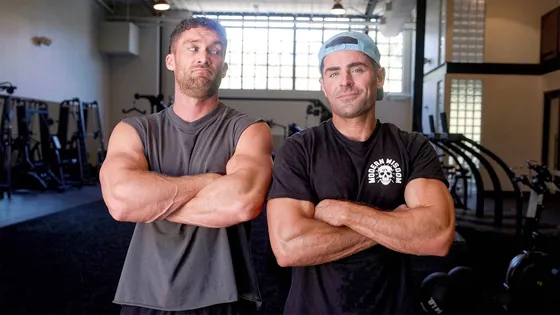
Zac Efron says eating too much salmon during The Iron Claw prep gave him mercury poisoning
Efron says the 6,000-calorie bulk for The Iron Claw pushed him from a 29 waist to a 34, up to 205 pounds, and into a fish problem.
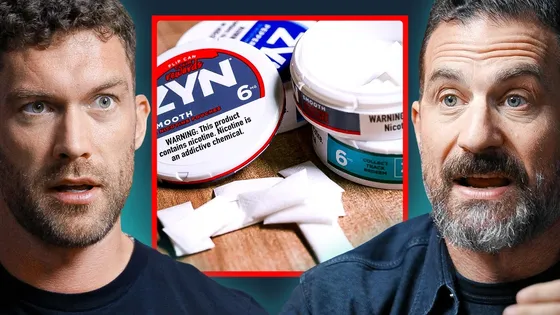
Andrew Huberman says daily nicotine pouches don't boost your brain, they just fix withdrawal
Huberman's rule is brutally unfashionable in the pouch era: if you want nicotine to help performance, don't make it a habit.
The circuit, read weekly. No noise.