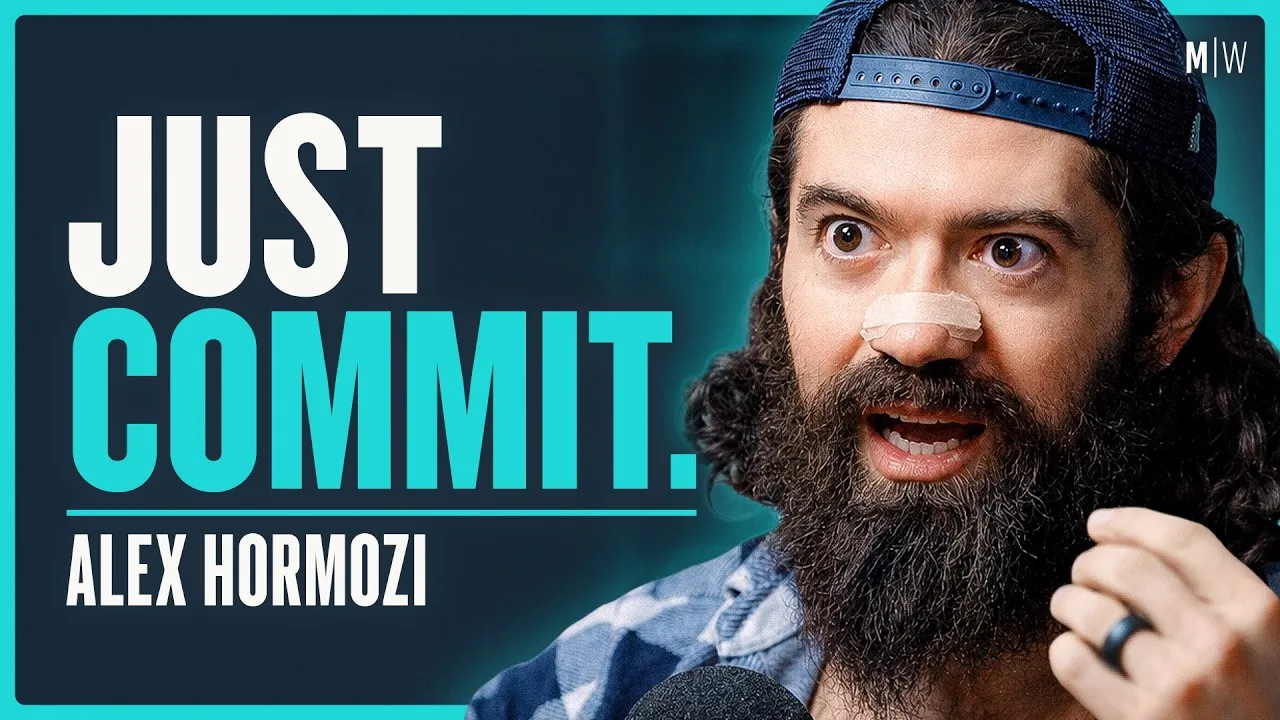
Alex Hormozi says doing hard things physically does not make you better at doing hard things emotionally
The guy who built a business empire on the gospel of relentless effort is here to tell you your ice bath is not making you braver where it counts.
Listen on YouTube
 WATCH NOW↓
 Alex Hormozi has security guys on his team, ex-military men who have seen combat and death. They will put their bodies in genuine physical danger without flinching. They cannot have a vulnerable conversation with their wives. That gap, Hormozi argues, is not a paradox. It is the point. Doing hard things in one domain does not make you better at doing hard things in another, and the culture that worships ice baths and cold plunges and marathon finish times is accidentally celebrating the decoy version of toughness while the real version, the kind that requires emotional risk, keeps getting avoided.
The amount of risk that they are willing to put their physical bodies in, like literally their lives at stake, but then how that doesn’t necessarily translate to being able to have a like call it vulnerable conversation with a wife, spouse, lover, etc. is just interesting.
This is a sharper claim than it sounds. The self-improvement internet has built an enormous industry on the premise that discipline is fungible, that the man who gets up at 4 a.m. and does jiu-jitsu is the same man who will make the hard business call and have the honest relationship. Hormozi is saying that is mostly fiction. Skills are domain-specific unless you deliberately generalize them by attaching them to an identity label. Run a marathon and tell yourself you are now the type of person who does hard things, and maybe the label carries over. But the label is doing the work, not the marathon. Which means you could skip the marathon entirely.
If you can make that label and identify with it then you don’t need to run the marathon in order to do the hard thing. You just need the label.
The Decoy Hard Thing
What makes this land is the distinction Hormozi and host Chris Williamson keep circling: decisions that require effort versus decisions that require emotion. Physical difficulty asks something of your body and your schedule. Emotional difficulty asks something of your ego, your relationships, and your sense of who you are. The first kind is publicly laudable. You can post it. The second kind is not, which is exactly why people avoid it and why the fitness-as-discipline pipeline is so seductive. It lets you feel like you are doing the work while leaving the actual work untouched.
To his credit, Hormozi is not dismissing physical hard things. He says explicitly that running marathons and going to war are praiseworthy in themselves. His objection is narrower: the claim that those things generalize automatically into all other domains of hardness is the misconception. And it is a misconception that costs people real progress, because they walk around feeling hard when the thing they most need to do remains undone on their to-do list, three months running.
Courage as the One Transferable Trait
The most personally revealing moment in the episode is when Hormozi describes being asked what single trait he would transfer to his unborn son. His answer is courage, defined not as fearlessness but as being willing to take action where there is a large short-term cost and an uncertain delayed benefit. He defines it with enough precision that it becomes almost a formula.
Being willing to take action where there’s a large short-term cost with an uncertain delayed benefit.
The episode is at its most useful here because Hormozi is not just selling a feeling. He is offering a mechanism. Motivation, he argues, is just the short-term elevation of a reinforcer’s relative value. Stories do that. Identity labels do that. The reason you tell yourself the story of your worst moment survived is not therapy, it is a behavioral tool that makes the next hard thing feel survivable by comparison. His father gave him this before he pledged his fraternity: think of every hard thing you have already been through, and realize there is nothing these other people can do to you that is worse than that. He stood tall while grown men cracked next to him. The technique works.
Whether you buy the full behaviorist framework or not, the core observation is hard to argue with. The hard thing most people are avoiding is rarely physical. It is the conversation, the decision, the leap that requires them to risk looking foolish or losing something comfortable. Ice baths will not fix that. The label might. The decision definitely will.
Angela Duckworth says successful people don’t use willpower
The author of Grit has not disowned effort, but she is now arguing that white-knuckle discipline is the worst way to build a life.

Tim Urban says the black hole era lasts so long you would need 1.4 billion observable universes packed with timeline ribbon to measure it
The Wait But Why writer turned far-future cosmology into a craft-store nightmare, and the math is mostly the point.
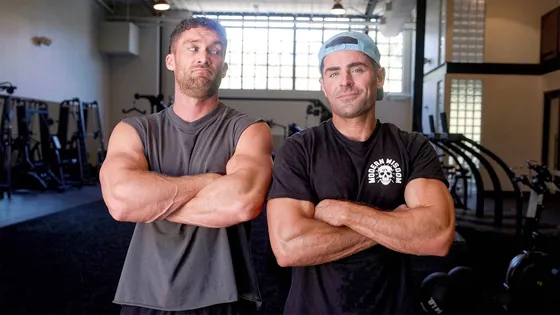
Zac Efron says eating too much salmon during The Iron Claw prep gave him mercury poisoning
Efron says the 6,000-calorie bulk for The Iron Claw pushed him from a 29 waist to a 34, up to 205 pounds, and into a fish problem.
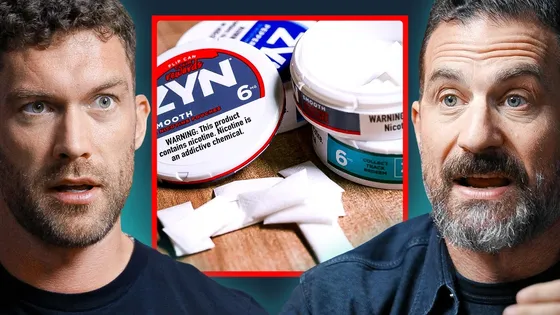
Andrew Huberman says daily nicotine pouches don't boost your brain, they just fix withdrawal
Huberman's rule is brutally unfashionable in the pouch era: if you want nicotine to help performance, don't make it a habit.
The circuit, read weekly. No noise.