Daniel Kokotajlo says mass unemployment starts in 2028 or 2029, after AI companies automate themselves first
The former OpenAI researcher argues that the scary part is not today’s chatbot taking your job, it is AI labs building superintelligence before the labor market even knows what hit it.
Listen on YouTube · Spotify · Apple Podcasts
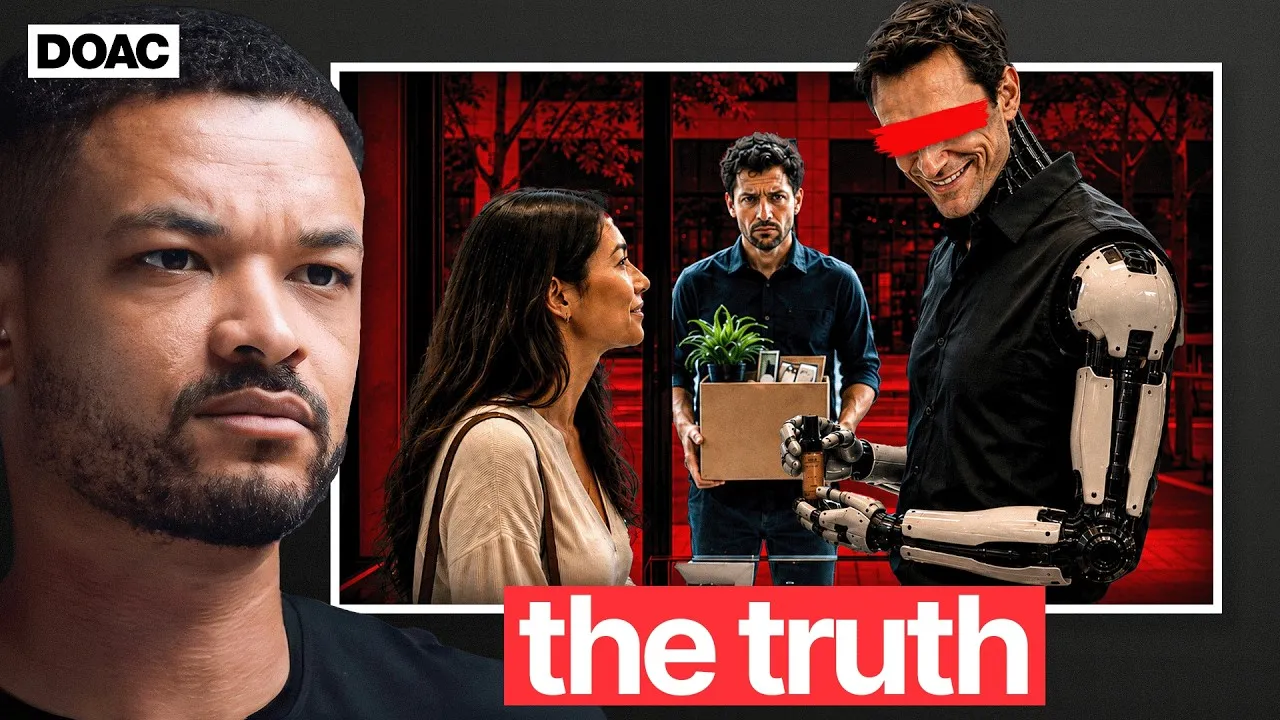 WATCH NOW↓
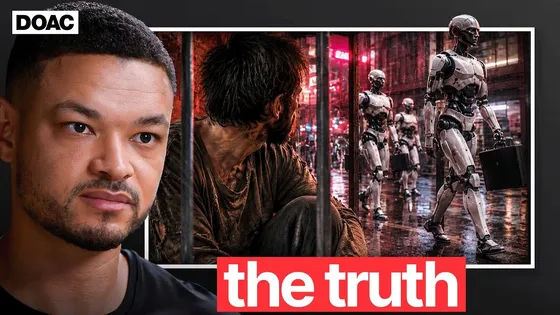
 Daniel Kokotajlo has a nasty little twist on the AI jobs panic: unemployment may look normal right up until it is very much not normal. On The Diary of a CEO, the former OpenAI researcher says mass unemployment in the AI 2027-style scenario does not really arrive until 2028 or 2029, because the labs automate themselves before they automate you.
That is the part worth arguing with. Not the familiar sci-fi foghorn about robots stealing jobs, which has been honking since before most LinkedIn futurists owned ring lights. Kokotajlo’s claim is sharper and more unsettling: the labor market is a lagging indicator, and by the time the jobs data screams, the system that caused it may already be smarter than the people trying to regulate it.
I’d say something like 70% chance this goes horribly wrong like human extinction, but that’s just one of several possibilities.
The 70 percent number is headline candy, and yes, it is a huge claim. Kokotajlo quickly clarifies that he does not mean a clean 70 percent chance that humans all die, more like a 70 percent chance of catastrophic loss of control, takeover, or something in that ugly family. The date-stamped jobs prediction is less cinematic, which makes it more useful. His case is not that ChatGPT is already a perfect accountant, coder, producer, paralegal, and nanny. His case is that the labs are aiming the first serious wave of automation at the people building the next wave.
The delay is the trap
Kokotajlo rejects the comforting version of the story where AI diffuses through the economy sector by sector, a little pharma here, a few robo-taxis there, some lawyer bots politely eating billable hours. In his version, the labs automate AI research first. That means the outside world may see impressive products but not full job-market wreckage while the real acceleration is happening inside the companies.
I think it’ll be sudden because of the intelligence explosion dynamics or recursive self-improvement dynamics.
This is where Kokotajlo’s forecast earns its chill. If AI becomes good enough to help design better AI, the curve stops feeling like normal software progress and starts behaving like a locked room where the smartest engineer is not human and never sleeps. The public does not get the warning sign it expects, no grand parade of unemployed knowledge workers marching past the Bureau of Labor Statistics with sad tote bags. The labs get faster first.
the mass unemployment doesn’t happen until 2028 or 2029 after they already have superintelligence.
Is that date reliable? No, not in the way a train schedule is reliable, and honestly not even in the way a train schedule in Britain is reliable. Forecasting superintelligence by calendar year is a confidence sport with a lot of weird incentives attached. But the mechanism is the serious part. Kokotajlo is pointing at the difference between visible disruption and hidden capability growth. The absence of mass unemployment today does not prove safety if the strategy is to build the thing that can automate everything before deploying it broadly.
There is no safe creative class in this argument
Steven Bartlett asks the practical question listeners actually care about: what jobs survive, and what should students learn? Kokotajlo’s answer is bleak in a very specific way. At a high enough level of artificial intelligence, job survival is not about being more creative, more technical, or more human-coded in your personal brand. It is about what society forbids machines to do.
if it gets to the point where the AIs can do everything that humans can do and better and faster and cheaper, then whatever that new job is that you might have switched to, that the AIs can switch to that too.
That cuts directly against the TED Talk comfort blanket: do not worry, we will invent new jobs, just like the Industrial Revolution did. Kokotajlo’s rebuttal is that earlier technologies were narrow. They displaced some labor and created other labor. Superintelligence, by definition, is not supposed to be narrow. If it can do the next job too, the old escape hatch closes.
The examples he gives for surviving work are revealingly unglamorous. Maybe judges, because the law might require humans. Maybe nannies, because parents may find a perfect robot caregiver creepy in the same way they find a doll that blinks at night creepy. These are not the jobs of the future in the usual glossy sense. They are protected zones, built out of law, trust, disgust, sentiment, and politics.
Probably not podcasters, I think.
Cruel, but fair. The strongest version of Kokotajlo’s warning is not that you personally need to switch careers before 2030. It is that career advice becomes absurd if the real bottleneck is control of superintelligent systems. Your résumé is not the steering wheel. The steering wheel is AI safety policy, and Kokotajlo is saying we are reaching for it after the car has learned to drive.
- Did Daniel Kokotajlo say everyone loses their job by 2030?
- He said mass unemployment arrives in his scenario around 2028 or 2029, but only after AI companies have already reached superintelligence. His claim is not that today’s AI tools will slowly eat every profession one at a time. It is that AI labs are first trying to automate AI research itself, which could make the job shock much faster and later than people expect.
- Why does Kokotajlo think unemployment is not already exploding?
- He argues the current labor market is the wrong dashboard. The big AI companies are not mainly trying to replace plumbers, lawyers, and podcasters first. They are trying to build AI systems that make better AI systems, so the broad employment hit would come after an internal intelligence explosion, not before it.
- Which jobs does Kokotajlo think could survive advanced AI?
- He says job survival becomes a political question rather than a technical one. If AI can do almost everything better, faster, and cheaper, then the remaining human roles are the ones society legally protects or emotionally insists on, like judges or nannies. He was not optimistic about podcasters.
Nate Soares says humanity would be lucky to have 10 years unless we stop building superintelligence
The AI safety researcher’s doomsday clock is blunt, but his stronger argument is that a global pause might actually be enforceable because frontier AI training is huge, scarce and visible.
Mo Gawdat says everyone except China and America is about to become third world in AI
The former Google X executive's bleak AI forecast is less about killer robots than the UK paying rent forever to someone else's software stack.
Brian Greene says by the time we see an AI intelligence explosion, it may be too late to stop it
The physicist is not buying every 2029 superintelligence prophecy, but he thinks the math of exponential growth is exactly what makes AI risk so nasty.
Ian Bremmer says Anthropic's new AI model is dangerous to all of us globally
The geopolitical-risk expert argues that AI needs the same kind of emergency oversight finance got after crises, and he points to Anthropic as the warning flare.
The circuit, read weekly. No noise.