Darcy Weir says Corey Goode admitted in a 2022 deposition he has never been to space
The UFO filmmaker says Goode's secret space program story runs into one very earthly problem, a deposition clip and a DMCA fight.
Listen on YouTube
 WATCH NOW↓
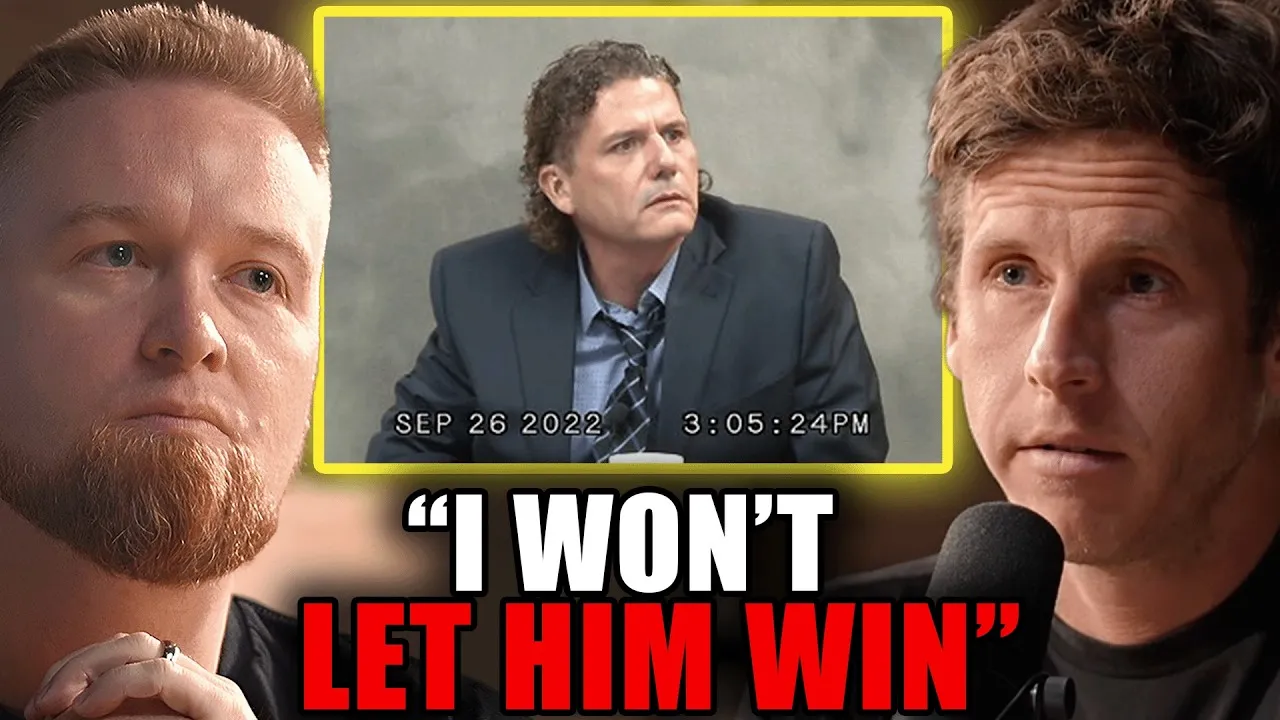
Darcy Weir said on the Danny Jones Podcast that Corey Goode admitted in a 2022 deposition video that he has never been to space. Weir argued that the answer directly contradicts Goode’s secret space program story and now sits at the center of a copyright fight over Weir’s Dark Alliance documentaries.
This is not how the grand galactic opera is supposed to end. Not with reptilians, underground bases, and a bubble ride to a space station. With a deposition clip, a copyright registration number, and everybody suddenly speaking fluent DMCA.
The claim matters because Goode is not just any guy with a wild campfire story. In the UFOs world, he became one of the more recognizable faces of the secret space program lane, the subgenre where alleged hidden military projects, alien factions, ancient beings, and New Age cosmology get blended into one extremely expensive-looking YouTube thumbnail. Weir’s point is simple, and brutal: when Goode was put in a legal setting, the space part allegedly disappeared.
Have you ever been to space?” And he says, “No, I’ve not been to space.
That is the line people will clip, argue over, and send to the friend who still says, technically, maybe astral travel counts. The wrinkle is right there in the transcript too: Danny Jones immediately supplies the escape hatch, saying “body” and then “consciously.” In UFO lore, that distinction can do an absurd amount of work. A spaceship can become a memory. A mission can become an experience. The hard claim can dissolve into fog.
The deposition is the plot twist
Weir says the deposition came from litigation involving Goode and former collaborators, and that attorney Landon Webb asked the question during a six-hour video. Weir’s larger accusation is not that Goode merely told a strange story. It is that the story lost its steel when attached to legal consequences.
As a piece of podcast evidence, this is stronger than the usual UFO-show vapor. Weir is pointing to a specific video, a specific year, a specific question, and a specific answer. That doesn’t make every surrounding claim automatically true. It does make this one unusually checkable.
It also gives the episode its darkly funny shape. The whole mythology begins in Star Trek-adjacent grandeur, with Galactic Federation language and 20-year missions, then lands in the most terrestrial place imaginable: a dispute over who owns footage of a man saying he hasn’t been to space.
Then the aliens become a copyright problem
Weir says Goode has been using copyright claims to target his trailers, distributors, Amazon, Tubi, and FilmHub. According to Weir, Goode filed a copyright certificate for the deposition video in 2025 and claimed he created it, while Weir says the video was actually recorded by the defense team in the earlier case.
We are currently exploring federal litigation concerning the specific uses of the copyrighted deposition footage.
Weir’s legal language gets sloppy in a way that matters. He says a court proceeding video published online “becomes fair use material” and “becomes public domain.” Those are not the same thing. Fair use is a defense. Public domain means no copyright protection. A filmmaker can be right about the larger unfairness of a takedown and still talk like a guy trying to speed-run law school during a podcast.
when a video that’s part of a court proceeding gets published online, it becomes fair use material. Becomes public domain.
Still, the practical complaint is familiar to anyone who has watched YouTube’s copyright system turn into a vending machine for nuisance. A claim can knock a video down first and make the uploader fight later. Jones explains the mechanism plainly: file the takedown, the video comes down, the uploader counters, then the claimant has to sue or let the video go back up. It is not a courtroom. It is a pressure point.
Weir says Goode then proposed a licensing resolution that would give Goode access to the full catalog of interviews and original footage from Weir’s Dark Alliance films. Weir calls that what it sounds like he calls it.
This is where he shifts to extortion.
Weir has receipts, and an obvious stake
Darcy Weir is not a neutral librarian floating above the mess. He is a filmmaker with a documentary, distribution relationships, and footage at risk. That makes him motivated. It does not make him wrong. His strongest material here is concrete: the deposition question, the alleged answer, the copyright notice, the email, and his claim that Leon Isaac Kennedy signed off on his use of the footage.
Leon signed off. He let me use his interview.
The verdict on the big claim is narrow but damaging. If the deposition clip is as Weir describes it, then Goode’s public secret space narrative has a massive contradiction sitting in plain sight. Not a vibe contradiction. Not a skeptical eye-roll. A sentence.
For listeners, that changes what the argument should be. The question is not whether someone somewhere might be hiding advanced aerospace programs. The question is whether this particular man told a particular story that collapses when the legal transcript asks for oxygen.
- What did Darcy Weir say about Corey Goode's deposition?
- Darcy Weir said Corey Goode was asked in a 2022 deposition video whether he had ever been to space and answered that he had not. Weir presents that as a major contradiction of Goode's public secret space program story, which includes claims about being taken into space and serving in a 20-year mission. The claim is especially sharp because Weir says that same deposition footage is now part of a copyright dispute over his Dark Alliance documentaries.
- Why does Darcy Weir think Corey Goode's story has a consistency problem?
- Weir argues that Goode's deposition answer does not match the version of the story that made him famous in UFO circles. In Weir's telling, the issue is not just that the story is extraordinary, it is that Goode's own accounts shift when legal pressure enters the room.
- What is the copyright fight between Darcy Weir and Corey Goode about?
- Weir says Goode filed copyright claims over deposition footage that Weir used in his Dark Alliance films, even though Weir argues the footage was created by the defense side in an earlier legal case and had already been published online. Weir also says Goode threatened litigation and floated a license deal that would give him access to Weir's interview footage.
Darcy Weir says the US Air Force planned to nuke the moon in 1958 to flex on the Soviets
The UFO documentary filmmaker revisits Project A119, a Cold War scheme that proves our actual space history is much weirder than the flying saucer rumors.
Nathaniel Gillis says Chris Bledsoe's 'Merlin' label means a category of UFO contactee, not the wizard
On Danny Jones Podcast, Gillis turns the goofiest-sounding Bledsoe lore into a darker theory about government study, contactees, and weaponized ridicule.
Nadia Drake says Susan Gough's psyops résumé is normal comms work, not proof of a UFO cover-up
The Danny Jones Podcast tried to turn a DoD spokeswoman's LinkedIn into a smoking gun, and Drake refused to salute.
Matt Ehret says the CIA shaped the National Enquirer to seed a one-world alien religion
The claim is wonderfully lurid, and also a perfect example of how a real Cold War fact can become a cosmic corkboard theory in about 90 seconds.
The circuit, read weekly. No noise.