Doug Brunt says Stalin’s erasure of Immanuel Nobel inspired George Orwell’s 1984
Brunt’s claim is a great lost-history grenade, though his Stalin-to-Orwell line compresses a messy Soviet story into one very TV-ready villain.
Listen on YouTube · Spotify · Apple Podcasts
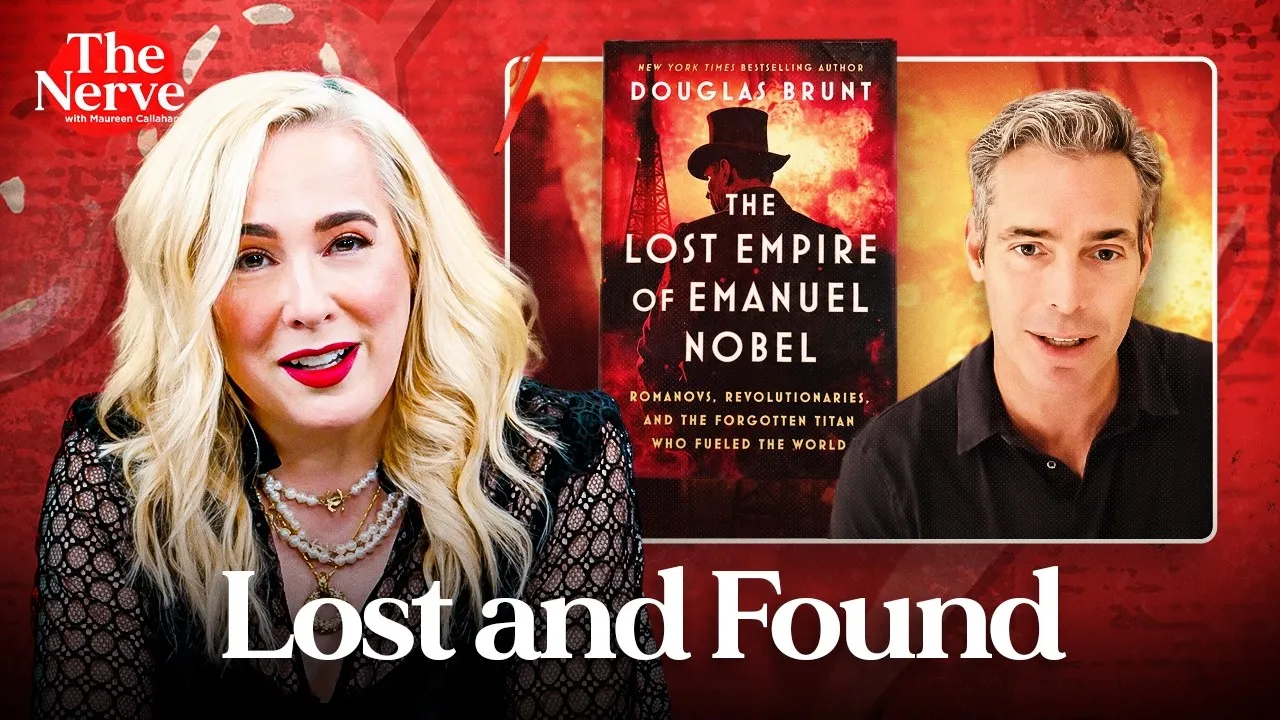 WATCH NOW↓
 The Nobel name usually enters the room in black tie, carrying a prize envelope. Doug Brunt says one Nobel story should arrive covered in oil and Soviet fingerprints: Immanuel Nobel’s erasure, he argues, helped inspire George Orwell’s 1984.
That is the live wire inside Brunt’s appearance on The Megyn Kelly Show. Not another pleasant author chat about forgotten geniuses. Brunt makes a harder claim: Immanuel Nobel, nephew of Alfred Nobel, was not merely overlooked by history. He was politically sandblasted out of it.
His nephew, Immanuel Nobel, almost nobody in the West knows. And yet he had done far greater things. He pioneered the Russian oil industry. By World War I, he had the biggest oil company in the world, bigger than Rockefeller’s Standard Oil.
That is a magnificent barroom-history sentence. It has everything: a famous uncle, a missing titan, Rockefeller as the measuring stick, and the faint smell of someone at the next table opening Wikipedia with hostile intent. Brunt’s larger frame is that Nobel’s real power was not social status or invention. It was oil, the substance that turned the 20th century from a cavalry painting into a machine-shop nightmare.
The memory hole had a company name
Brunt’s Orwell claim is the one with teeth. He says the Soviet treatment of Nobel’s business, the nationalizing, renaming, and historical scrubbing, became part of the imaginative raw material for 1984. Megyn Kelly hears the claim and immediately reacts like someone has just found a secret trapdoor under a high-school syllabus.
And what Stalin did to Immanuel Nobel is the inspiration for George Orwell’s 1984.
The claim is deliciously specific. It is also a little too neat. Orwell’s 1984 did not come from one villain pressing one button. The book drew from Stalinism, fascism, wartime propaganda, censorship, surveillance, and Orwell’s own long disgust with political lying. Brunt is at his strongest when he keeps the claim tied to concrete acts of erasure rather than making Nobel the skeleton key to Orwell.
There’s a passage in the book that talks about changing the street names and tearing down the statues and rewriting the history.
That part tracks with Orwellian logic. 1984 is not just about being watched. It is about being made unable to prove what happened yesterday. Rename the company. Rename the street. Remove the statue. Teach the next generation that the old owner was either irrelevant, wicked, or never there at all. The state does not have to win the argument if it owns the archive.
Brunt’s best argument is oil, not Orwell
The cleaner historical point Brunt makes is that Nobel mattered because energy mattered. World War I turned petroleum from an industrial commodity into geopolitical blood. Trucks, ships, planes, fuel oil, all of it made control of supply feel existential. Brunt casts Nobel’s Caspian empire as an early version of the modern scramble for energy.
With Nobel, it was the oil. It’s really like it’s the the quest to capture our sources of energy is the story of our times.
That is where the episode has its best snap. Brunt connects Nobel’s fate to Venezuela, Russia, and the Middle East without turning the whole thing into a corkboard conspiracy map. The old story and the present tense share the same ugly punch line: whoever controls energy gets to write a lot of history, and sometimes delete a few chapters.
Still, the Stalin framing deserves a raised eyebrow. In the transcript, Stalin becomes the human shorthand for Soviet confiscation and historical rewriting around the Russian Revolution. That makes for a sharp villain. It also compresses a political process into one mustache. As podcast history, it’s gripping. As historical causation, it needs receipts.
But as a reason to care about Immanuel Nobel, Brunt’s pitch works. He is not asking listeners to memorize another forgotten rich man. He is arguing that forgetting him was part of the story. If that is true, the strange question is not why nobody knows Immanuel Nobel. It is who benefited when nobody did.
- What does Doug Brunt say happened to Immanuel Nobel?
- Brunt says Nobel, the nephew of Alfred Nobel, built a vast oil empire along the Caspian Sea and then effectively vanished from Western memory after Soviet power nationalized and renamed his business. His point is not just that Nobel was forgotten, but that forgetting him served a political purpose.
- Did Immanuel Nobel really have an oil company bigger than Standard Oil?
- Brunt claims that by World War I, Nobel had the biggest oil company in the world, larger than Rockefeller’s Standard Oil. That is the episode’s most checkable assertion, and also the one most likely to send history people into the comments with maps, production tables, and a moral obligation to correct everyone.
- How does George Orwell’s 1984 fit into the Nobel story?
- Brunt argues that Orwell was writing about Soviet tactics used on people like Nobel, including renaming, statue removal, and rewriting history. The broader Orwell connection is plausible, since 1984 is soaked in totalitarian memory control, but Brunt’s version makes Stalin the face of a larger Soviet machine.
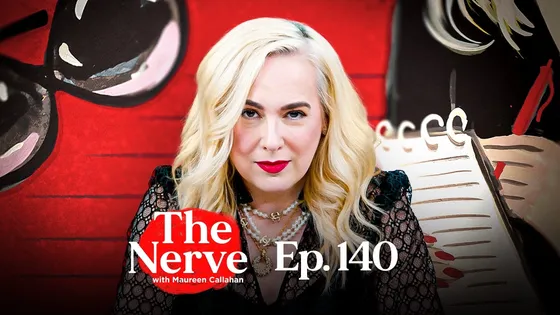
Douglas Brunt says Stalin’s erasure of Immanuel Nobel inspired George Orwell’s 1984
Brunt makes the case that the forgotten Nobel oil empire was not just a business story, but a prototype for Orwellian erasure.
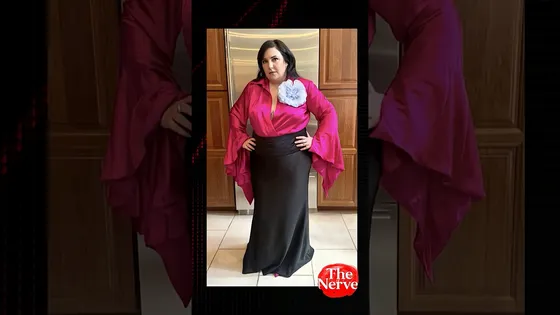
Maureen Callahan says Lena Dunham’s wedding outfit looked like “a big semen dump”
The line is gross, specific, and built to travel, but the bigger claim underneath it is the old Lena Dunham discourse in a new corsage.
Maureen Callahan says Keri Russell embarrassed her children by talking about sex with Matthew Rhys
Callahan turned a flirty Keri Russell anecdote about The Americans into a prosecutorial brief on celebrity oversharing, with the kids as Exhibit A.
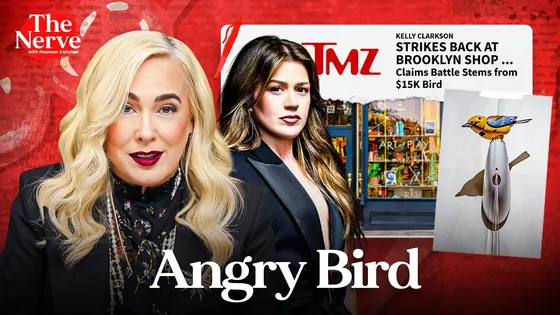
Maureen Callahan says Kelly Clarkson’s Art of Play feud was really about not being Brooklyn-cool enough
Callahan’s verdict on the Brooklyn toy-store dust-up is funny, class-coded, and probably more persuasive than Art of Play would like.
The circuit, read weekly. No noise.