George Mack says Spanish chicken farmer Juan Pujol was one of D-Day's three most important people
The Juan Pujol García story is real, absurd, and slightly overpolished in the telling, which is exactly why it works.
Listen on YouTube
 WATCH NOW↓
 The best spy pitch in history was apparently: if you won’t hire me, I’ll get hired by the Nazis first. On Modern Wisdom, George Mack said Juan Pujol García, a failed Spanish chicken farmer, belongs with Eisenhower and Montgomery as one of the three most important people on D-Day.
History loves a résumé that starts with poultry and ends with Hitler being successfully catfished. Mack’s telling has the shape of a pub story that somehow passes the fact check: man gets rejected by British intelligence, joins German intelligence out of spite and strategy, invents an entire spy network, helps sell the Nazis on the wrong invasion site, gets medals from both sides, then fakes his own death and hides in Venezuela.
the three most important people were Eisenhower, who looked after the US, um I think Montgomery, who looked after the Great Britain, and Juan Pujol, the Spanish chicken farmer.
That ranking is the part to argue about. The rest is not some TikTok history goblin hallucination. Pujol really was one of the great double agents of World War II, operating under the British codename Garbo, a nod to Greta Garbo and his gift for performance. The Germans knew him as Arabel. The man was not merely lying. He was world-building.
The chicken farmer who sold Hitler a fake invasion
Mack tells the story as a lesson in agency, which is usually where podcasts start turning history into a LinkedIn carousel with better microphones. But Pujol can survive that treatment. He did have a wonderfully cursed early CV: chicken farmer, hotel manager, failed businessman. He did approach the British and get brushed off. He did then convince the Germans he could spy for them.
So, he then becomes the most valuable spy for Britain during World War II.
The genius was not that Pujol had access. He mostly had imagination, nerve, and paperwork. He created a fictional web of subagents supposedly placed around Britain, each with their own reports and rhythms and plausible little bureaucratic stink. This was espionage as fan fiction, except the audience was Nazi high command and the comments section had tanks.
He convinced them that D-Day was going to happen in Calais.
That is the core of the claim, and it is basically true. Pujol’s false reporting was part of Operation Fortitude, the Allied deception campaign that helped keep German forces fixed around Pas-de-Calais even after troops were landing in Normandy. No, one Spanish chicken farmer did not single-handedly win D-Day. Nobody does anything single-handedly in a war involving amphibious landings, codebreaking, logistics, air superiority, weather calls, and thousands of young men being asked to run into machine guns. But Pujol was not decoration. He mattered.
True story, podcast haircut
The episode gives the story the clean motivational arc: rejected, pivoted, became indispensable. Real history is messier, as it tends to be when everyone is using invisible ink and half the institutions involved still enjoy being vague for a living. Pujol’s work sat inside Britain’s Double-Cross System, run by MI5, after contacts with British intelligence. Mack compresses the machinery. Fine. A podcast is not a footnoted monograph, and this one at least compresses toward the truth rather than away from it.
The double-medal detail is the giveaway that reality sometimes has better writers than streaming television.
he’s the only agent to get both an Iron Cross from Hitler and an MBE
This is the sort of fact that sounds invented by someone in a pub who has been allowed to say “one more thing” too many times. But Pujol really was awarded the Iron Cross by Germany and an MBE by Britain. The Nazis honored the man they thought was helping them. Britain honored the man who actually was not. Somewhere, a spreadsheet of performance reviews became art.
The useful part is not the trivia
Mack uses Pujol as a case study in not taking rejection at face value. That is the bit that saves the anecdote from becoming history-flavored hustle sludge. Pujol did not simply bang on the same door forever. He asked what would make him impossible to ignore, then took the insane route to becoming that person.
The moral is not “be persistent,” which is what every airport book tells you while charging $28 for common sense. The moral is uglier and better: if the room will not recognize your value, change the evidence the room is forced to look at. Pujol wanted a job with the British badly enough to become, temporarily and theatrically, the exact kind of man the Germans wanted.
his final last act was to fake his own death in 1949, and he lived in a bookstore in Venezuela.
- Did Juan Pujol García really help deceive Hitler before D-Day?
- Yes. Pujol, known to British intelligence as Garbo, fed the Germans false information through a fictional network of agents. His work helped support the Allied deception plan that made the Nazis believe the main invasion would come at Calais, not Normandy.
- Was George Mack right to put Juan Pujol next to Eisenhower and Montgomery?
- That is the shiny podcast version of the claim. Pujol was enormously important, but calling him one of the three most important people on D-Day is more dramatic ranking than historical consensus. The safer verdict is that he was one of the most consequential deception assets of the war.
- Did Juan Pujol really receive both the Iron Cross and an MBE?
- Yes, that is the deliciously ridiculous part. Germany honored him because it believed he was a valuable spy for the Reich, while Britain honored him because he was actually working for the Allies.
George Mack says Belgium’s driving theory test raised the death rate for new drivers by 32%
On Modern Wisdom, Mack turns Belgian road safety into a brutal little parable about false confidence, bad incentives, and the danger of thinking you know what you’re doing.
Zac Efron says eating too much salmon during The Iron Claw prep gave him mercury poisoning
Efron says the 6,000-calorie bulk for The Iron Claw pushed him from a 29 waist to a 34, up to 205 pounds, and into a fish problem.
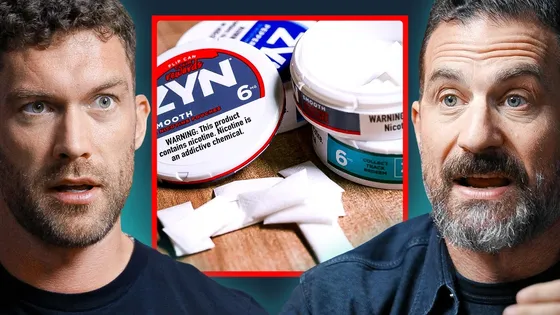
Andrew Huberman says daily nicotine pouches don't boost your brain, they just fix withdrawal
Huberman's rule is brutally unfashionable in the pouch era: if you want nicotine to help performance, don't make it a habit.
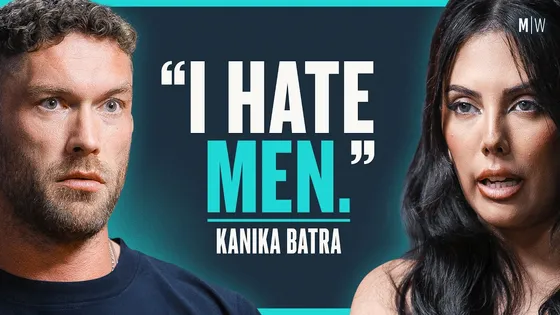
Kanika Batra says she'd encourage her future children to date a sociopath
The self-described diagnosed sociopath argues that a loyal psychopath can be a romantic shield, which is either brutal honesty or the darkest dating ad ever written.
The circuit, read weekly. No noise.