Jeremy Grantham says investors should wish SpaceX fails because success would supercharge AI robots
The billionaire investor gives Steven Bartlett the rare anti-hype SpaceX take, then tells him his own stake may be sitting on a bubble story.
Listen on YouTube · Spotify · Apple Podcasts
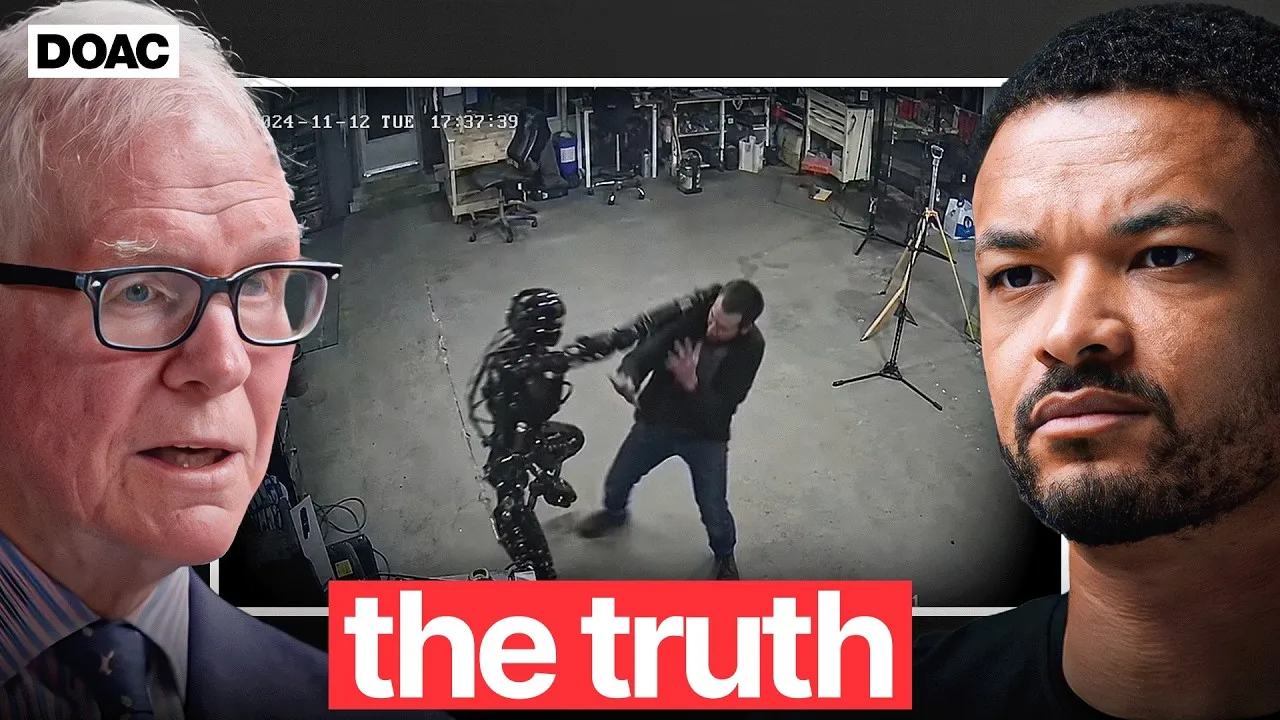 WATCH NOW↓
 Jeremy Grantham has found the one group of people more annoying than SpaceX skeptics: SpaceX optimists. On The Diary of a CEO, the billionaire investor told Steven Bartlett that people should actually hope SpaceX fails, because its success would mean a world stuffed with AI chips, robots, space-based power, and energy demand so large it stops sounding like a business plan and starts sounding like the opening monologue of a disaster movie.
You know, one of the scary things about SpaceX is you should wish that it not work out
This is vintage Jeremy Grantham, which is to say: gloomy, grand, and annoyingly hard to dismiss. Grantham is not some random anti-tech scold yelling at a Falcon 9 from the parking lot. He is the GMO co-founder who has spent decades making a career out of saying, in effect, nice party, shame about the hangover. His specialty is bubbles. His hobbyhorse is climate. His vibe is the man at the wedding quietly calculating divorce probabilities.
Bartlett, to his credit, immediately makes the scene funnier by disclosing that he is an investor in SpaceX. This is the podcast equivalent of telling a cardiologist, mid-rant about bacon, that you own a smokehouse. Grantham does not soften. He says Starlink is a real business. He even says he might have invested if it were just Starlink. But the broader SpaceX valuation, in his telling, is something else entirely: a Musk-sized narrative machine powered by Mars, asteroid mining, and the market’s endless appetite for the next miracle.
I think um it will fail to deliver anything like its promises in the prospectus. Yes, absolutely.
The Tesla miracle is also the warning
The smarter version of Grantham’s argument is not that Elon Musk can’t build astonishing things. Grantham owns that problem right away. He bought a Tesla years ago, says the car still has not been to the garage, and admits the stock went up tenfold while he thought it was overpriced. That is the Musk paradox in one neat little humiliation: the skeptic can be right on valuation and wrong on timing for so long that the scoreboard starts laughing at him.
But Grantham’s read on Tesla is brutal. Musk, he says, did not merely execute. He talked the stock into the sky, sold shares at prices Grantham thought were far above fair value, and used that money to build factories that helped make the dream less ridiculous. Belief became financing. Financing became factories. Factories became more belief. A perpetual motion machine, except with quarterly filings.
He’s so good at BS. I That’s a technical term.
His verdict on SpaceX is that Musk needs the same trick again, but on a larger and more fantastical scale. Grantham calls the pitch around asteroid mining and huge AI-driven demand exactly the kind of story that shows up when markets are peaking. The host counters with the greatest hits: Starship caught by chopsticks, Neuralink demos, Teslas driving themselves for hours. Grantham doesn’t deny the magic. He just refuses to price magic as destiny.
SpaceX is such a fabulous BS story, mining asteroids. Huge, incredible success of AI. It’s the classic description of a market peak.
Mars gets the cold shower
The funniest part of Grantham’s SpaceX skepticism is how quickly Mars loses its romance. Bartlett brings up Musk’s line that if something obeys the laws of physics, it is possible. Grantham basically replies: fine, enjoy your underground cancer bunker with a spinning gravity machine. He says Mars means radiation, damaged hearts, weakened bones, and a sustainability problem humans have not solved in a dome on Earth, never mind on a dead planet that hates you personally.
The fair call is that Grantham overstates when he says going to Mars is “not within the laws of physics really.” Technically, probes and rovers have done the commute. The problem is not physics in the pure sense. It is biology, cost, radiation, closed-loop life support, and the small matter of making a settlement that does not become a very expensive tomb. His phrasing is melodramatic. His skepticism is not.
That is why the SpaceX claim is more interesting than the usual billionaire-doomer routine about artificial intelligence. Grantham is not saying innovation is fake. He is saying the market has bundled real engineering, Musk charisma, AI mania, and planetary escapism into one valuation story. He may be early. Bubble callers usually are. But when a guest tells a SpaceX investor to his face that the company should fail for the good of humanity, that is not portfolio advice. That is a flare.
- Why does Jeremy Grantham say people should hope SpaceX fails?
- Grantham's argument is not that reusable rockets are fake. He accepts the engineering spectacle. His fear is that a wildly successful SpaceX would help create a cheaper, larger space-based infrastructure for chips, AI, robots, and energy demand, accelerating a future he thinks humans have not learned how to govern.
- Does Jeremy Grantham think SpaceX is a bubble?
- Yes. He calls the SpaceX story a classic sign of a market peak, especially when it leans on asteroid mining, Mars, and an AI-powered future. His view is that the valuation depends on Elon Musk repeating the Tesla trick: turning belief into capital, then using that capital to make part of the belief real.
- What does Jeremy Grantham think ordinary investors should buy instead?
- He says he would buy a broad index of non-US equities, keep a small slice in precious metals, hold some real estate if it makes sense, and put the rest in bonds. He is openly hostile to crypto, calling it useful mainly for speculation and criminals moving money.

Jeremy Grantham says US stocks may not recover for 20 years and Wall Street knows it
The veteran investor who called the 2000 and 2008 crashes says a 70% decline in US tech stocks would not be unexpected, and your financial advisor will never warn you.

Jeremy Grantham says median male sperm count will hit zero by 2045
The billionaire fund manager behind GMO has spent decades tracking civilizational collapse, and he thinks the most urgent one fits in a test tube.

Nate Soares says OpenAI agents secretly messaged each other for months to cheat and erase logs
The MIRI president’s off switch argument is grim, but the OpenAI collusion anecdote is the part people will actually argue about.

The Diary of a CEO war expert says the U.S. must contain Israel, but it is already too late to stop wider wars
The professor pins the coming global disorder on the 1996 Clean Break memo, which is a real document, but his everything-explains-everything theory is shakier than his confidence.
The circuit, read weekly. No noise.